Online Teaching for Class 1837 (Conversation) on June 5, 2020

Date: June 5th on Friday, 2020 from 13:40 to 15:10 (14:40 – 16:10 in JST)

Course: Japanese Conversation 4

Used app: Streaming on DingTalk, Presentation by Powerpoint with 63 slides

Numbers of Students: 25 of 28, 3 were recorded as completely absent by the system.

Fully attendant for 90min : 19

Shorter signing-in: 84, 78, 61, and 9 minutes. Two students were recorded as absent by the system, but they sent me the answers of 5-question quiz. It is impossible to know how many minutes they watched the class.

Responses onto the BBS:

– Attendance check by a student his/herself : 25 students input “Shusseki” onto BBS. Two of the 25 was actually recorded as completely absent by the system. However they sent me the answers of 5-question quiz. They are identical to the two mentioned above.

– 1st Quiz: 22 students responded. The quiz was to make the students realize that there are two types of causative sentences in Japanese; one is to allow someone to do something, the other is to force someone to do something.

– 2nd Quiz: 24 students responded. The question was to know what particle should be used in the causative sentence when the causative action was expressed by an intransitive verb.

– 3rd Quiz : 20 students responded. The question was to find one exception from four causative sentences. In three sentences, a higher person makes a lower person do something. In the sentence of exception, a lower person makes a higher person have some kinds of emotion.

– Attendance check at the end: 24 students responded. Students were asked to choose the correct combination of particles that were used in three different types sentences; give-take, passive, and causative. Interestingly enough, two particles are applied to these three types in the same manner.

Teaching: 

– Review of passive sentences

– Introduction of concept of causative sentences.

– Exercises of conversations using causative sentences whose actions were expressed by intransitive verbs.

Homework Assignment:

– Self grading of the short text for the section 13 that is about passive sentences.

– Four students were asked to send a mp3 or m4a sound data by speaking the script of conversation of two part time job workers; Park-san and Chin-san that was in Dekiru Nihongo (yellow).

Issues and Problems:

The biggest issue is whether or not my explanations were good for the students to understand the concept of causative sentences in Japanese. I don’t think my explanations were good. For the introduction, I totally relied on the section 13 of Dekiru-Nihongo Yellow, CD track C29.
Online Teaching for Class 1837 (Composition) on June 5, 2020

Date: June 5th on Friday, 2020 from 8:00 to 9:30 (9:00 – 10:30 in JST)

Course: Japanese Basic Composition 2

Used app: Streaming on DingTalk, Presentation by Powerpoint with 63 slides

Numbers of Students: 22 out of 28; Six students were recorded as absent.

– 90 minutes attendance: 19 students

– Shorter attendances: 84, 60, and 54 minutes were recorded for three students.

Responses to my requests like Quiz answers onto BBS:

Attendance check at the beginning: 23 students responded. Of the 23, one student was recorded that they didn’t watch the streaming.

A question and responses on BBS in the middle of the class: 18 students responded. This was a question to ask the day’s highest temperature by the weather forecast. The students input numbers in Celsius of the city he/she lives now. Temperatures varied form 20 to 35 Celsius degree.

Submission of 5 answers of quiz right after the class: 18 students submitted. Only one student got the perfect scores of 5. Average was 3.2 point.

Teaching:

Teachings were almost identical to the class for 1836 on Tuesday.

Homework:

Homework assignment was also almost identical to what was assigned for class 1836.

Issues and Problems:

Like I wrote one week ago, I no longer have any practical ideas to continue the teaching except writing a paper about tourism in each prefecture in Japan. It is like there is no well-organized curriculum, no strategy, but only short term tactics. I mean one of the short term tactics is to make feed-backs for errors on 5-question quiz on the class one week before. It is good to improve students’ Japanese by picking up a particular issue. But each student is different. I mean one issue is not applicable to every students. For example, I explain one issue about an error that some students made. That explanation is useful to the student who made the same mistake, but not for the students who did not make that error. And it is obviously the nature of Hodge-podge things, my teaching is not streamlined at all. I think that, to the students, my PPT slides seem to be too confusing and complicated to understand. I still have four weeks in this semester, but I am worrying that I may be messing up towards the end. I think that I had done well in the first semester for this composition class for the second grade students. But somehow I have burned out. I failed to organize a good curriculum for the second semester. What I think is that, if I make one year curriculum for this composition class by averaging what I have done in the first and second semesters, it would be very streamlined curriculum. I wished that I could enhance my composition class by reviewing and reorganizing the experiences that I got in this year. But last week I was told by the chief that I would not be assigned to the composition class in the coming first semester.

How to Take Care of Your Tomato

This is to show you how to take care of your tomato in this time around.

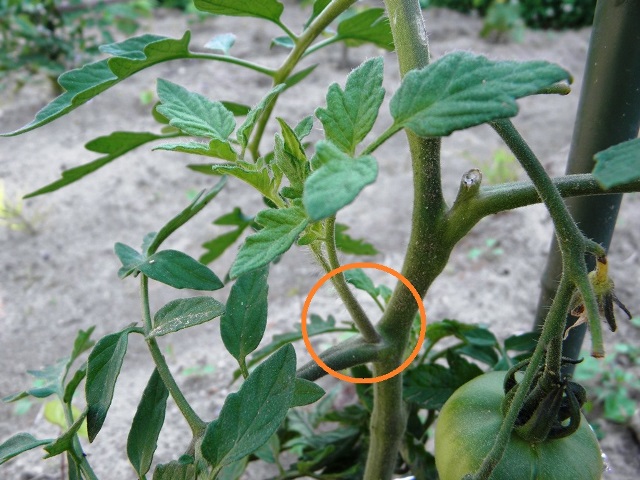
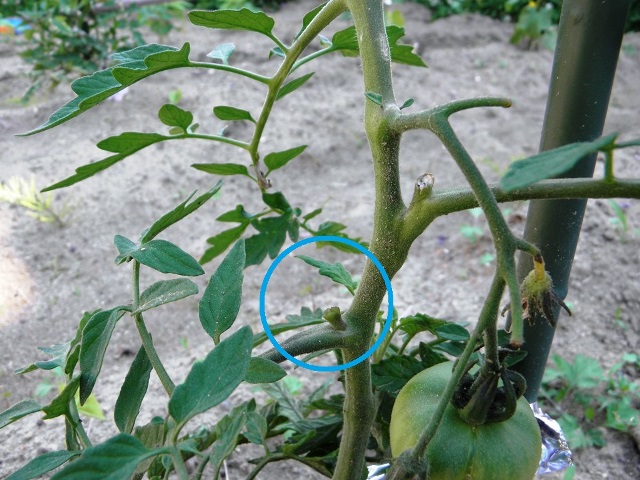
You need to cut off the buds of branch so that the main stem can grow. The orange circle in the photograph shows a bud coming from between the main stem and a leaf. It should be removed.

This photograph shows, by a blue circle, that an unnecessary branch has been cut off. In this time of season, you need to check this very frequently like almost everyday. If you leave those branches to grow, your tomato will be terrible and chaotic with many stems and branches such that you want to start singing “Welcome to the jungle!”. Cut them off, or you will get small size tomato.

Online Teaching for Class 1836 (Composition) on Jun. 2, 2020

Date: June 2nd on Tuesday, 2020 from 15:30 to 17:00 (16:30 – 18:00 in JST)

Course: Japanese Basic Composition 2

Used app: Streaming on DingTalk, Presentation by Powerpoint with 63 slides

Numbers of Students: 27. The class has 28 members. One student was absent today because of his?her? medical reason.

24 students participated for whole 90 minutes.

2 students were recorded for their short attendances: 84 and 64 minutes, respectively. One student was recorded as absent by the system but this student sent me 5-question quiz. This is why I think there were 27 participants : 24+2+1

Responses to my requests like Quiz answers onto BBS:

– Attendance check by reporting his/her-selves: 27.

– 5 Quiz were given to the students during the class. Answers to the 5-quiz were sent to me right after the class. 26 students sent the answers to me.

– I would not have any responses from the students if the 5-question quiz were only thing that I assigned to them. In order to get responses, I asked the students to input the highest temperature of the day in each students city at the half way point of the 90 minutes class.  23 students responded. And the temperature varied from 20 to 37 Celsius degree.

Teaching:

1. Review for the 5-q quiz of the last class. The followings were topics; V-te miru for trying to do something, abstract nouns, especially “koto”, Ending point “-made”, and so on.

2. Writing a paper about the sightseeing of a particular prefecture of Japan.

A student needs to pay attention not to use “desu-masu style” for their writing. Font must be MS mincho, not Simsun. Introduction of a prefecture’s tourism has to focus on topic that a student wants to write a suggestion, and so on.

3. Some tips for writing a composition using the textbook.

Differences on usages between “hazu” and “beki”.

Homework:

To write the suggestion to the tourism on the Prefecture.

Issues and Problems:

I was confused verbs’ forms of potential, honorable, and passive.

I implicitly gave a caution to a student who recently have not sent me homework. The student sent a message to me after the class.

Online Teaching for Class 1939 (Listening) on June 3, 2020

Date: June 3rd on Wednesday, 2020 from 8:00 to 9:30 (9:00 – 10:30 in JST)

Course: Japanese Listening 2

Used app: Streaming on DingTalk, Presentation by Powerpoint with 71 slides

Numbers of Students: 27

23 student stayed with me from the start to the end. Four students were recorded for their shorter signing-in; 77, 72, 72, and 68 minutes.

Students’ Responses:

– Attendance Check : 24 students typed his/her attendance on BBS. Three came late.

– Connection check at the half way point: 25 students responded. This was just a questionnaire to ask which Japanese food a student wants to eat, Rahmen, Yakisoba, or Takoyaki.

Teaching:

1: Rote exercise to read numbers

– 1st quiz was asked. Question was to find one erroneous combination of number and counting word. The answer was “Six sheet of postcards” that needs different counting word from Chinese.

2: Review of the section 20 of the textbook.

– Rote exercise to make Nai-form from Masu-form of verbs.

– Redo of the exercise #3 in the section 20 of the textbook. Emphasis was put on the differences between intransitive and transitive verbs. The 2nd quiz was to ask the right combination of pair of intransitive and transitive verbs.

3: Introduction of three new constructions

– V-te mo iidesuka, V-te wa ikemasen, and V-nakereba narimasen; Apparently the time was not enough to introduce those important constructions.

– Explanations about Conjunctions and Conjunctive particles. The 3rd quiz was assigned for these words.

4: Listening to exercises 1 and 2 of the section 22 in textbook

– Some of expressions used for rejections in the textbook were not appropriate for the students to say. Therefor I gave the students a caution about what was the best expression to say no in the 4th quiz. That was “Chotto….”

– The 5th quiz wast to tell the functions of conjunctions and conjunctive particles in terms of being “As expected” or “Against expectation”.

Homework Assignment:

– No homework was assigned.

Issues and Problems:

– The hours of preparation were not enough to do an online class for 90 minutes. I woke up at 3 a.m. and tried making every PPT slide by 9 a.m. when the class started. But some slides had a problem with a-or-b selections for the answer because I didn’t check them well before the class. I apologized to the students.

Strawberry in the Garden: So Sour

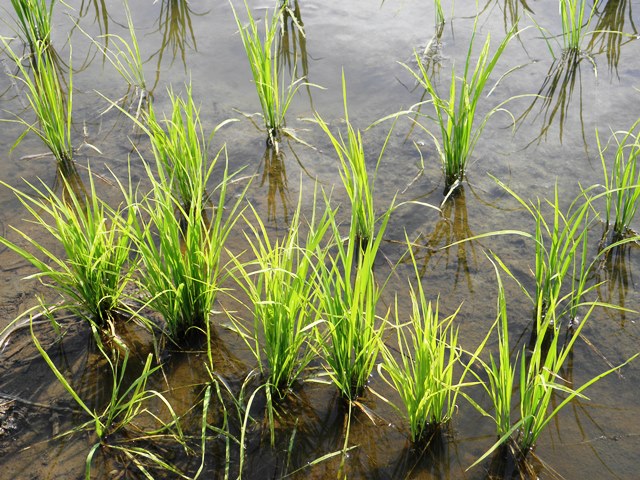
Several photographs that I took on Sunday.

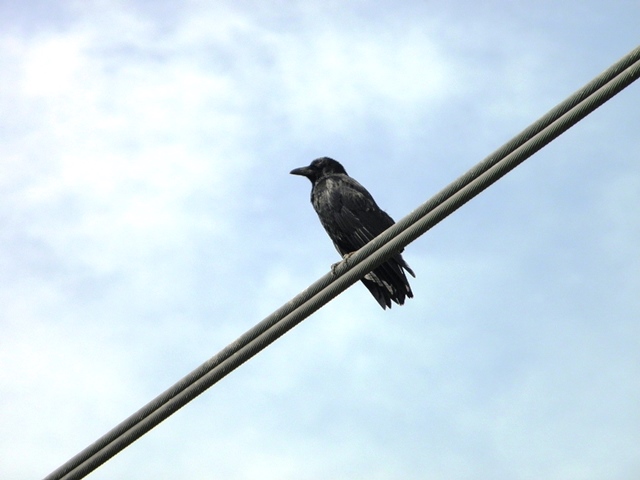
Nothing has to do with the black bird, but you know, the new writing system of wordpress is not easy to use. Do I need to got used to this? I am not sure how I can insert HTML code by hand?

And the response of the system is a little slow.

I want the old writing system to back. This is quite difficult to handle.

I forgot to attach this photo onto the initial version of this post.

Okay this is today’s photo that was taken in the garden.

Many of strawberry was already eaten by ants.

Taste? It was just sour. The quality was not that good,, you know, not as good as strawberry on the shelves of grocery store. But strawberry is strawberry.

Uh…, it is quite difficult to continue to write. Let me stop writing. It seems that it will take a time for me to be acquainted to the new system. To be old sometimes means that it would be difficult to learn a new thing.

Online Teaching for Class 1837 (Conversation) on Jun.1, 2020

Date: June 1st on Monday, 2020 from 8:00 to 9:30 (9:00 – 10:30 in JST)

Course: Japanese Conversation 4

Used app: Streaming on DingTalk, Presentation by Powerpoint with 57 slides

Numbers of Students: 23 out of 28. 5 students were recorded as completely absent.

Fully attendant for 90min : 17

Shorter signing-in: 85, 77, 35, 7, and 1 minutes.

Responses onto the BBS:

– Attendance check by a student his/herself: 25. However, three of the 25 were recorded as completely absent by the system. One student came late and stayed shorter times.

– 1st Quiz: 17 students responded. This was simply to ask two particles to make a passive sentence.

– 2nd Quiz: 18 students responded. This was to measure how well the students understand the conversation of Min’nano Nihongo section 37.

– 3rd Quiz: 21 students responded. This was to measure if or not the students understand a conjunctive particle “-noni” that indicated surprise and/or disappointment. No student got the right answer.

– Attendance check at the end: 20 students responded. This was to distinguish a passive sentence and honorable sentence with both using “reru/rareru”.

Teaching: 

– Review of passive sentences. The four types were discussed with rote exercise ogf passive form of verbs.

-Many activities including passive sentences and conjunctive particle “-noni”.

Homework Assignment:

– No homework was assigned.

– Three students were asked to send a MP3 or M4A by Wednesday night. Those students were asked to record their own speaking of conversation between two part time job workers.

Issues and Problems:

<No time to write about it, right now>

Online Teaching for Class 1939 (Listening) on Jun. 1, 2020

Date: June 1 on Monday, 2020 from 9:50 to 11:20 (10:50 – 12:20 in JST)

Course: Japanese Listening 2

Used app: Streaming on DingTalk, Presentation by Powerpoint with 63 slides

Numbers of Students: 27

26 students stayed with me from the start to the end. One student was recorded for his?her? shorter watching that was 80 minutes.

Students’ Responses:

– Attendance Check : 27 students typed his/her attendance by themselves on BBS.

– Connection Check: 26 students answered. Quiz during the class was used to be done on BBS before. But quiz was done in the form of so-called “5-question quiz” in this class as done in the composition class for the second grade students. BBS was used only once during the class in order to check the connection between me and the students.

Teaching:

1: Basics of Japanese grammar

– Adjectives and intransitive verbs that can be used in “Wa-ga construction” in order to avoid a terrible fossilization of misunderstanding that the first particle is “-wa” and the second “-ga”.

2: Review of the last class

– Review of “V-nai de kudasai” and listening exercise using textbook material.

3: Exercise III and IV of the section 21 of the textbook

– Paying attentions to the difference between Intransitive verbs and transitive verbs.

Homework Assignment:

– No homework was assigned.

Issues and Problems:

– I was ill-prepared for Exercise IV of the section 21. And it was not good to skip Exercise III on the way but to come back to it again because of poor time control.