Hi, this is a blog that is a record of my career as a Japanese teacher. Please introduce this blog to your friends by showing the QR code below

Listen to my music playing: J. S. Bach, Unaccompanied Cello Suite No.3, Prelude on Electric Bass (4.22MB)
I am a native Japanese speaker who used to teach Japanese in a university somewhere on this planet. Currently I don't work but stayed in my house in Northern part of JAPAN. I hope that you could enjoy reading my posts and know what life in Japan is like.
Hi, this is a blog that is a record of my career as a Japanese teacher. Please introduce this blog to your friends by showing the QR code below
Listen to my music playing: J. S. Bach, Unaccompanied Cello Suite No.3, Prelude on Electric Bass (4.22MB)
すみませんが、これも後日書きます。
私は 晩ご飯を とんかつに します。
「晩ご飯」の主題化
晩ご飯は とんかつに します。
※もちろん、メインは「選んでそれにする」の「Nにする」
————————————–
This post was written with reference to the exercise A5 of Section44 in “Minna no Nihongo (2nd Edition)” published by “3A Corporation”
The verb “Suru/Shimasu” is most of the time a transitive verb. Actually, sometimes “Suru/Shimasu” is used as an intransitive verb as introduced by the example sentence number 5 in the section 47. But let us just put aside “Suru/Shimasu” as an intransitive verb now. We are focusing on “Suru/Shimasu” as a transitive verb. Then, today’s sentences are to be compared with the exercise A4 in the section 19, in which the intransitive verb “Naru/Narimasu” is used.
(1) Sentence Constructions in A4 S19 with “Naru/Narimasu”
– [Subject] wa* [I-adj]+ku Narimashita.
– [Subject] wa* [Na-adj]+ni Narimashita.
– [Subject] wa* [Noun]+ni Narimashita.
(* “ga” is also used.)
(2) Today’s constructions of A4 S44
– [Object] o [I-adj]+ku Shimasu.
– [Object] o [Na-adj]+ni Shimasu.
– [Object] o [Noun]+ni Shimasu.
There is a difference between the sentences of (1) and (2), at the sentence ending. The sentences of (1) end with “-mashita.” which means perfect tense, in other words, actions of changing have already happened. On the other, the sentences of (2) end with “-masu” which means actions of changing will happen near future, or strong will of the subject. But rather than this difference of tense, there is an important difference between (1) and (2).
The sentences of (1) express that the subject itself changes. Therefore, the subject needs to be mentioned and the verb of changing must be the intransitive verb “Naru/Narimasu”.
The sentences of (2) express that the object is changed under someone’s intention. Therefore, the object needs to be mentioned and the verb must be a transitive verb, in this case, “Suru/Shimasu”.
Then, let us compare (1) and (2) with example sentences.
<This post is incomplete. >
————————————–
This post was written with reference to the exercise A4 of Section44 in “Minna no Nihongo (2nd Edition)” published by “3A Corporation”
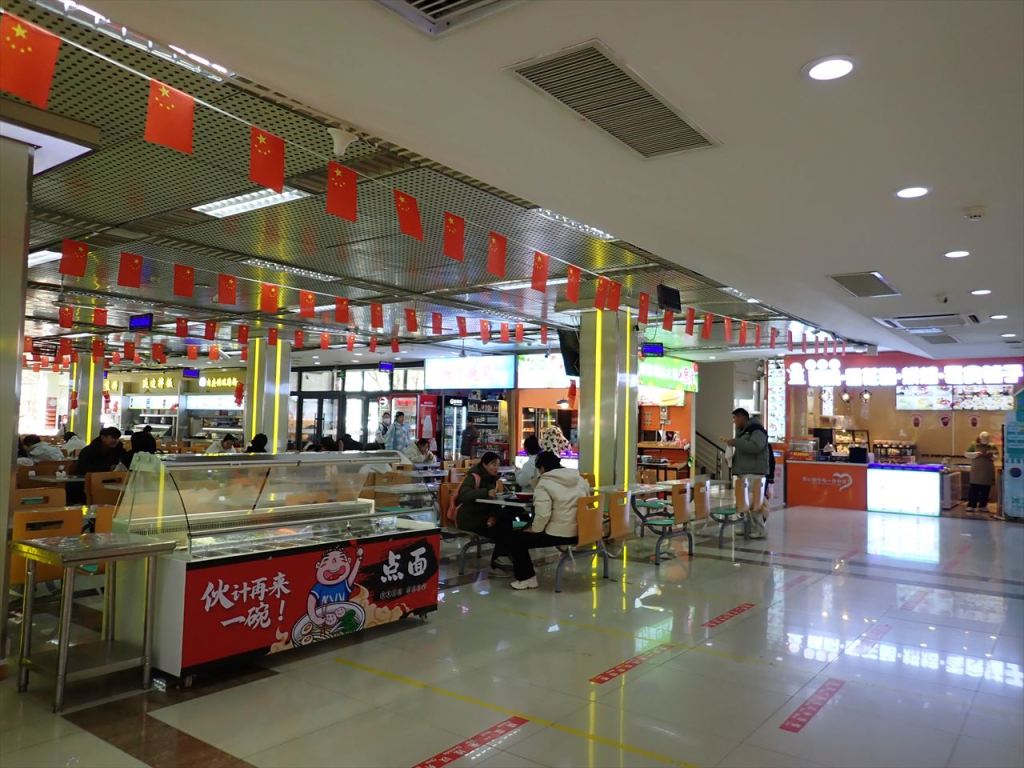
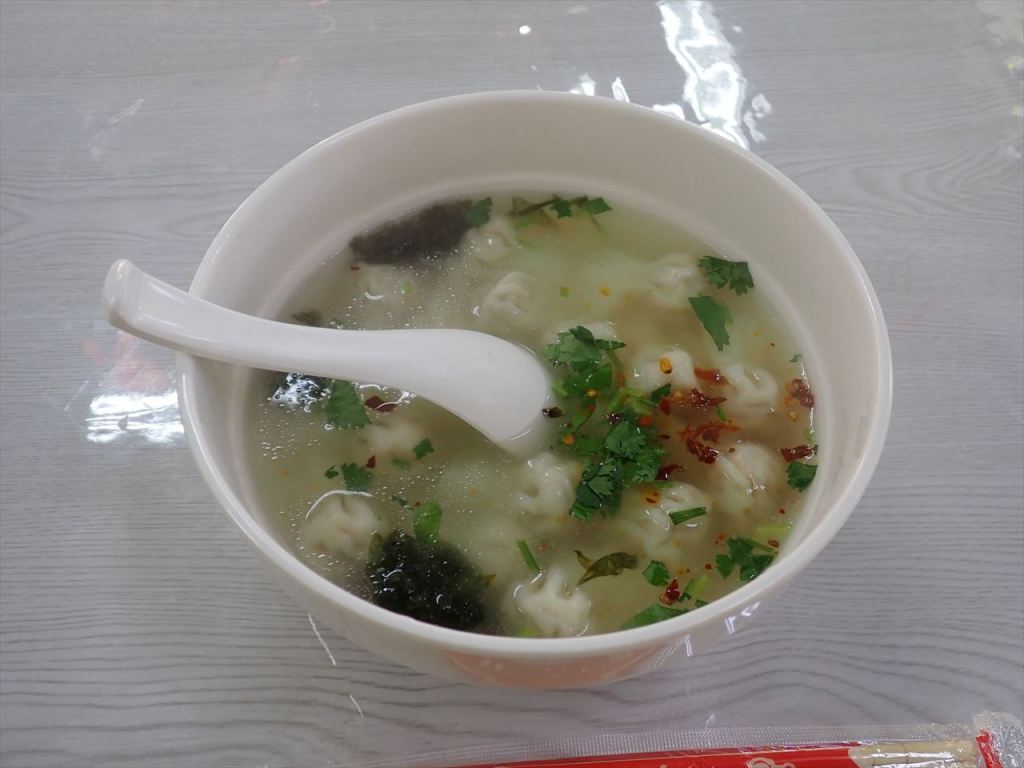
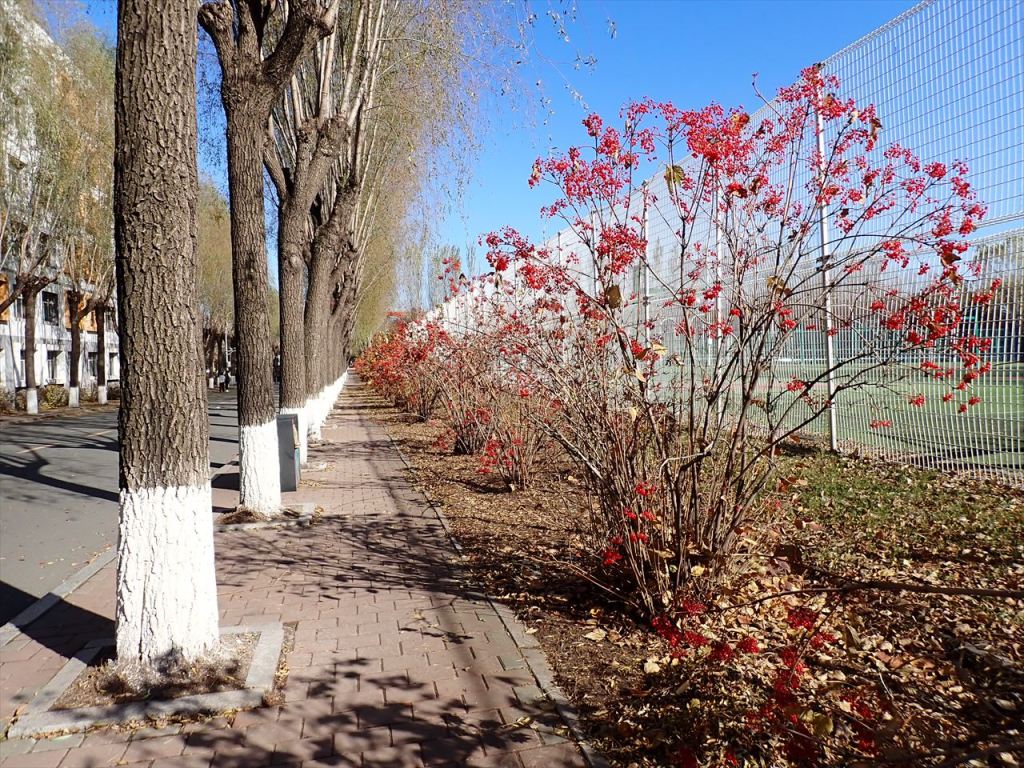
<恐れ入ります。時間がありませんので、後日この投稿を完成させます。>
————————————–
This post was written with reference to the exercise A3 of Section44 in “Minna no Nihongo (2nd Edition)” published by “3A Corporation”
Last time we learned the combination of two conjugating words that were a verb in Masu-form but without ‘masu’ and the verb “Sugiru/Sugimasu”. This time also, we are learning a combination of two conjugating words. The first part is, again, a verb in Masu-form without ‘masu’, but the second parts are not a verb, but I-adjectives “Yasui” and “Nikui”
(1) [Verb in Masu-form without ‘masu’] + Yasui* + desu.
1. Kono Kyoukasho wa Yomi yasui desu. (This text book is easy to read.)
“Yomi” comes from the Masu-form “Yomimasu”.
2. Kono Gita’a wa Hiki yasui desu. (This guitar is easy to play.)
“Hiki” comes from the Masu-form “Hikimasu”.
*: When Yasui is written with Kanji, Yasui meaning cheap is “安い”, and Yasui meaning “easy” is “易い”.
(2) [Verb in Masu-form without ‘masu’] + Nikui + desu.
3. Toukyou wa Kurashi nikui desu. (Tokyo is difficult to live in.)
“Kurashi” comes from the Masu-form “Kurashimasu”.
4. Kono Nabe wa Tsukai nikui desu. (This pot is not easy to use.)
“Tsukai” comes from the Masu-form “Tsukaimasu”.
Actually, this exercise A2 is about Yasui and Nikui, and the next exercise A3 is also about Yasui and Nikui.(違いを検討して明日追記します。)
————————————–
This post was written with reference to the exercise A2 of Section44 in “Minna no Nihongo (2nd Edition)” published by “3A Corporation”
So, the following photos were taken three days ago.
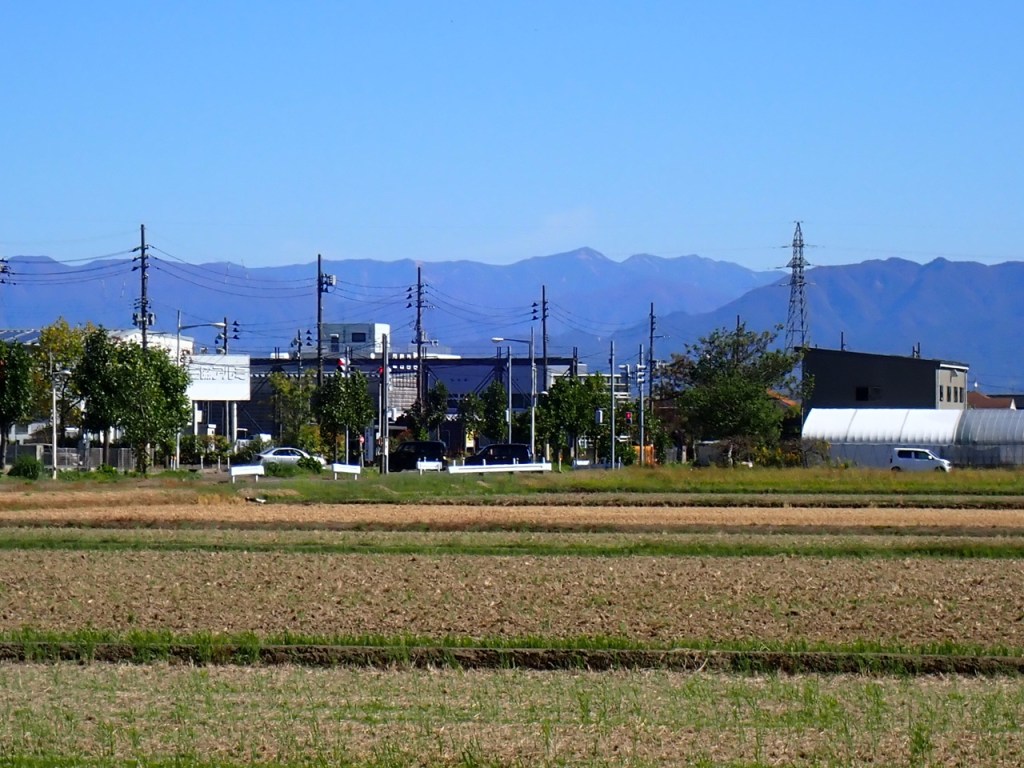
Iide mountains have not had snowfall yet. But I guess it will get it within a week.
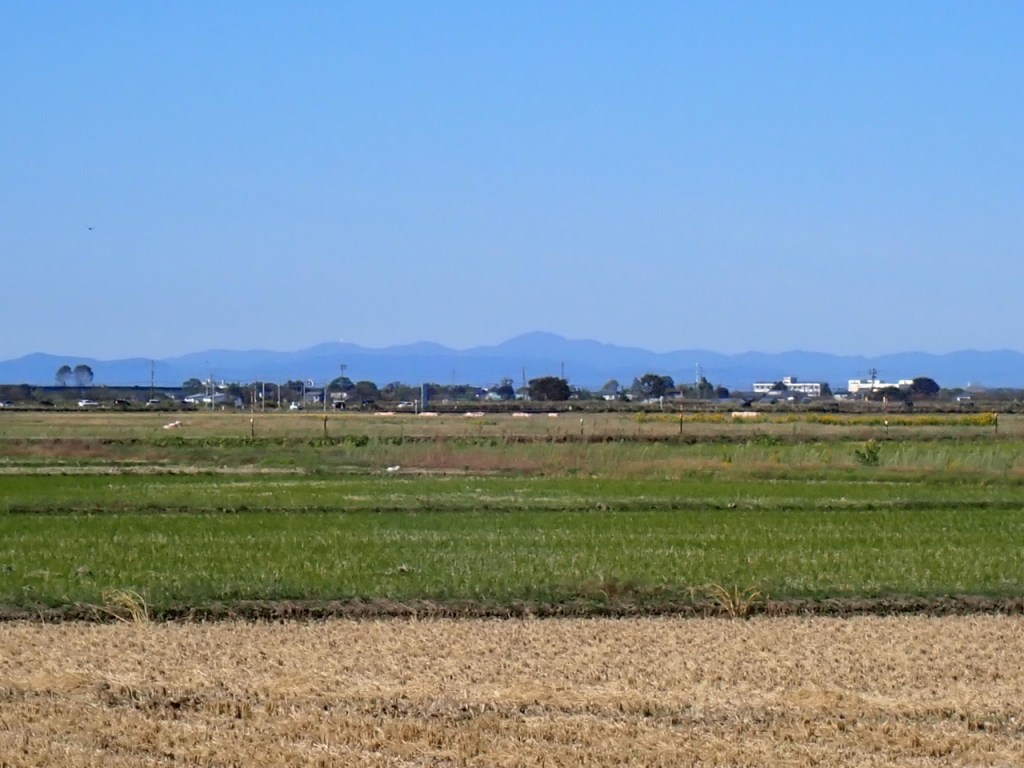
The mountains are actually behind the sea. They are mountains on Sado Island.
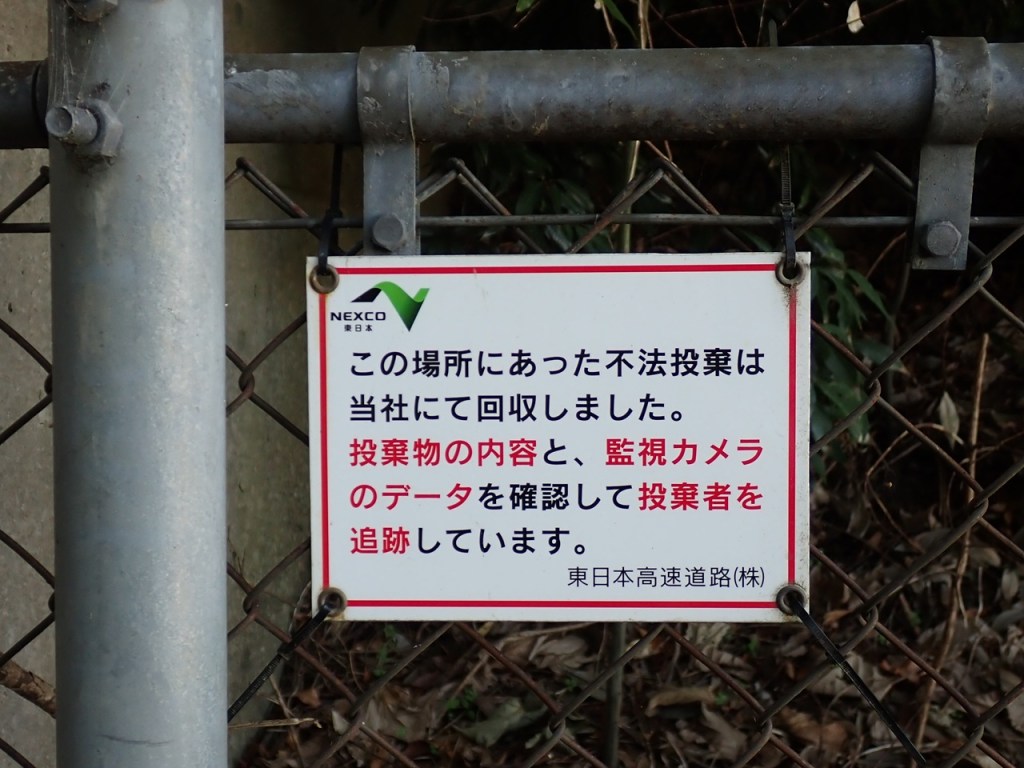
There is a board on the fence at the border of expressway area. It reads; The expressway company collected illegally disposed trashes here. confirming the trashes and the monitoring camera, the company is pursuing the suspects.
We learned yesterday an expression using combination of “Masu-form without ‘masu’” and “sugi mashita”. Using “Masu-form”, the expression was about verb, which describes that you did something too much. On the other, today’s expression uses I-adjectives or Na-adjectives. Both adjectives are placed in front of “sugi masu” in the form of the stem. The stem is part of a conjugation word that doesn’t change by conjugation.
[Conjugation Word] = [Stem] + [Inflection Ending] = [No Change] + [Changing part]
In the case of I-adjectives, the stem is a word head which “i” is eliminated from noun-modifying form and short ending form. In the case of Na-adjective, the stem is a word head which “na” is eliminated from noun-modifying form or “da” is eliminated from short ending form.
1. Kono Co’ohi’i wa Ko sugi masu. (This coffee is too strong.)
“Koi” is an adjective that means a liquid is thick. Taking “i” away from “Koi”, you get “Ko”, and it can be combined with “sugi masu” to be “Ko sugi masu”.
2. Kono Tesuto no Mondai wa Kantan sugi masu. (Questions in this examination are too easy.)
“Kantanna/Kantanda” is a Na-adjective that means easy. Its stem is “Kantan”.
————————————–
This post was written with reference to the exercise A1 of Section44 in “Minna no Nihongo (2nd Edition)” published by “3A Corporation”
If you drank alcohol too much, and hang over in the following day, what would you say in Japanese?
1. Kinou, Osake o Takusan Nomi mashita. (Yesterday I drank Sake a lot.)
But this sentence 1 says just it was a lot. Some people don’t get affected much by alcohol, but ordinary people get hang-over if the alcohol exceeds a proper amount. In order to express that you drank too much yesterday, and the amount of alcohol exceeded your proper level, you would say;
2. Kinou, Osake o Nomi sugi mashita. (Yesterday I drank too much.)
Comparing the sentences 1 and 2, you will find in the sentence 2, “sugi” came in between “Nomi” and “mashita”.
“sugi” is a verb (Sugiru/Sugimasu), which can be used on its own as below;
3. Yakusoku no Jikan wa Mou Sugi mashita. (The appointment time has already pasted.)
But in the sentence 2, “sugiru/sigimasu” is attached to “Masu-form without ‘masu’” of the verb “Nomu/Nomimasu” as if it was a kind of supplemental verb.
– [Verb in Masu-form without ‘masu’] + sugi mashita.
When it comes to “supplemental verbs”, we have already learned some of them that are combinations of Te-form of a verb and a supplemental verb like;
– [V-te] + iru, [V-te] + aru, [V-te] + oku, [V-te] + shimau, and so on
This time, we are learning combination words that consist of “Masu-form without ‘masu’” and a verb. There are some expressions of this kind of combination words as below;
– Tabe-masu + sugi mashita => Tabe sugi mashita. (ate too much)
– Tabe-masu + hajime mashita => Tabe hajime mashita. (started eating)
– Tabe-masu + owari mashita => Tabe owari mashita. (finished eating)
– Tabe-masu + tsuzuke mashita => Tabe tsuzuke mashita. (kept eating)
– Kagi i Kake-masu + wasure mashita => Kagi o Kake wasure mashita. (forgot to lock)
– Denwa o Kake-masu + naoshi mashita => Denwa o Kake naoshi mashita. (called again)
Learning six types at one time is too much. Let us concentrate on the first one “V+sugimashita” today. Here are some example sentences;
4. Kinou Renshuu de Hashiri sugi mashita. (I ran too much for practicing yesterday.)
5. Netto-ge’emo o Yari sugi mashita. (I played on-line games too much.)
6. Ko’ohi’i ni Satou o Ire sugi mashita. (I poured too much sugar into coffee.)
————————————–
This post was written with reference to the exercise A1 of Section44 in “Minna no Nihongo (2nd Edition)” published by “3A Corporation”
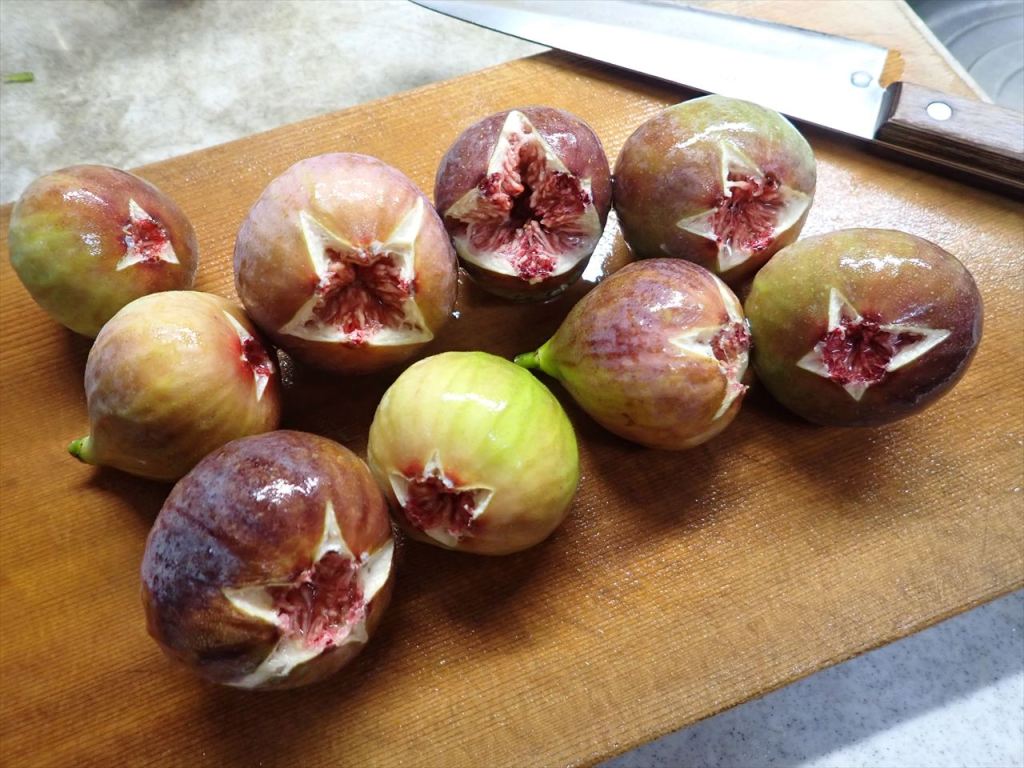
Figs need to be processed quickly because the fruits get worse soon. Though I wanted to go to the bed early, I started cooking after dish washing.
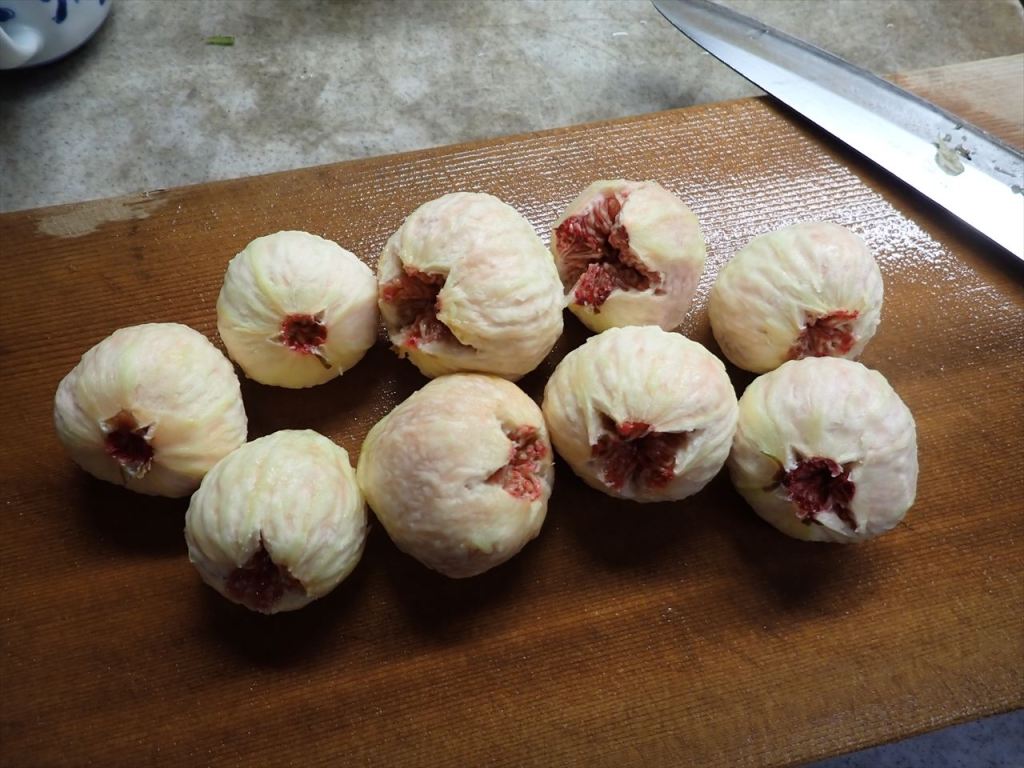
When you cook fig compote, you don’t need to peel off. But I think it is better to peel off when making jams. If a fig is ripen, it is easy to peel it off.
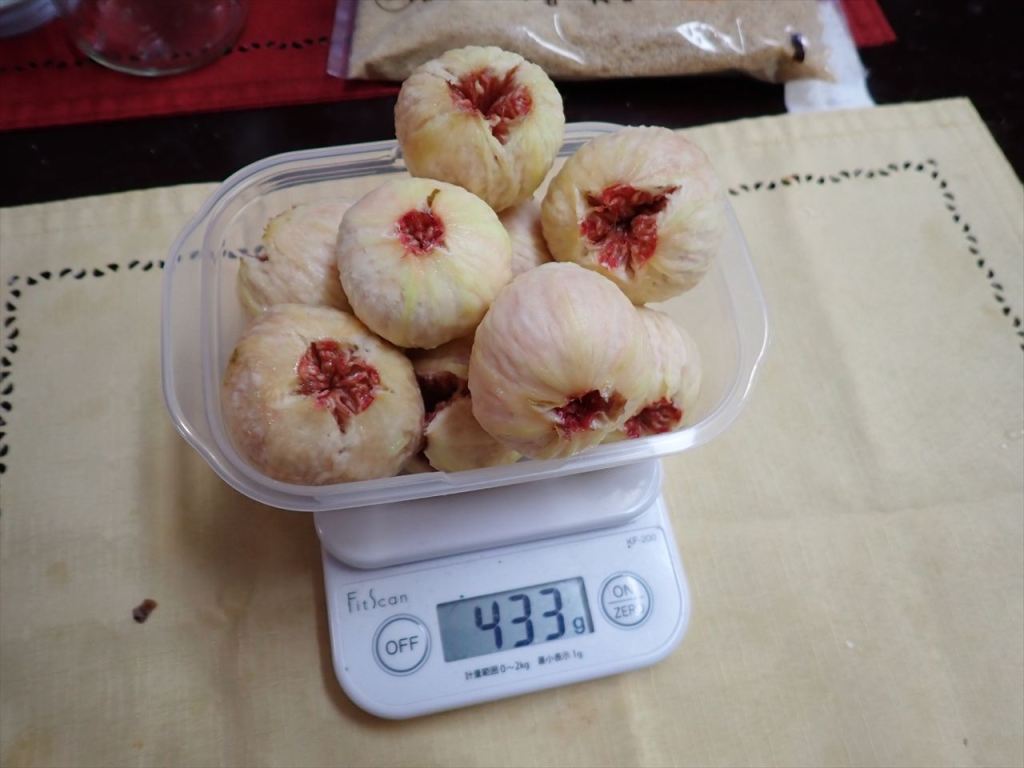
The weight of Figs was 433 grams.
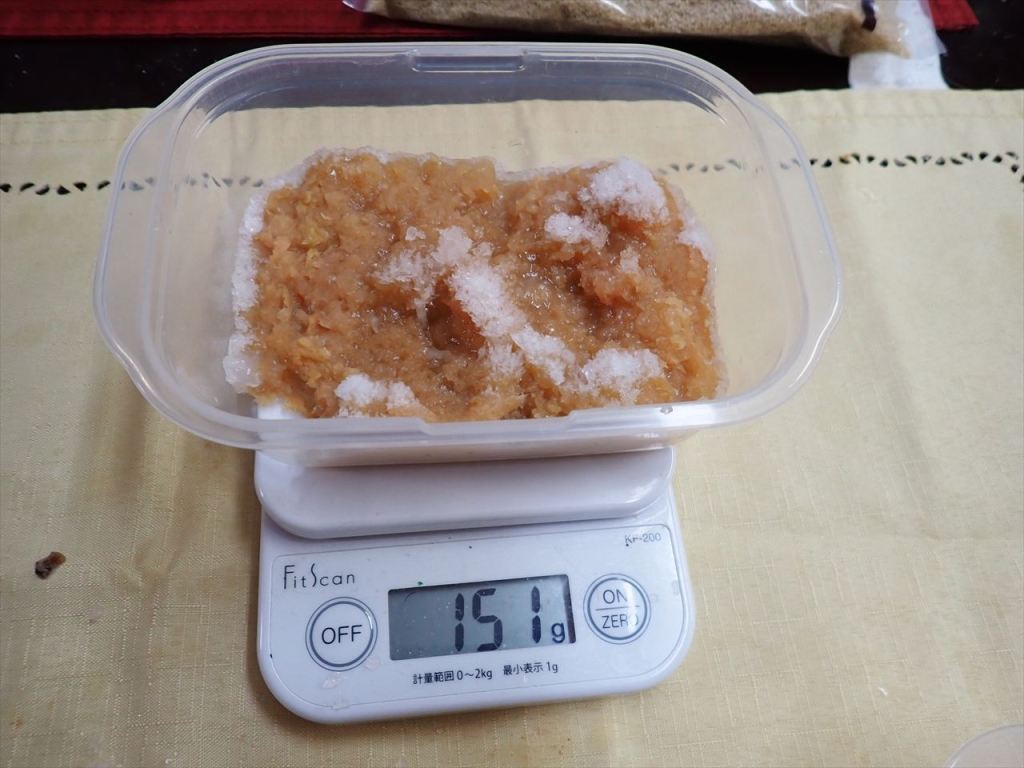
There was a leftover when I made apple jam a little while ago. Its weight was 151 grams. I mixed them with figs because I expected an effect of pectin of apple.
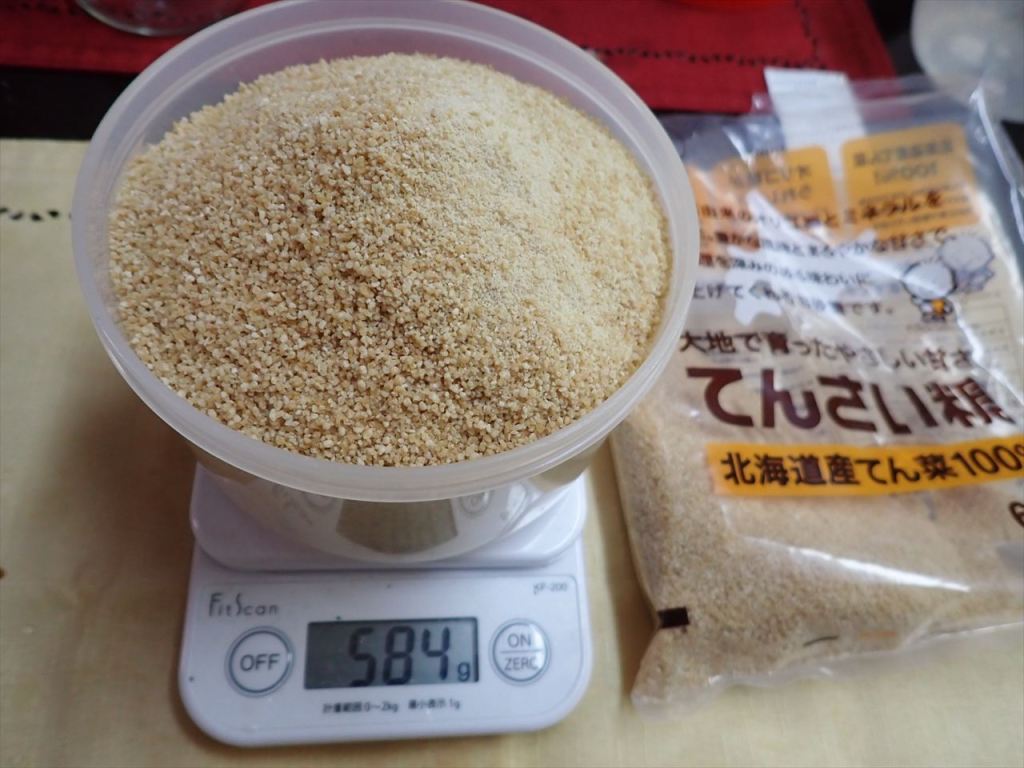
I usually use sugar of 50 percent weight of fruits when I cook jam. Probably 50 percent is a bit large portion when Japanese make a jam. But I am expecting the effect of sugar as preservative, though I am not sure the percentage is best for my purpose.
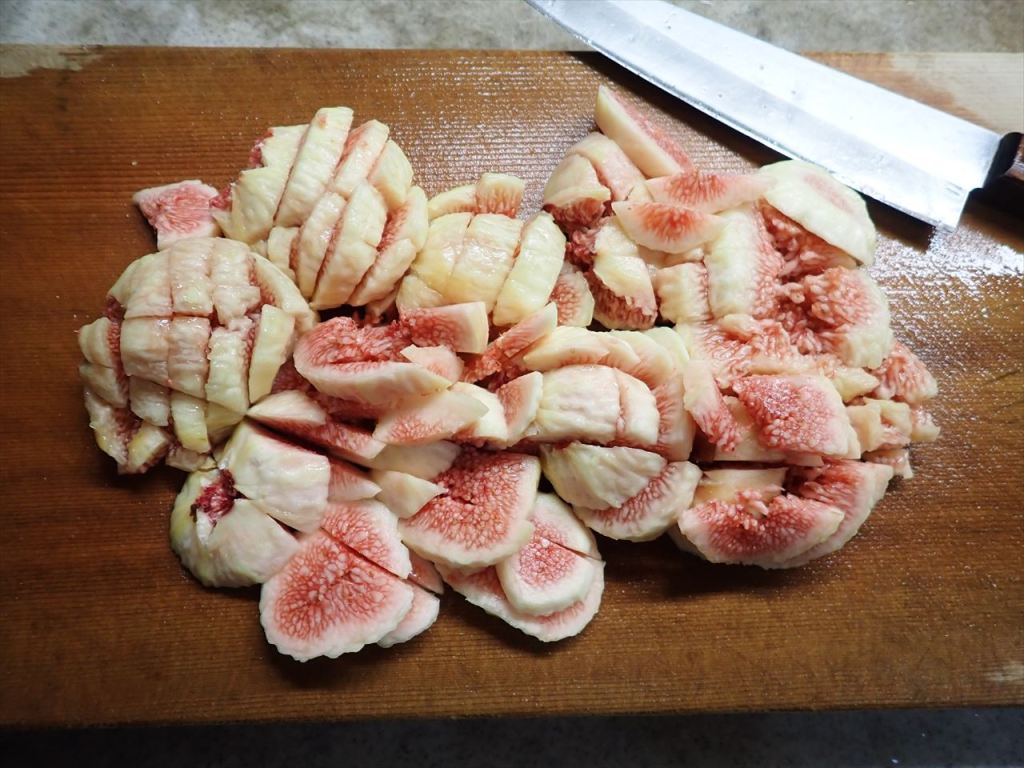
I chopped figs so that the jam would be a smooth one.
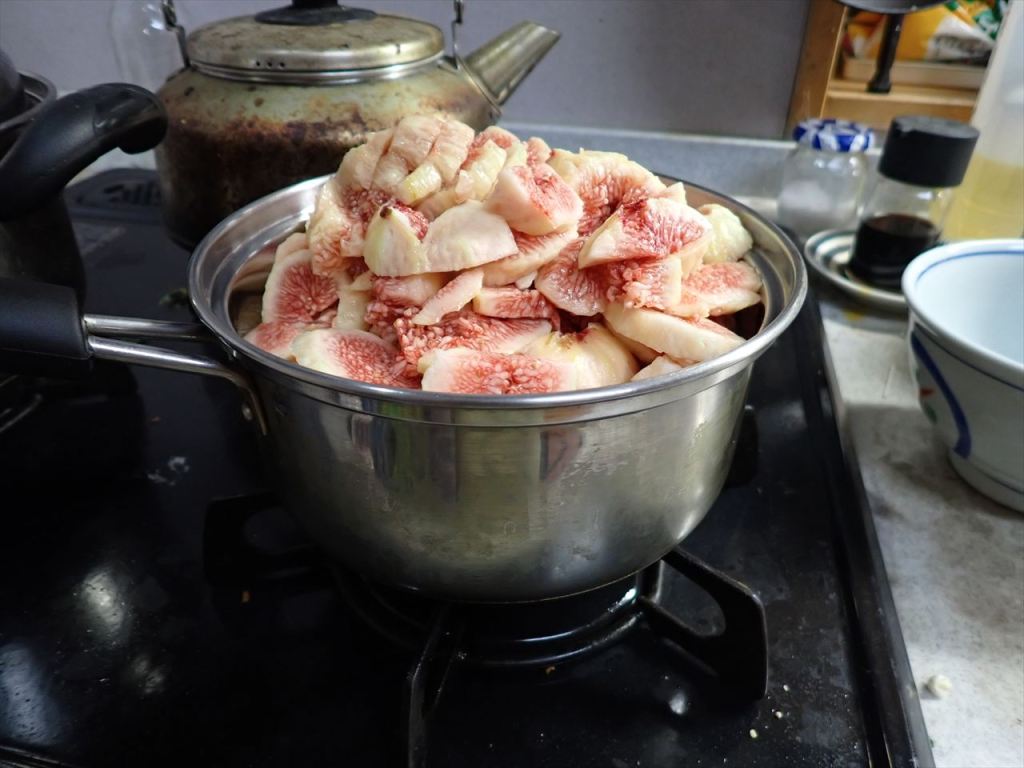
I put apple paste, beet sugar, and chopped fig into a pot. Oops! Too much for this pot!
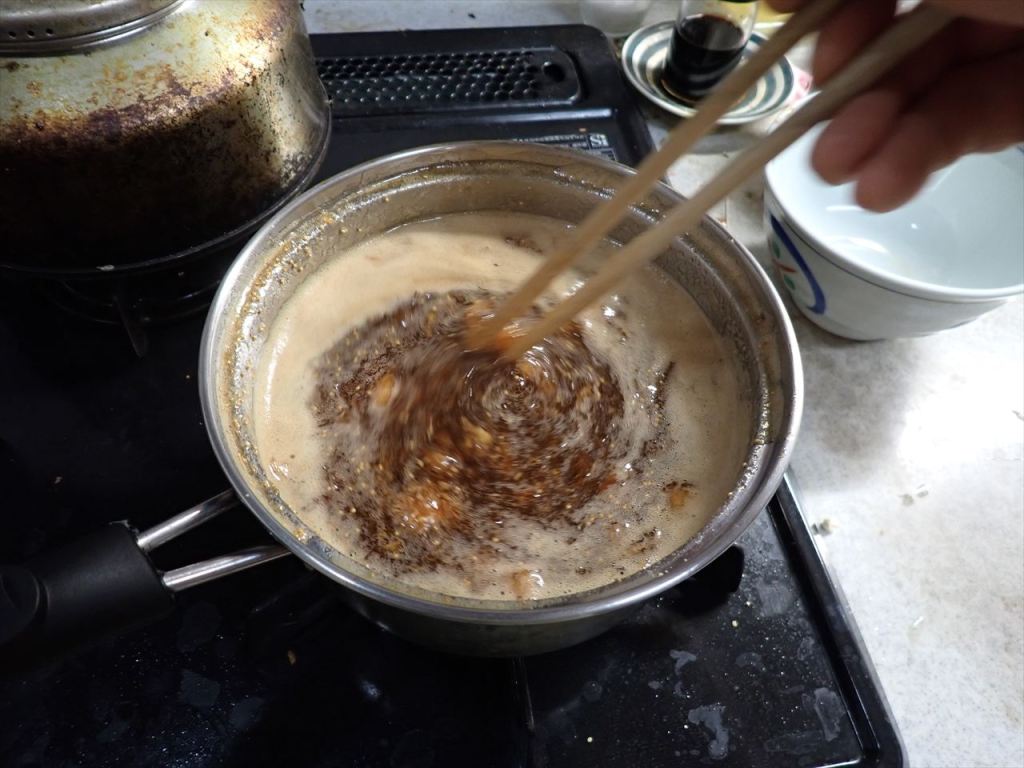
Heating with gas fire, I stirred for fifteen minutes.
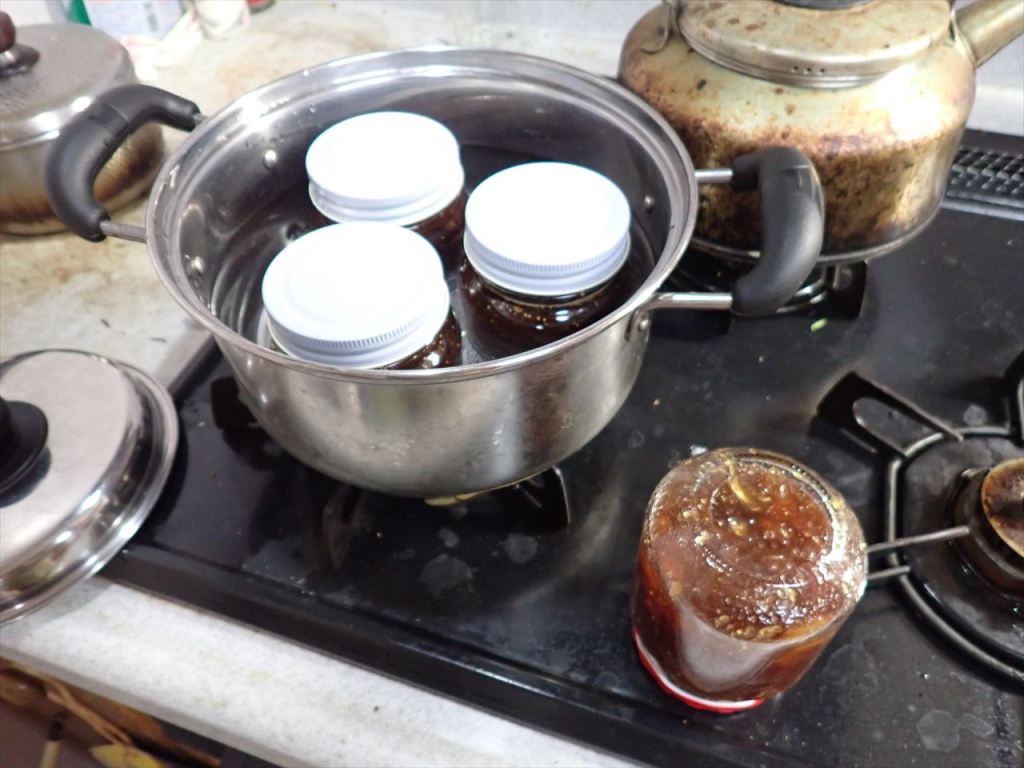
I tighten the lid of one bottle while the jam was hot. For other three, I loosely put the lids on the bottles and boiled them in a big pot. Having boiled for ten minutes, I took them out and tightened the lid with gloves.
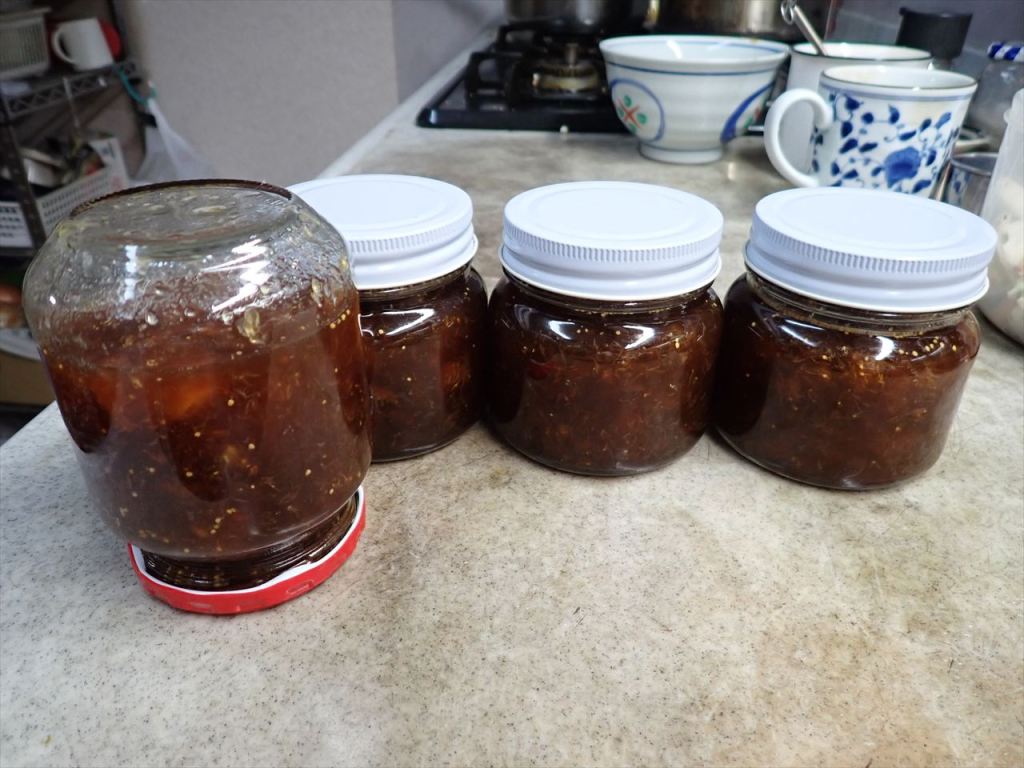
Okay, I got four bottles of fig jam.
There are two types of expressions that use “[V-te]+kuru/kimasu”, although it is usually “kimashita” for the second one;
(1) [V-te] + kimasu(来ます)
“kuru/kimasu” in this one means a physical movement, and usually the kanji(来) is used. The speaker takes an action described by [V-te], and then will come here.
1. Chotto Toire ni Itte Ki masu. (I am going to the restroom a while, and then coming back.)
(2) [V-te] + kimashita(きました)
“Kimashita” in this one means a change over time, usually change from past to present. And “Kimashita” is written in Hiragana.
2. Chichi no Kami ga Shiroku Natte Ki mashita. (My dad’s hair has come to be white.)
Since this is an expression of intermediate level, this post doesn’t deal with it much.
The exercise A3 of the section 43 in Minna no Nihongo is about (1). The following is example sentences of (1).
3. Chotto Ryou de Sato-san no Yousu o Mite Kimasu. (I am going to see how Sato-san is in the dormitory (and then coming back).)
4. Chotto Ie no Tojimari o Kakunin-shite Kimasu. (I am going for checking whether or not the doors are locked in my house (and then coming back).)
————————————–
This post was written with reference to the exercise A3 of Section43 in “Minna no Nihongo (2nd Edition)” published by “3A Corporation”

