I am a native Japanese speaker who used to teach Japanese in a university somewhere on this planet. Currently I don't work but stayed in my house in Northern part of JAPAN. I hope that you could enjoy reading my posts and know what life in Japan is like.
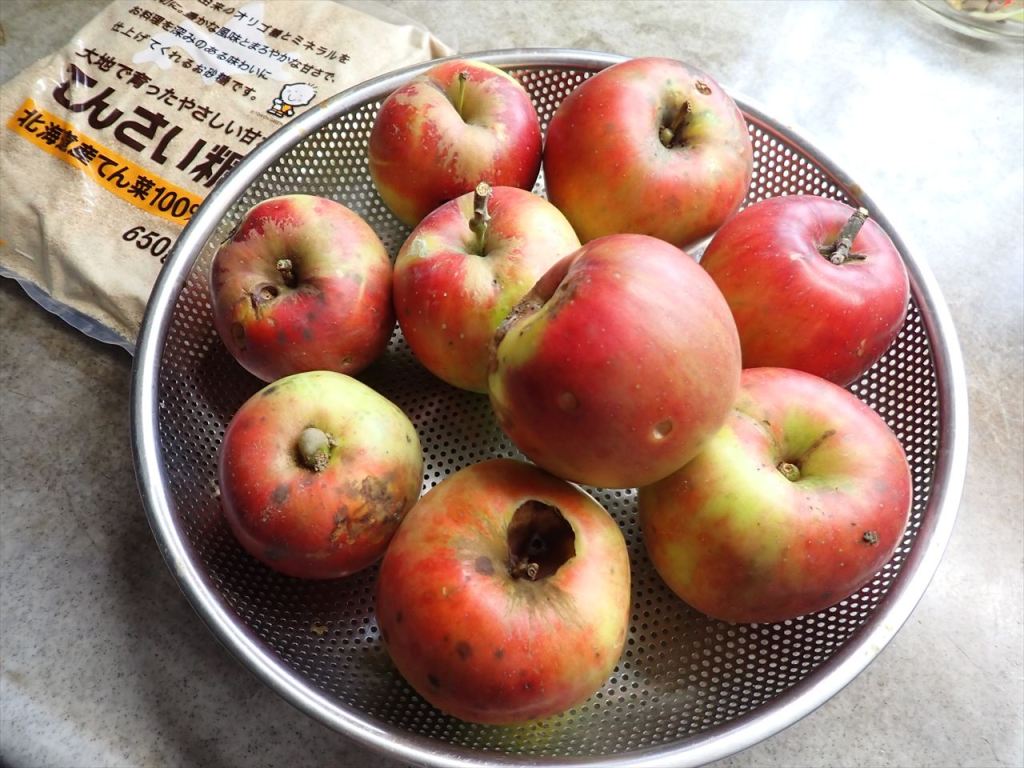
Since Jonathan is a sour apple, if I got them early, it could have been too sour. Therefore, I have just kept them hanging on the tree. Then some of them fell onto the ground, and some were eaten by worms and insects. I picked up them yesterday, and made them jam today. I used not cane sugar but beet sugar this time.
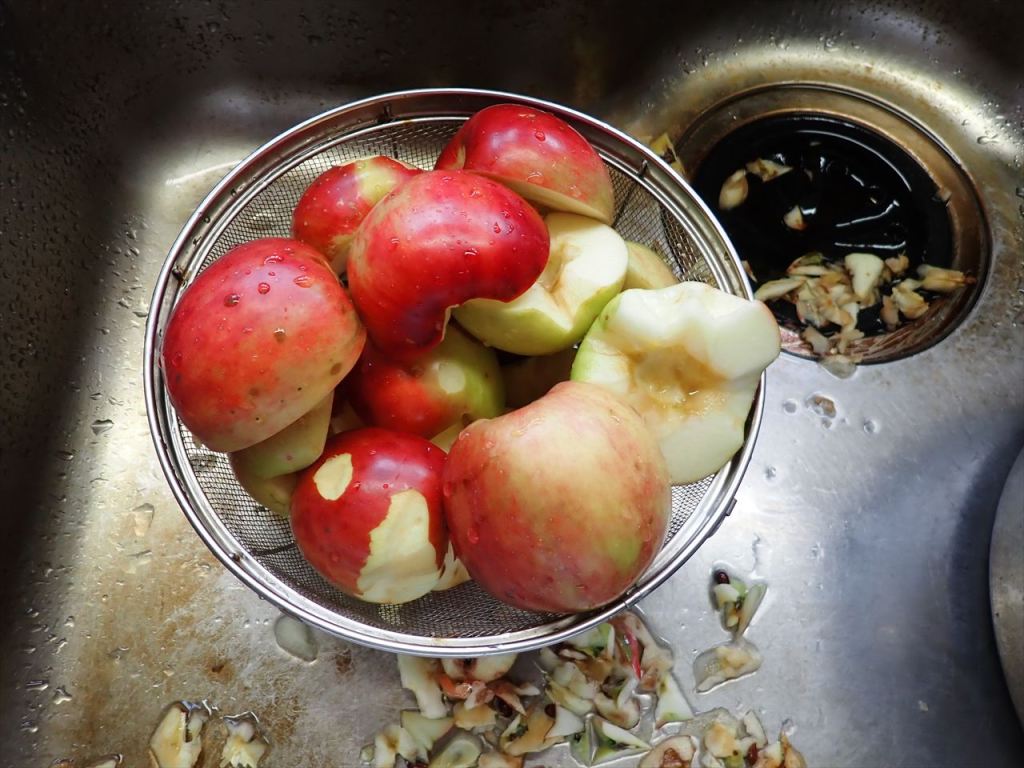
In reality, there is a lot of insects’ excrement. I got rid of them carefully.
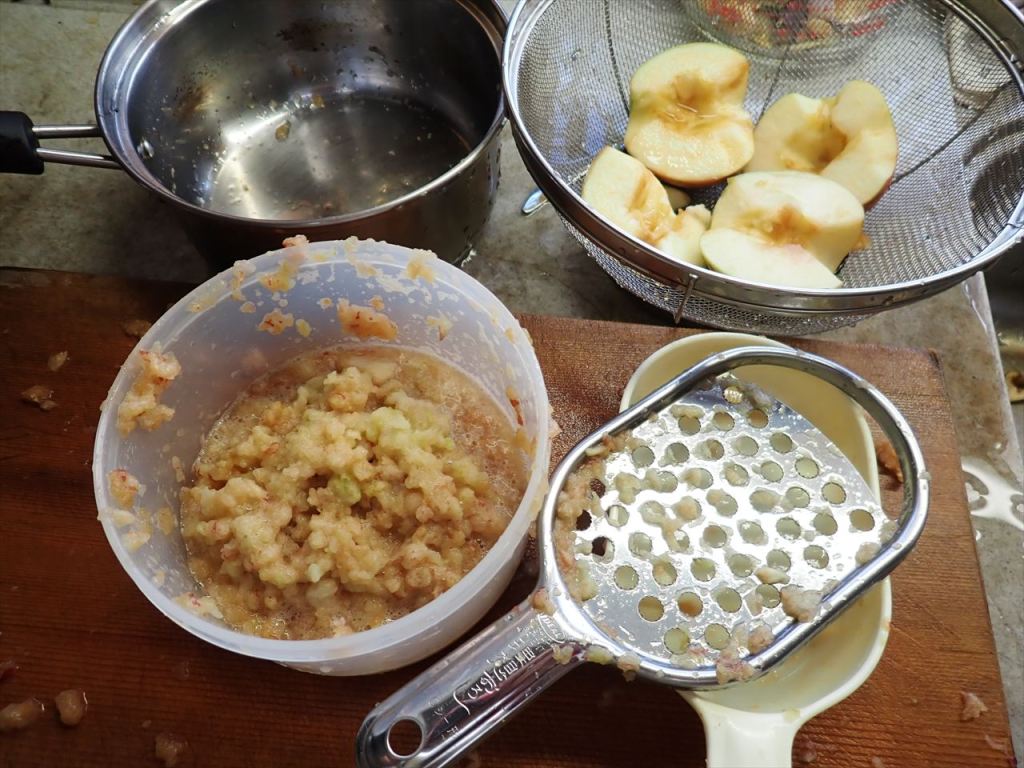
I grated the apple. Thinking about the amount of sugar I had, I just stop grating when I got 1 kilogram of grated apple.
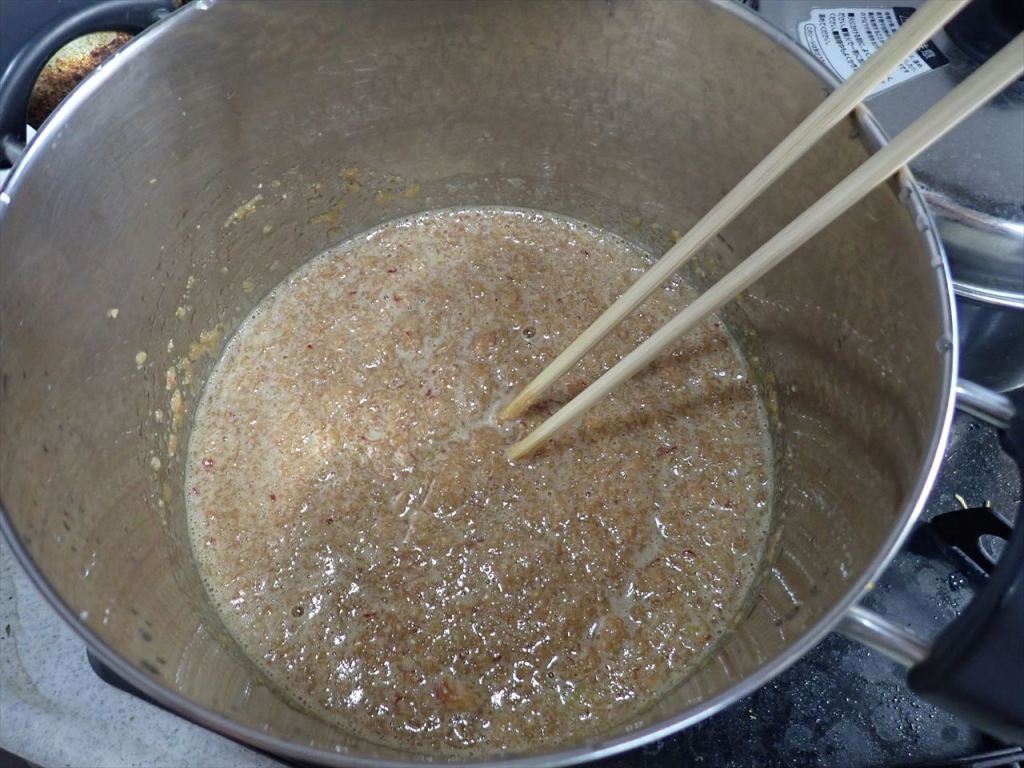
The pan was a little big, but anyway, I boiled 1kg(=1000g) of apple with 800g of beet sugar.
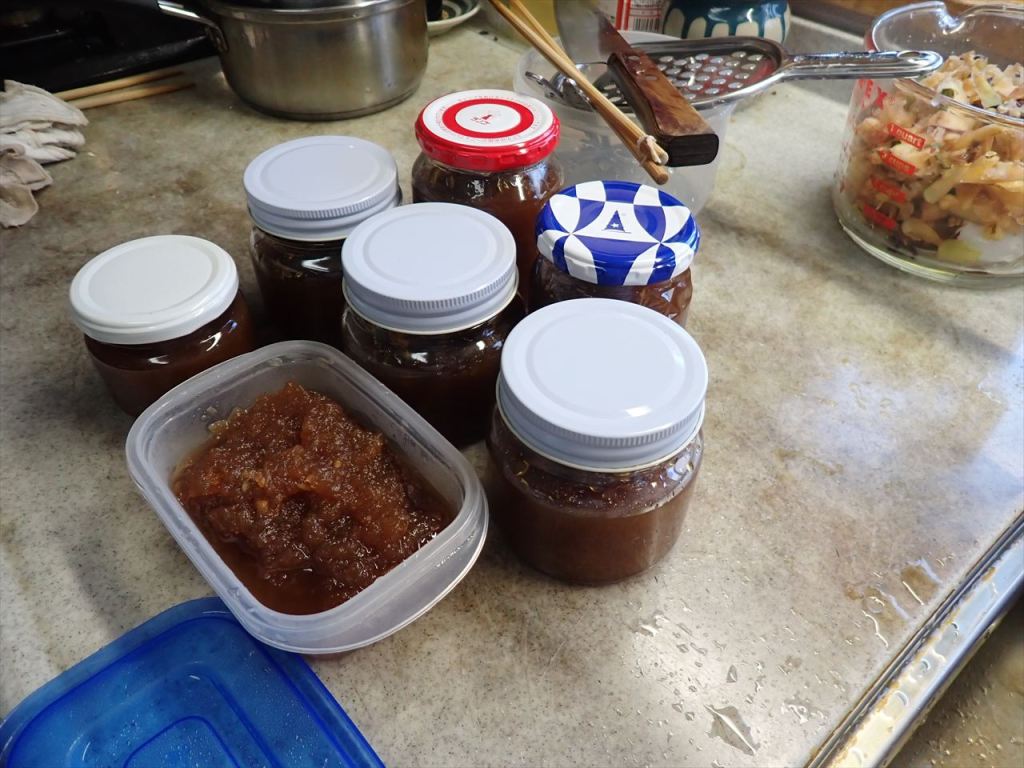
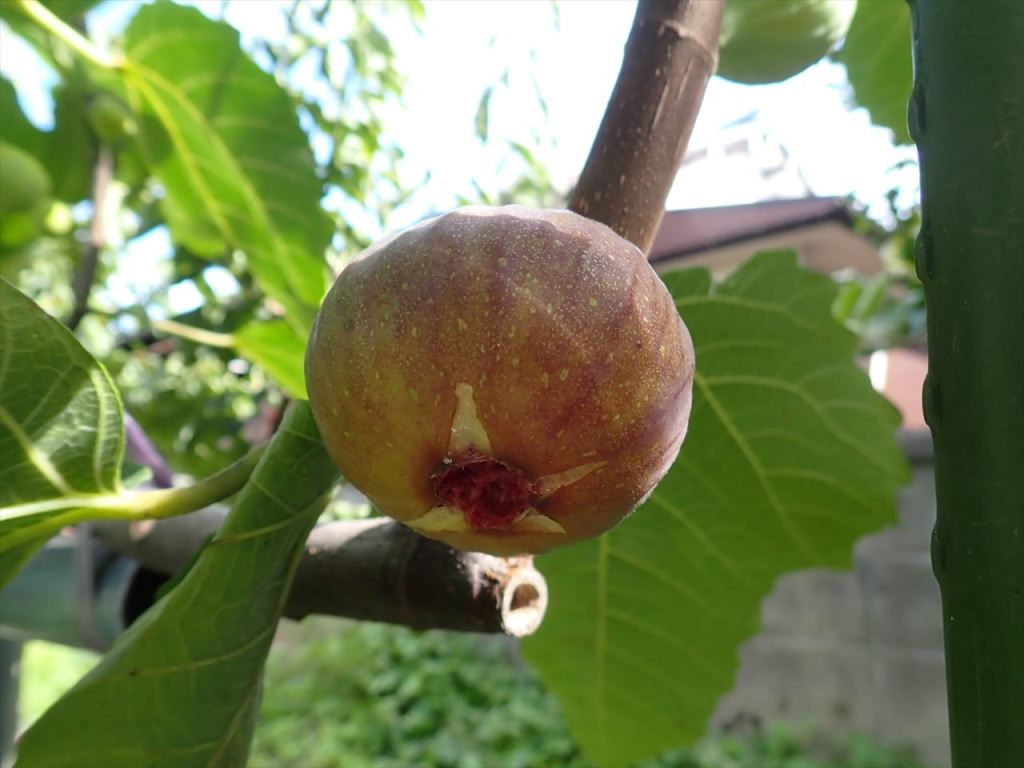
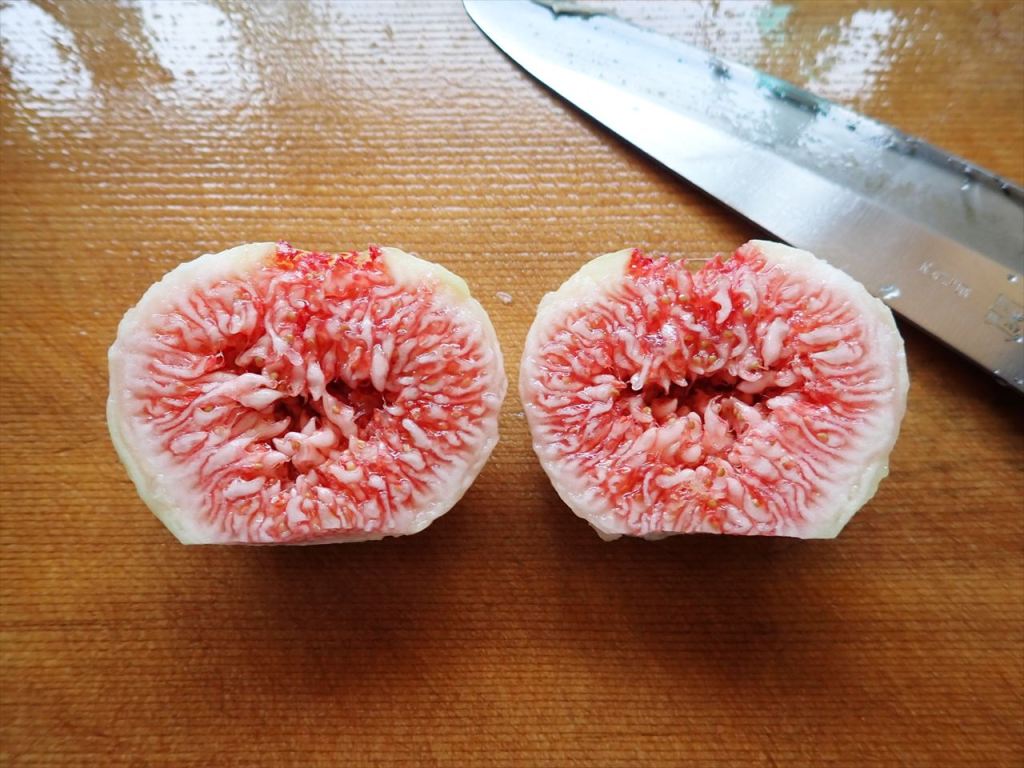
I got six bottles and more of apple jam. When I harvest fig in October, then I will make fig jam. I hope that I won’t need to buy any jam from the supermarket until spring, by pasting these my handmade jam on toast in breakfast.
I have recently planted many seeds of vegetables. This post is a kind of the record.
The onion “Neo Earth” is a specie that can be kept for so many months after the harvest. But I planted their seeds onto a less-prepared space. Though I wanted at least 100 seedlings, it seemed I would not be able to get enough numbers of seedlings.
So I planted seeds of another onion by the side of carrot. This specie cannot be kept for so long as “Neo Earth”, but can be harvested a little earlier. Actually, I wanted to get seeds of an onion that could be harvested much earlier than “Neo Earth”. But it was a tiny flower shop where I tried buying another type onion. There were only two species of onions, and this one “Marie” is not-early, not-late, but a middle harvest type.
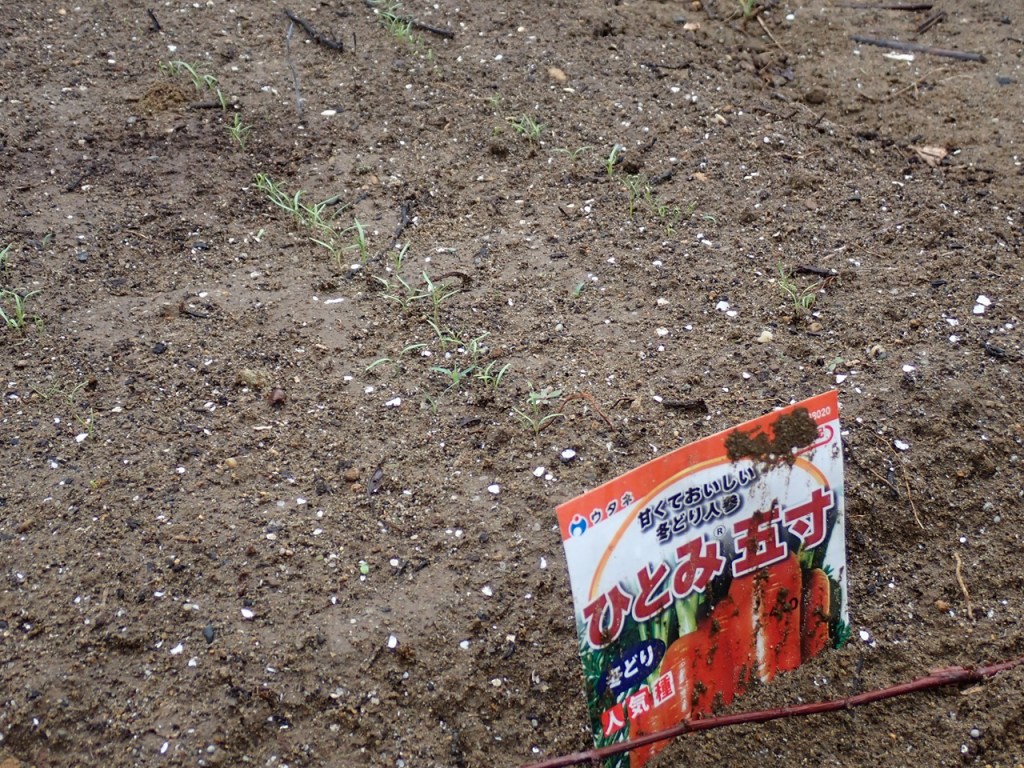
These are carrots. This one is to plant in the summer and to harvest in winter. I think now it’s the time to pull some of them to reduce the number of them.
This is a leafy vegetable. Since I planted the seeds too much densely, I will waste much of them. As they grow, I will pick some of them and put them into Miso-soup.
This is Daikon. I planted four or five seeds at one place. And this morning I reduced the number of buds to make them three in one place.
They are Daikon whose core become red. It seems that they were also planted densely too much. Actually, they were seeds of last year. I thought that the germination percentage should have downed so that it would be better to plant more, and I wanted to plant all the seeds in order not for them to remain for the next year.
It reads on top yellow part with red characters, “Otameshi Pakku” that means “small portion for trial”. So, of course it was reasonable price but I felt that the number of seeds was not enough.
I don’t feel I have enough energy to write a post for Japanese learning tonight.
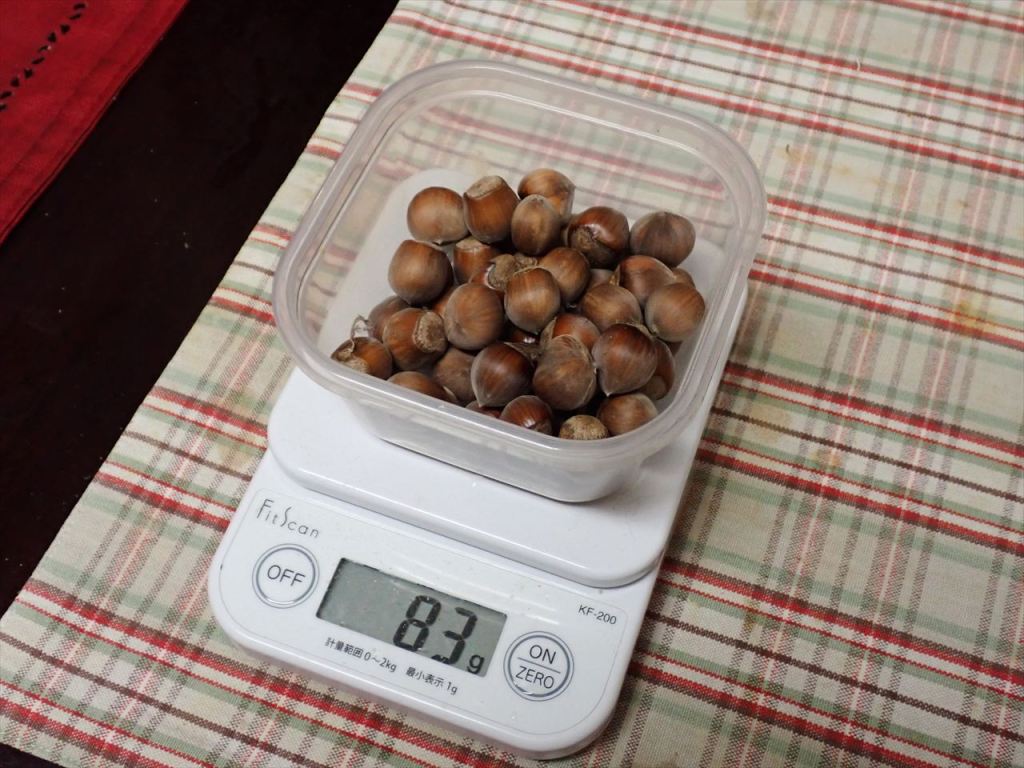
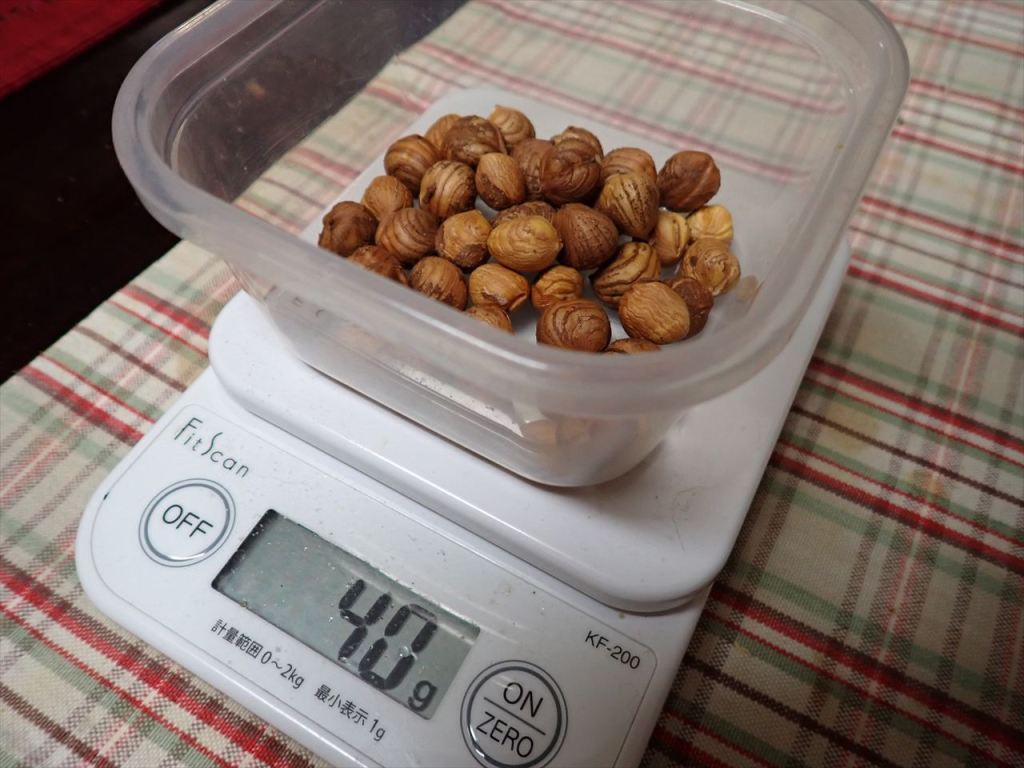
Their weight with shells was 83 gram. Of course the weight of the plastic container is excluded.
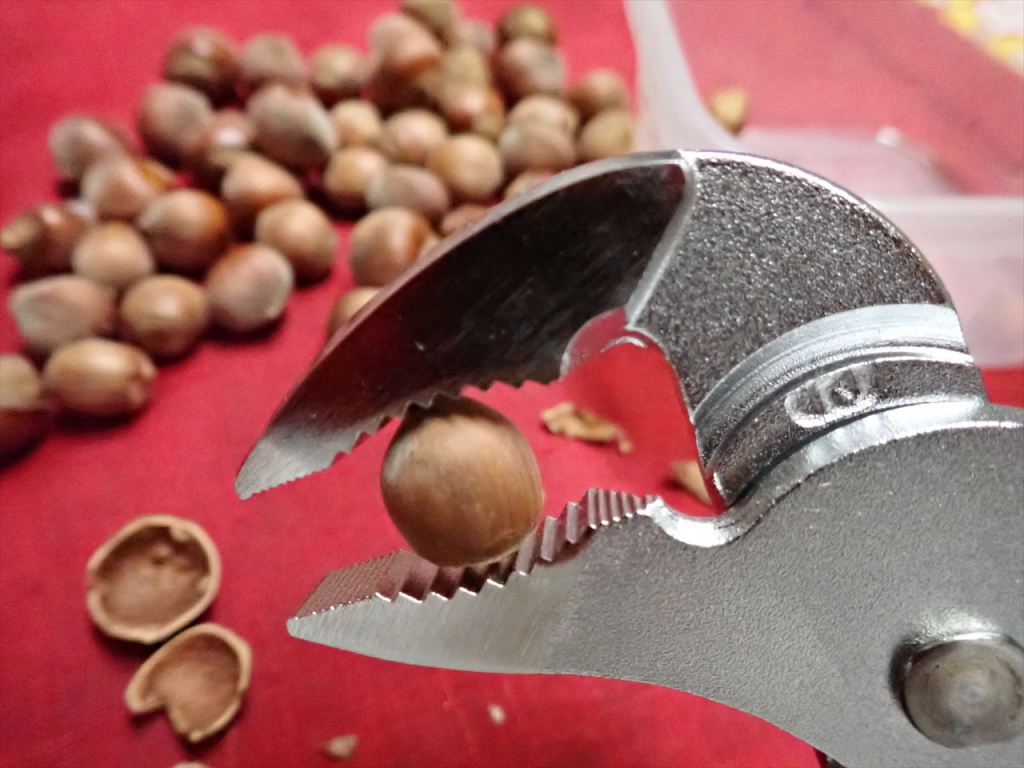
I used a “water pump pliers” to break the shells.
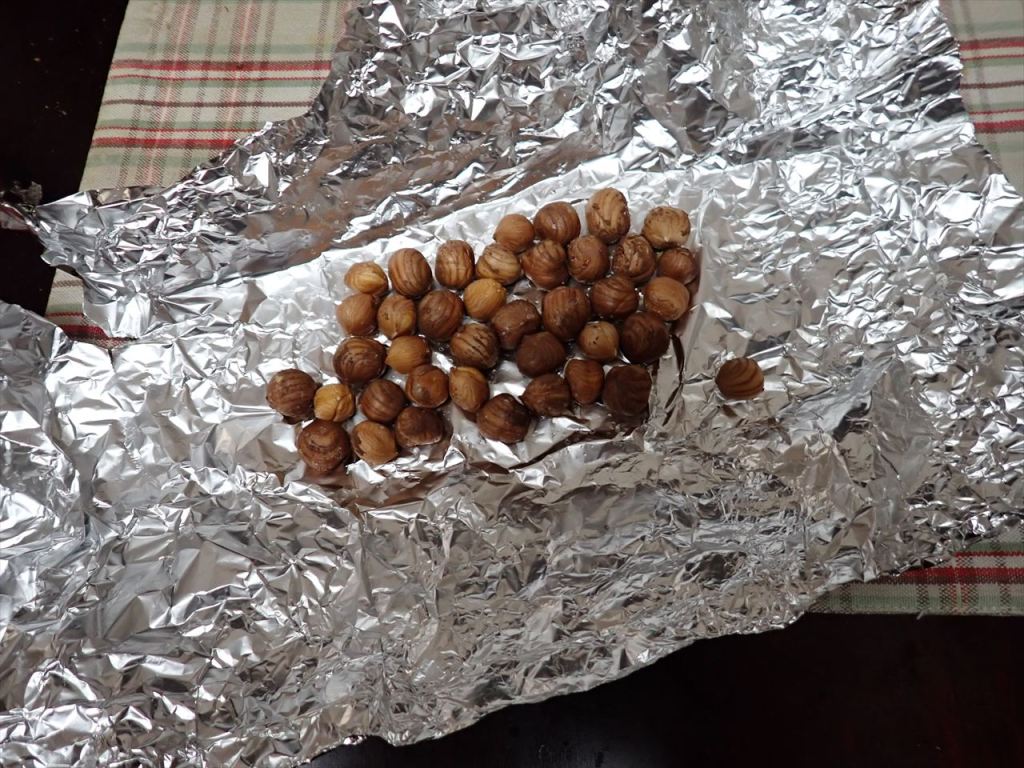
Some were rotten inside, some ran into the air, I got 40 gram of Hazelnuts without shells.
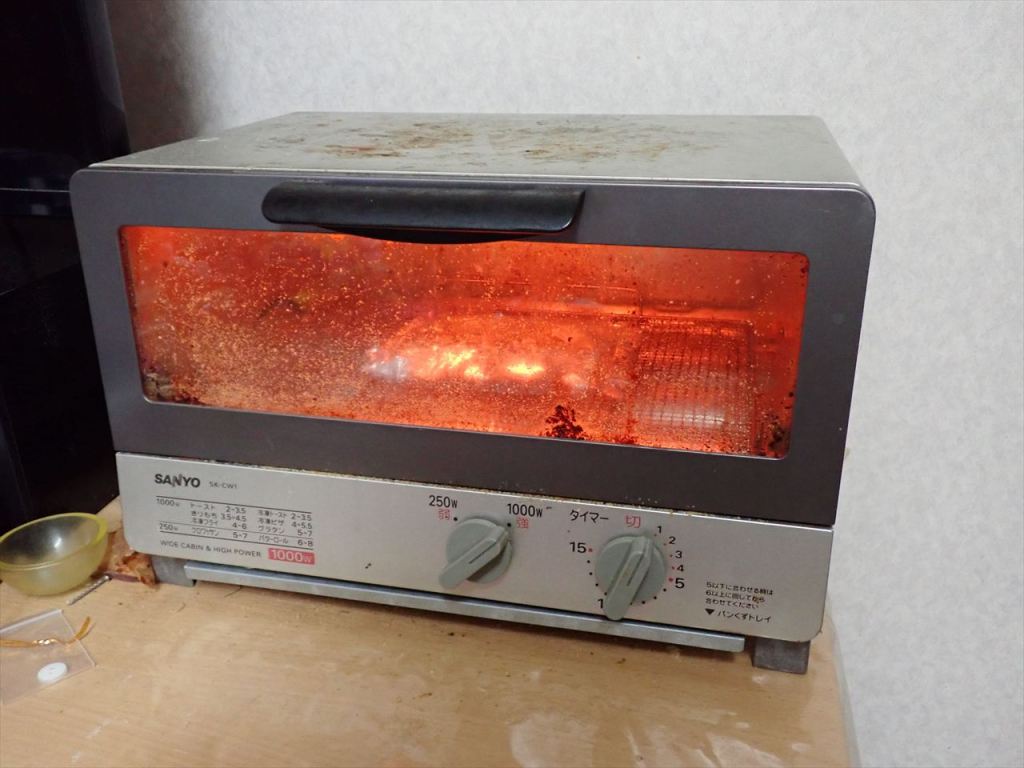
I roasted them Four minutes by an electric oven toaster.
To be honest, neither their taste nor quality of roasting were good. Since they were what I could get this year, I hope I will be able to harvest more next year. And roasting procedure needs to be improved.
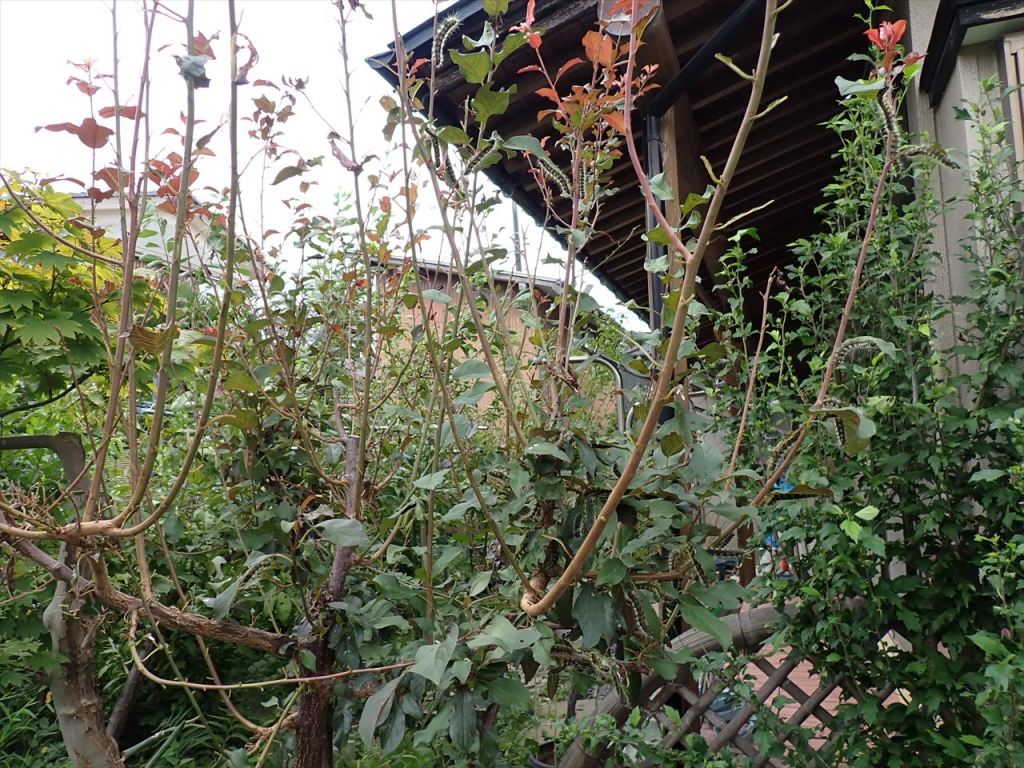
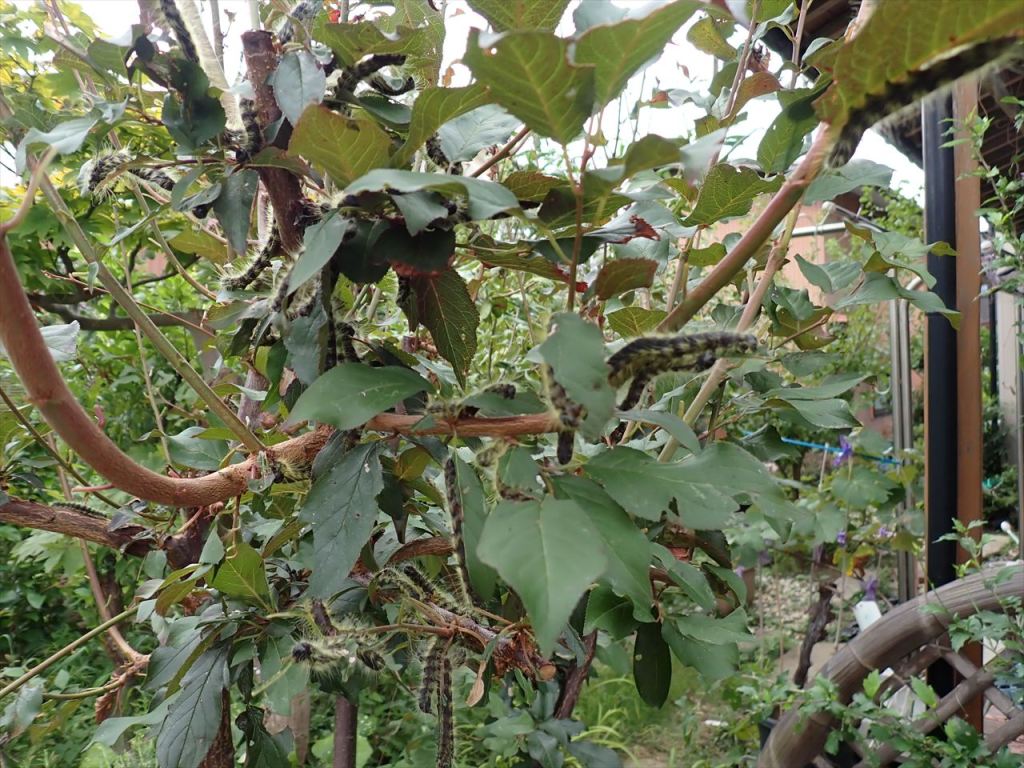
The tree was “Hollywood” which I planted for pollification to the plum “Soldam”. I don’t expect much about Hollywood to have fruits, but to have flowers so that Soldam would be able to have fruits. One thing that is impressive about Hollywood is its color of leaves. It’s dark purple. I planted that tree in the entrance of my field.
But today in the morning, I found that a lot of worms were eating the leaves. Everyday I walk through by the tree. But it is wondering I haven’t noticed until the situation has gone that worse.
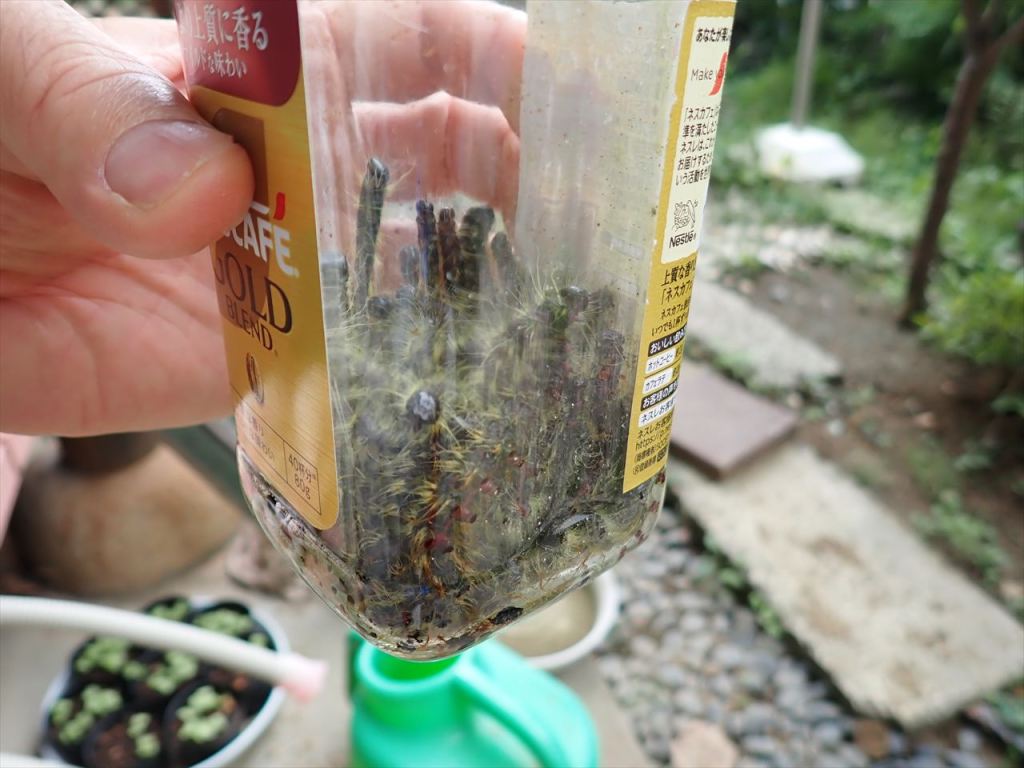
I picked them one by one with disposable chop sticks, and put them into a grass bottle of “Ne##afe”. And then I poured pesticide into the bottle and put the lid. They were moving, but some minutes later, – – – – – – – – –







 Agony or Fun?! Second Language Learning