Online Teaching for Class 1837 (Composition) on May 15, 2020

Date: May 15th on Friday, 2020 from 8:00 to 9:30 (9:00 – 10:30 in JST)

Course: Japanese Basic Composition 2

Used app: Streaming on DingTalk, Presentation by Powerpoint with 61 slides

Numbers of Students: 25 out of 28

90 minutes attendance: 21 students

Shorter attendances: 33, 14, 11, and 3 minutes.

completely absent: 3 students

Responses to my requests like Quiz answers onto BBS:

Attendance check: 26. One student sent the message of his?her attendance, but the system recorded that student as “Completely Absent”.

Quiz was done in other way. So far I have asked the students to input their quiz answer onto BBS. This gives me a quick response, but has a deficit that most of the students are just looking at other students’ answer at the top and inputting the same answer. In order to reduce chances to refer to other students’ answers, I made them answer on a sheet of paper during the class and made them send the answers immediately after the class.

Teaching:

– Basically the teaching was the same as another composition class on Tuesday for the class 1836. Several slides were added to help the student understand better.

– Review and explanations for two questions of 5-question quiz in the last class (it was the same as on Tuesday).

-1: Particle “-o” should not be used for the intransitive verb “Naru” .

-2: There is a difference between “V-te ita” and “V-te kita” in terms of tense-aspect.

– Writing a paper

The student were asked to start a new task to write with good formatting as a document. The topic was sightseeing of a particular prefecture in Japan. Students were asked to write a paper with internet research and to make a suggestion for the better sightseeing services of the prefecture. Each student chose his/her prefecture in the class.

– Learning using the textbook.

Explanations and exercises as to how to use particle “-ni” and other issues like the difference between “-made” and “-demo”.

Homework:

– The students were asked modifying the template for the paper by filling the chapter titles of our task.

Issues and Problems:

During the class, approximately the half of the students chose a prefecture that they wanted to write about. But 10 students were remaining undecided. Actually this class 1837 has got a big problem with part of students. Their attendance is bad, and they are reluctant to hard studying. In order to make those students choose their prefecture to write about, I had to send messages.  Some have replied t me, some not.

Afternoon Walk under Strong Sunshine in Niigata, JAPAN.

I don’t have any online class on Thursday. However, I know that I have to work through the night today because there are two classes tomorrow. I felt I had to exercise my body, so I took a walk again.

00447

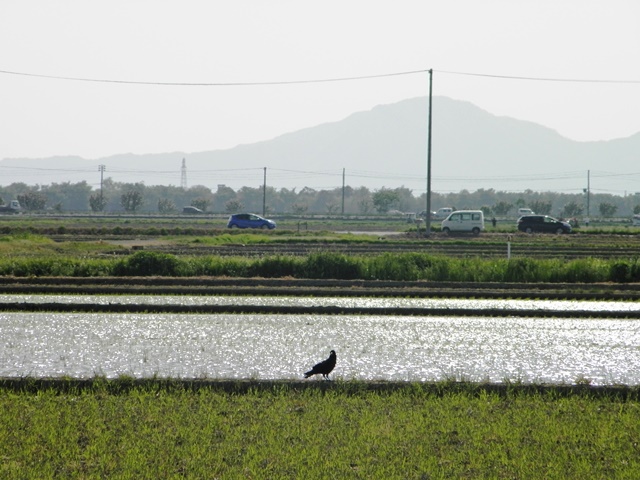
Rice had been already planted in the paddy fields around here.


00453

I wish that this small rice seedlings grow and survive. When autumn comes, it will turn to be golden and bring us a rich harvest.


00448

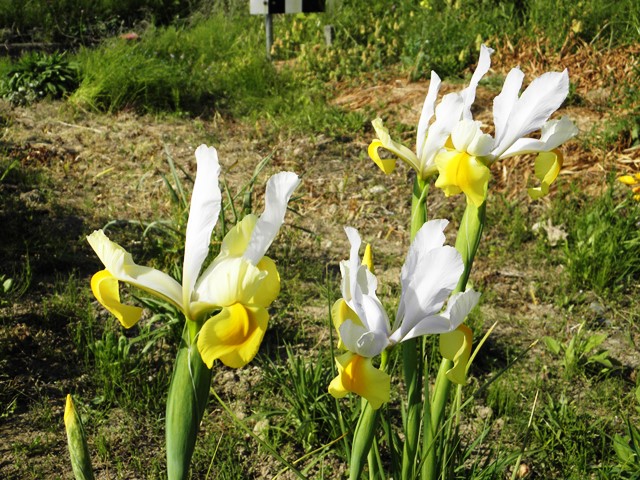
There are not many flowers in my house, so this was the chance to take a photo of flowers. This orange one is a popular spring flower in Japan.


00449

I don’t know much about this type of flower. Is this a German Iris or something?


00450

I think this is a kind of chrysanthemum. And the word chrysanthemum always needs auto-spellcheck.


00451

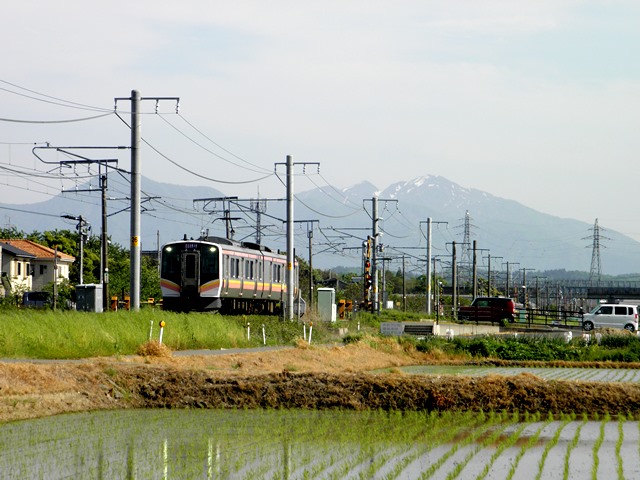
Let me tell ya. I am not a railway geek. I believe that being a railway geek surely ruins boy’s fortune. A boy should never be a railway geek. (Perhaps reiterating it makes a reader suspicious of me, though)


00452

Again. I have to pay more attention to a utility pole. When I took this photo, I should have avoided coinciding of the utility pole and the peak of the mountain behind.

Tomato and Egg Plants in the Garden on May 12th

These days I work through the night several times a week. I don’t like TV says “tele-working” is new normal and “Online education” is wonderful, this and that. I would say it is too hard for me to spend day to day because I have to make three hundred PowerPoint slides a week. I can’t go outside. Even I cannot find a time to go shopping in the nearby supermarket located in the place of 10 minutes walk from the house. Actually I could not take a bath for several days because I worry I may fall or get a heart attack in the bath. My fun these days is just to look at the garden and take a photo.


00440

Because I have to work very hard for online teaching kind of things, I do not have time to manage the garden. So I asked a neighbor to plant something on the garden. He and his friend planted some vegetables already.  The photo is a tomato. The card on the ground says that this is Tomato that is easy to grow.


00441

Yellow flowers of tomato.


00442

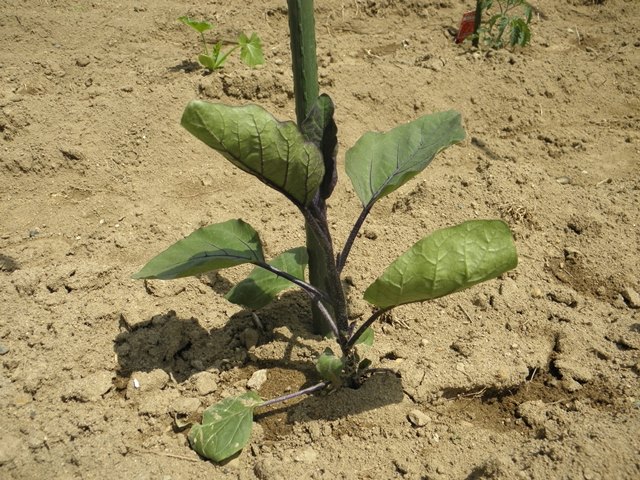
He planted egg plants.


00443

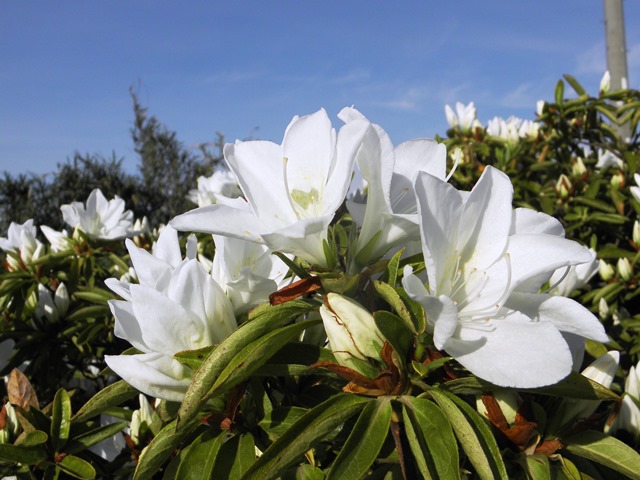
The fruits of peach are too many. I have to reduce the number of fruits for better harvest. And comes below are Azalea flowers in the garden.

00444

00445

00446

Azalea flowers last short. When they are gone, the garden will have little flowers. If I had a time, I would like to plant many flowers to make the garden colorful and beautiful. But it is sure that the online education kind of things prevents me from doing so.

Online Teaching for Class 1939 (Listening) on May 13, 2020

Date: May 13th on Wednesday, 2020 from 8:00 to 9:30 (9:00 – 10:30 in JST)

Course: Japanese Listening 2

Used app: Streaming on DingTalk, Presentation by Powerpoint with 66 slides

Numbers of Students: 27

Every student stayed with me from the start to the end.

Students’ Responses:

– Attendance Check : All of the 27 students typed his/her attendance on BBS.

– Quiz 1 : 26 students answered.The question asked the relation between “Naze” in the question and “-karadesu” in the answer which seems to have similarity with English’s “Why?- Because”.

– Quiz 2: 26 students answered.The question was to distinguish the function of a noun “tokoro” that can mean just before, ongoing, and right after

– Quiz 3: 26 students answered. Question was about a noun “koto”. The students were asked to choose one sentence from four, in which “koto” meant a decision by the one’s will.

– Quiz at the End: 26 students typed their own sentences that meant like “A person can d osomething”(of course in Japanese) .

Teaching:

1: Basics of Japanese grammar

– Intransitive verb predicate sentences and particles used in such sentences.

– Wa-ga construction for existence focusing on relations between the topic “wa” that contains and the subject “ga ” that is contained; in other words, “wa” for the entire and “ga” for a part. The students not only over-generalize “Wa-ga construction”, but also reversely place the entire thing and a part in the wa-ga construction. Also a caution was given to the students. the subject is unclear in a “Wa-ga construction” because it has the topic and the subject. It is better to use another construction that has a clear subject in order to make a sentence to say an existence of a thing and matter.

2: Review of grammar in the last class

– The section 18 of the textbook that contains some expressions using “V-te iru”.

3: Introduction to the section 19 of the textbook

– Functional nouns like koto, tsumori, and tokoro. Especially the expressions for capabilities were explained for both two types. One was that a person has potentiality to do something and the other was that the situation allows someone to do something.

– Exercise1 and 2 of the section 19 in the textbook.

Homework Assignment:

– No homework was assigned.

Issues and Problems:

– I used many PPT slides to make the students understand that there is a relationship of “contains – contained” in Wa-ga construction. “Contains” uses “-wa” as the topic and “Contained” uses “-ga” as the subject. But some students often place those words in reverse. It seems that, rather than teaching the same thing over and over and over again with a lot of repetitive PPT slides, I wonder that there might be a decisive way to make the students learn a correct use in just one time. If I repeat the same teachings again and again, but the students didn’t understand, it would be wasting the hours and it would mean that I am just damaging students’ opportunities to learn.

Online Teaching for Class 1836 (Composition) on May 12, 2020

Date: May 12th on Tuesday, 2020 from 15:30 to 17:00 (16:30 – 18:00 in JST)

Course: Japanese Basic Composition 2

Used app: Streaming on DingTalk, Presentation by Powerpoint with 59 slides

Numbers of Students: 28

22 students participated for whole 90 minutes.

5 students were recorded for their short attendances: 83, 86, 42, 33, and 20 minutes

1 student was completely absent today

Responses to my requests like Quiz answers onto BBS:

– Attendance check by reporting his/her-selves: 27. ( One sent a message to tell me his absence beforehand)

– 5 Quiz were given to the students during the class. Answers to the 5-quiz were sent to me right after the class. Quiz to be posted on BBS was not given today. 24 students sent the answers to me.

Teaching:

– Review and explanations for two questions of 5-question quiz in the last class.

-1: Particle “-o” should not be used for the intransitive verb “Naru”.

1st question of 5-q quiz was given for this issue. Still one student thought it was okay to use “-o” for the sentence of intransitive verb ” Naru”.

-2: There is a difference between “V-te ita” and “V-te kita” in terms of tense-aspect.

– A new task for the last half of the second semester

The student were asked to start a task to write with good formatting as a document. The topic was sightseeing of a particular prefecture in Japan. Students were asked to write a paper with internet research and to make a suggestion for the better sightseeing services of the prefecture. Each student chose his/her prefecture in the class.

– Learning using the textbook.

2nd question of 5-q quiz: Choosing the right combinations of particles. Over-generalization of “Wa-ga construction” is one issue. But there is another issue that even in the case that “Wa-ga construction” can be used, many students make error for uses of particles “wa” and “ga”. 10 students made this type of error.

< For time limitation, the rest of the teaching was suspended to be recorded here>

Homework:

– The students were asked modifying the template for the paper by filling the chapter titles of our task

Issues and Problems:

< No time to write now>

Online Teaching for Class 1939 (Listening) on May 11, 2020

Date: May 11th on Monday, 2020 from 9:50 to 11:20 (10:50 – 12:20 in JST)

Course: Japanese Listening 2

Used app: Streaming on DingTalk, Presentation by Powerpoint with 70 slides

Numbers of Students: 27

26 students stayed with me from the start to the end. One student was absent.

Students’ Responses:

– Attendance Check : 26 students typed his/her attendance by themselves on BBS.

– Quiz 1 : 25 students answered.The question was conversions from Masu-form to Te-form for four verbs. Some students tended to put the small “tsu” for 1-dan verbs, but it is not correct. Putting a small “tsu” happens on some types of 5-dan verbs, not 1-dan verbs.

– Quiz 2: 24 students answered.The question was  to choose the correct combination of four particles from the selections. Students typed wrong answer that came from over generalization of  “Wa-ga construction”. Many students are sticking to “Wa-ga construction” and make errors on particles by over-generalizing it. I stopped them and made them answer again.

– Quiz 2: 24 students answered. Question was about tense for past, present progressive, and non-past. All 23 were right. The purpose of this question is to make students understand the usage of “V-te iru” in the concept of tense-aspect.

– Quiz 3: 24 students answered. The question was to choose the right combination of a question and an answer. When a question was done with “Naze (why)”, the answer must have the ending “-karadesu.”. This seems like the relation between why and because. This quiz intended to make the students find the relation between “naze” and “karadesu”.

– Quiz at the End: 25 students typed their own sentences in the form of “V-te kudasai”.

Teaching:

1: Basics of Japanese grammar

– Verb predicate sentences end with “-masu”, which is different from the endings of Noun and Adjective predicate sentences.

– Do not over-generalize “Wa-ga construction” to verb predicate sentences especially for transitive verb sentences for action/movement. Use proper particle for a word’s function.

2: Review of grammar in the last class

– Introduction of Te-form, “V-te iru” for ongoing actions, and uses of particle “-de”.

3: Listening using textbook material

Homework Assignment:

– No homework was assigned.

Issues and Problems:

When the students were typing the wrong answer by over-generalizing “Wa-ga” construction, I stopped their inputting with shouting and made them input again. Since some students had not yet input, this forced redo could not be used for knowing the first reaction of a student. However, I expected that could be an effective action to make the students realize that they got an wrong answer.

Another issue was that  I was ill-prepared for the activities with textbook’s listening materials. Making the students listen to and simply showing the answer for it was not a good teaching style. I had been concentrating on making PPT slides that reflects my own ideas about damage by “Wa-da construction” or other issue. But I didn’t spend enough time to think how to use and teach the textbook materials effectively to the students.

Online Teaching for Class 1837 (Conversation) on May 11, 2020

Date: May 11th on Monday, 2020 from 8:00 to 9:30 (9:00 – 10:30 in JST)

Course: Japanese Conversation 4

Used app: Streaming on DingTalk, Presentation by Powerpoint with 58 slides

Numbers of Students: 26 out of 28, Number of completely absent was 2

Fully attendant for 90min : 14

Shorter signing-in: 85, 81, 80, 77, 49, 46, 32, 31, 28, 11, 5, and 4 minutes.

Responses onto the BBS:

– Attendance check by a student his/herself: 26. Of the 26, one student was actually recorded as completely absent from the class. One came late and stayed for 32 minutes.

– 1st Quiz: 23 students responded. The quiz was to find the best conditional conjunctive particle for a sentence stating an incident that had happened already. Some of the best students answered one that was not the best, and then many students followed it. At the point that two thirds students had input the same answer, one student typed the best one. And then remaining one third students input the (new) best answer.

– 2nd Quiz: 18 students responded. The question was to choose the better conditional conjunctive particle for a sentence of invitation. This is to make the students know realize that conjunctive particle “-to” cannot be used for will, suggestion, command, and so on.

– 3rd Quiz: 23 students responded. The question was to choose one nature which is applicable only to “-nara”. “Nara” cannot be used if the condition phrase is quite certain.

– Attendance check at the end: 20 students responded. This was to choose the best explanations for four conditional conjunctive particles “-to”, “-ba”, “-tara”, and “-nara”.

Teaching: 

– <No time to write them now>

Homework Assignment:

– Nothing to submit to the teacher this time.

– Six students were asked to send a voice mail by speaking the script of conversation of two part time job workers.

Issues and Problems:

A lot of grammatical thing to teach. It is too much for conversation class.

Online Teaching for Class 1836 (Composition) on May 9, 2020

Date: May 9th on Saturday, 2020 from 15:30 to 17:00 (16:30 – 18:00 in JST)

Course: Japanese Basic Composition 2

Used app: Streaming on DingTalk, Presentation by Powerpoint with 80 slides

Numbers of Students: 28

25 students participated for whole 90 minutes.

3 students were recorded for their short attendances: 57, 44, 32 minutes

Responses to my requests like Quiz answers onto BBS:

– Attendance check by reporting his/her-selves: 28.

– 1st Quiz: 26 students responded. This was to correct the erroneous sentence with over-generalization of “Wa-ga construction”.

– In the rest of the class, the students were given 5-question quiz. A student answered a question by taking a memo, and sent five answers right after the class. This also worked as an attendance check at the end of the class.

Teaching:

– Feedback about the students’ compositions about a health care worker from abroad.

– Review and summary of the first half of this semester.

Homework:

– Homework assignment was suspended. Although the second drafting for the essay about a health care worker must be assigned, I haven’t yet evaluated their first draft.

Issues and Problems:

The result of the quiz showed that some students didn’t understand the difference between “-teiru” and “-tekuru”. For other issues, however, I have no time to write them right now.

Took a Walk in the Afternoon. Late Spring in Niigata, JAPAN.

It was 4:10 in the afternoon when I finished the online Japanese teaching. I had two online classes yesterday. Since I prepared for them almost through the night, I just wanted to go outside. The sky was clear yesterday, although it had become not so clear when I started walking in late afternoon.

00432

Wisteria flowers were in full bloom in the play ground of nearby junior high school. I think the tree is very old because I think it has been there since I was a kid.


00433

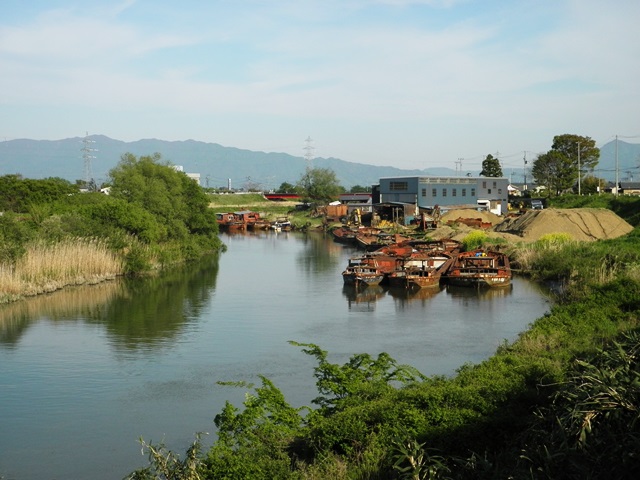
A view from the bank that is just behind the junior high school. There is a small ship building factory there. Community paper said that some American people came to the ship builder there to make an old style wooden boat, if my memory was correct.

I think there were many boats that went up and down the rivers in Niigata Plain (Echigo Plain) in the past like 19th century. Of course those navigation are now very rare. But what I thought was that if I devoted to a research about the history of water transportation in Niigata Plain, what would it be like? For example, writing a dissertation about it.  Uh.., it would be just a micro history in a small rural community. No one would be interested in such a tiny issue. I think I will not do a such research, probably.


00434

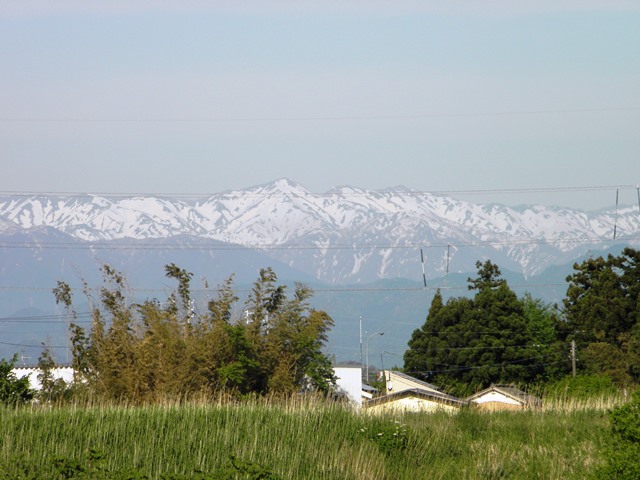
Snow is melting on the Iide Mountains that is located among Niigata, Fukushima and Yamagata Prefectures.


00435

I should have paid attention to the utility pole when I took this photo.


00436

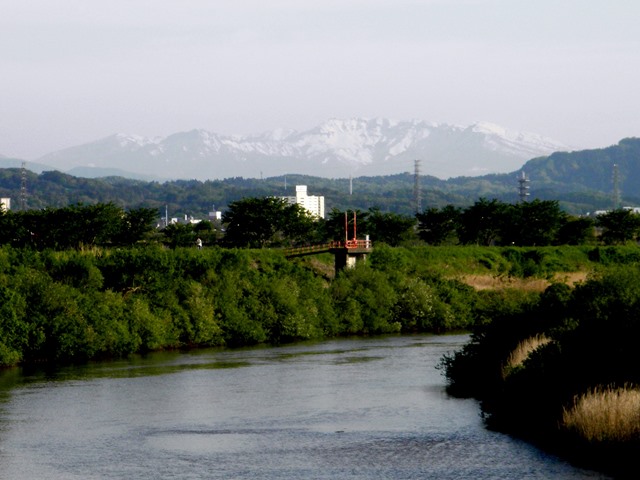
I was walking on a bridge that was almost the same age as me. The peak of the mountain in the photo is 1,293 meter if my memory is correct.


00437

I don’t know this mountain’s altitude exactly. Probably it may be 1500 meter. Its cliff looks like an inside of split bowl. It was said that the cliff was the mouth of the volcano in the very old time, but I am not sure.


00438

So the paddy fields are now filled with water. It seems that the rice seedlings have already been planted there.


00439

This was the last photo I took yesterday.

Online Teaching for Class 1837 (Conversation) on May 8, 2020

Date: May 8th on Friday, 2020 from 13:40 to 15:10 (14:40 – 16:10 in JST)

Course: Japanese Conversation 4

Used app: Streaming on DingTalk, Presentation by Powerpoint with 59 slides

Numbers of Students: 26 out of 28, Number of completely absent was 2

Fully attendant for 90min : 16

Shorter signing-in: 86, 82, 63, 37, 24, 16, 16, 6, 4 minutes, and the shortest was 2 seconds.

Responses onto the BBS:

– Attendance check by a student his/herself: 24. Two students came late.

– 1st Quiz: 19 students responded. The quiz was to find a sentence using the conditional conjunctive particle “-to” from four sentences.

– 2nd Quiz: 21 students responded. The question was to check the students’ understanding for limitation of use of the conditional conjunctive particle “-to”.

– 3rd Quiz: 23 students responded. The question was to make a student complete a conversation by filling the blanks correctly with understanding the difference between “-temo” and “-to”.

– Attendance check at the end: 19 students responded. Like the quiz No.3, this was also to ask proper uses of conditional conjunctive particles “-temo” and “-to”.

Teaching: 

– Conditional conjunctive particle “-to”, especially for  its limitation for the latter clause. Expressions like intention, invitation, and/or command are not used in the latter clause when the preceding clause uses “-to,”.

– Introduction of another conditional conjunctive particle “-tara,” including comparison with other conditional conjunctive particles “-to,”, “-ba,”, and “-nara,”.

Homework Assignment:

– Nothing to submit to the teacher this time. The students were asked to evaluate a short test for the section 12 by him/herself.

– Six students were asked to send a voice mail by speaking the script of conversation of two part time job workers.

Issues and Problems:

A lot of rote exercise (mechanical trainings) for sentences with “-to” and “-tara”. The students must have been tired and fed up with.