I am a native Japanese speaker who used to teach Japanese in a university somewhere on this planet. Currently I don't work but stayed in my house in Northern part of JAPAN. I hope that you could enjoy reading my posts and know what life in Japan is like.
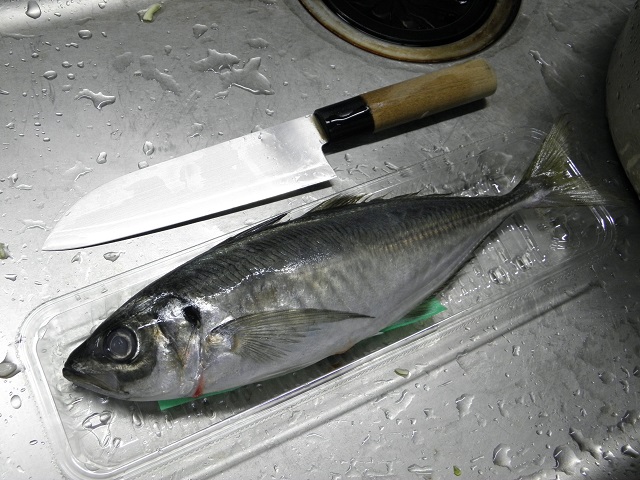
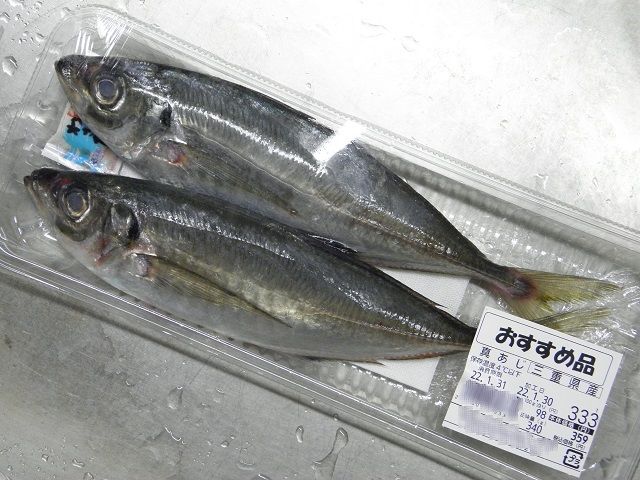
Horse Mackerel that I bought in a Super Market in Northern town in JAPAN
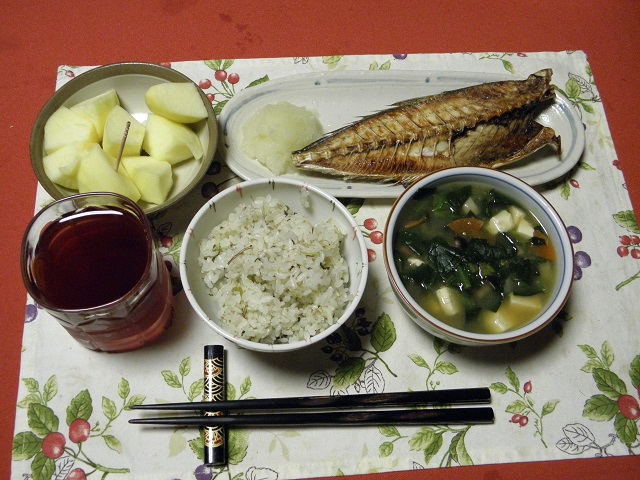
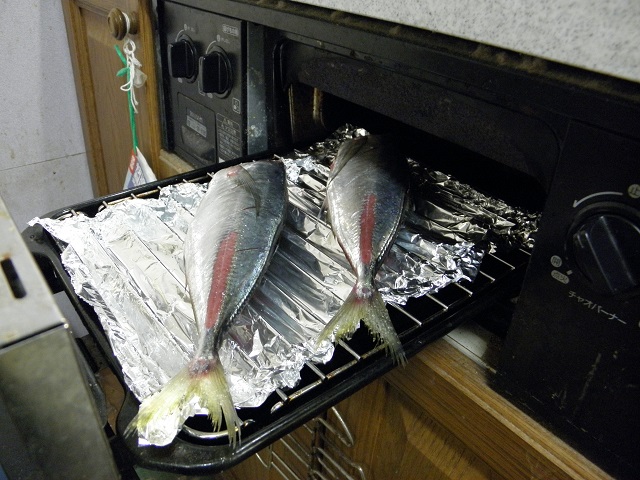
When it comes to Horse Mackerel, it always start with getting rid of hard scales First.Internal Organs were Removed. Several Cuts for Effective Heating in the Grill They were placed on the tray to go into the Fish Grill in Gas StoveWell- DoneMy Supper Yesterday
The photo above is yesterday’s. I boiled sweet potato in the pan. Those were the potato that I planted in my garden last year.
Still the Ground is Covered with Snow in my Region
This is a photo of today. I wanted to take a picture of train running, but those local trains do not come so frequently.
Mackerel in the Package about 4 USD
Today I bought the fish Mackerel. That was not “Horse Mackerel”, but simply “Mackerel”. This is Japan, but we usually see on the supermarket shelves, “Mackerel from Norway”. The mackerel in the photo was not from Norway, but from an Island of Sado which is the major island of Niigata Prefecture.
Mackerel being Boiled with Miso
I boiled them with Miso which is salty soy bean paste for seasoning. Not only Miso, I used also a little bit of sugar, ginger slices, pieces of red pepper, and Japanese Sake for seasoning.
Boiled Mackerel on a Plate
The white slices accompanying with Mackerel is white part of green onion.
My Supper Tonight
Now it’s already the last third (we call it “Gejun”) of Februray. But this winter is cold and still going on. Since the spring semester will start from the coming week, I have been just making PPT slides all day for my classes.
I found them in the supermarket where I always go buy food. Many packages of small horse mackerels were left unsold on the shelve. They were 30 percent discounted from the original price. But the original price was already reasonable because it was less than Two USD. I think that the problem was that they were too small to cook and eat. It was obvious that soon a lot of small horse mackerels were going to be thrown to be waste. Feeling sorry for that, I decided buying them.
Horse Mackerels’ Hard Scale
When you cook horse mackerels, you need to cut the hard scales off from the body side from the tale.
Opened Body of Horse Mackerel
I wouldn’t show you the most cruel part of the cooking process.
Fishes Wrapped with Potato Starch
Put a lot of Potato Starch around the fishes. I didn’t use fresh egg between the fishes and the starch. I just put the starch directly to the fishes.
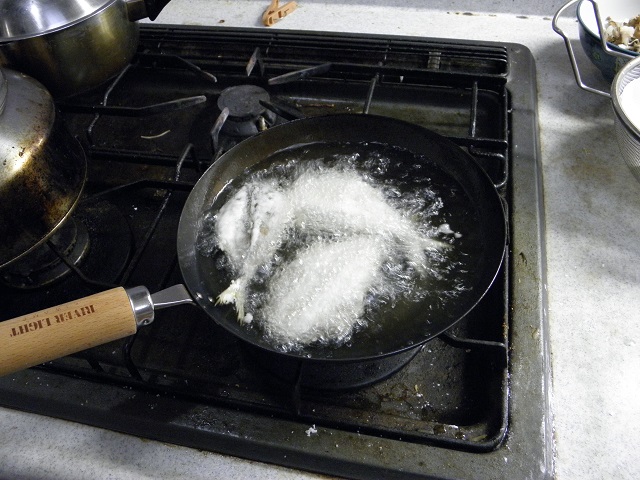
Fry in a Pan with Oil
Frying uses a lot of Oil. I usually use a good oil (a little expensive one), but for frying, I bought a cheap cooking oil.
The municipal government where I live has been collecting those cooking oils for recycling. I saw many bottles of dirty brown cooking oil were gathered at the entrance of the community center. Since there is a library in that building, I saw it every time I go to borrow books. But recently the city decided to stop collecting the oil. I don’t know why, because the city government doesn’t say anything about the reason explicitly to us. Recycling is good, so I think there must be a reason for stopping the recycling of used cooking oil.
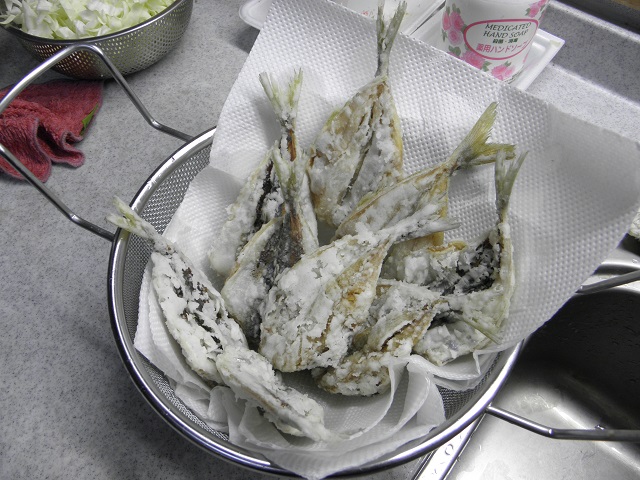
Draining Excess Oil with Cooking Paper
Oil is not good for our health. I put fried fishes onto cooking paper in order to remove excess oil.
Fried Horse Mackerels with Lemon Slice
Actually this is not the completion of the frying horse mackerels with potato starch. But I didn’t have time to do the end process of the cooking because I wanted to serve this for the dinner soon.
We Japanese usually put the fried horse mackerels into a sour sauce and keep it at least one night. The sauce is made of soy sauce, vinegar, and sugar. Ginger and red pepper are used for seasoning. Plus, slices of Carrots, onions, and peppers are accompanied. Those sauce and slices are poured onto fried mackerels and they are kept in the refrigerator. A good things of that are not only good taste, but also the vinegar makes the fish bones softer. When you come to Japan, please try to eat this menu that is “Aji no Namban Dzuke”.
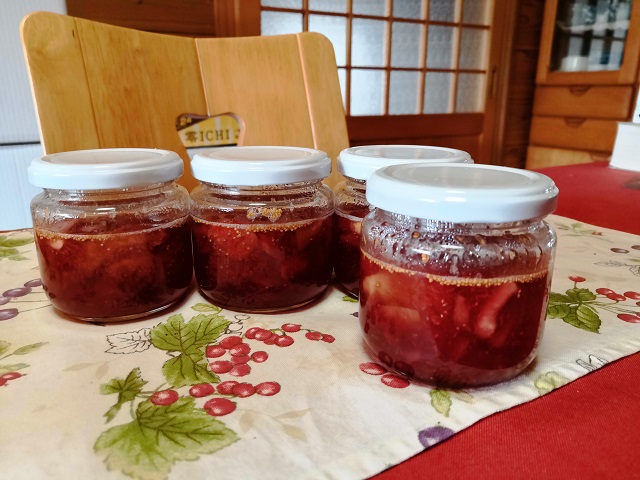
Only sugar was used; No chemical, no preservative, no artificial flavor/color.
They were boiled for tight sealing.
Actually I made five bottles of fig jam. I sent these four bottles to my sister.
So only one bottle was left. Fig jam on the toast in the photo above was the last portion from that bottle. But I still have many fig compote in my freezer.















 Agony or Fun?! Second Language Learning