Online Teaching for Class 1836 (Composition) on Mar.17, 2020

Date: March 17th on Tuesday, 2020 from 15:30 to 17:00 (16:30 – 18:00 in JST)

Course: Japanese Basic Composition 2

Used app: Streaming on DingTalk, Presentation by Powerpoint (74 slides)

Numbers of Students: 28

One student stayed 41 minutes but he left the online class. Other 27 students had been stayed whole through 90 minutes.

Responses to the “During-the-Class_Quiz”:

Q1: Of 28, 25 answered, 3 were silent.

Q2: Correction of sentences written by one particular student. Only 13 suggested his/her correction.

Q3: This was to ask types of  conjunctive particles. 23 students answered and all correct.

Q4: A series of 5 questions at the end of class in order to check if a student had been with class through the class. 26 submitted. Some got 4 points, some 5.

Teaching:

How can a composition class be done online? Actually my concern is just how to kill the time during an online composition class. Writing takes time. So if I made students write compositions in class, it would  be so easy to spend 90 minutes. But a big question arises; Isn’t it the same as homework? Is there any benefits to do it online?

So I had to think of how I teach during 90 minutes composition class. What I did was to show everybody how I correct one student’s composition. So the first half of time and slides were used for this activity. Corrections were a lot;

Verb Te-form, Inconsistency between a subject and a predicate, error on choice of conjunctive particles, speech style with spouse, Particles’ -wa/-ga problem, correlation between some type of adverb and sentence ending, better use of -teiru/tekuru, and so on.

In the last half of the time, I used the textbook which I don’t like much. Using it, I taught choices ko-so-a words and tense-aspect issue.

Homework:

Writing a Composition about how the student was spending this winter break within 300 characters. And the Word file must be sent by email to the teacher.

Issues and Problems:

It was obvious that PPT slides that I prepared were short for 90 minutes. So I introduced a Japanese painter Mr. Ikuo HIRAYAMA in the middle of the class.

Online Teaching for Class 1939 (Listening) on Mar.16, 2020

Date: March 16th on Monday, 2020 from 9:50 to 11:20 (10:50 – 12:20 in JST)

Course: Japanese Listening 2

Used app: Streaming on DingTalk, Presentation by Powerpoint (72 slides)

Numbers of Students: 27

All the 27 students stayed with me on the online class until the end. They are the first grade student. It is different from the behavior of the second grade students.

Responses to the “During-the-Class_Quiz”:

Their responses are quite good. I also tried solo-questioning by calling name of a student. This worked well although it took minutes.

Teaching:

1: Use of nouns that mean position/location

To tell an existence of human/animal or things, some abstract nouns for position/location are used. I taught students how to make those abstract nouns concrete in the form of N1 no N2 which is a modification for noun2 by noun1. I have already taught in the last semester, about difference between the intransitive verbs “iru” for human/animal and “aru” for things without life. This time I put an emphasis on use of somewhat abstract nouns for position/location.

2: Particle “-ga”.

Issues and Problems:

Too much use of English. Controlling time.


Online Teaching for Class 1837(Conversation) on Mar.16, 2020

Date: March 16th on Monday, 2020 from 8:00 to 9:30 (9:00 – 10:30 in JST)

Course: Japanese Conversation 4

Used app: Streaming on DingTalk, Presentation by Powerpoint

Numbers of Students: 28

Of the 28, 21 students connected to the streaming, but 7 had left before the ending. The shortest participation was only just 2 minutes. The student typed his attendance on BBS when the class began, but left from the class quite immediately.

Responses to the “During-the-Class_Quiz”:

1st Q=18, 2nd Q=19, 3rd Q=17, 4th Q=19

Six students did not answer all four questions even though they were in status of participation.

Teaching:  V-te morau, V-te itadakemasenka. Abstract of Japanese honorific system

Issues and Problems:

In this online streaming teaching, I couldn’t pay attention to each student’s nature or tendency. It is like I am teaching toward one monolithic mass of students. But each individual student is different from others. I could know some small nuance by a particular student in particular moment in the real class room. And I could talk to one by one. I think the online teaching has a huge disadvantage in this regard.


Online Teaching for Class 1837(Conversation) on Mar.13, 2020

This is to record my online class of listening course for class 1837.

However, I haven’t had a concrete idea how to make a record of class activities yet, so this is a trial for making a record of online class.

Date: March 13th on Friday, 2020 from 13:40 to 15:10 (14:40 – 16:10 in JST)

Course: Japanese Conversation 4

Used app: Streaming on DingTalk

Numbers of Students: 29

The class lasted approximately 1hours 33 minutes. Most of students had participated all through the class, but one had just stayed 59 minutes.

Responses to the “During-the-Class_Quiz”:

1st Q=26, 2nd Q=19, 3rd Q=21, 4th Q=24

I made students write their answers onto BBS. This has a problem because students just refer to answers that were already shown on BBS. So this way is not good to make students think of the right answer by themselves. Actually my purpose is to check “Are you with me?”

Teaching:  V-te Ageru and V-te Kureru

< Actually I think this part is the most important for the record purpose. I would like to write more on this part, if I could.>

Issues and Problems:

Streaming my PPT presentation is just a one-way teaching. I cannot get students’ responses as I could get in the real classroom. I think that teaching to the students, getting reaction from them, and making feedback to them are so important to make a second language class interactive. I consulted this matter with the chief. He wrote that video conference would give me a quick reaction from students. I would like to try that function on DingTalk.


LQ Laoshi Plays BACH on Electric Bass

J. S. Bach, Unaccompanied Cello Suite No.3, Prelude on Electric Bass (4.22MB)

p00381

I know that my playing is slow and technically poor, but this is a kind of mourning for the deceased.

The original is Key-C, but I play in Key-A so that I can play with a four-string bass.

Bass:SR500 by Ibanez

Strings:D’Addario, Extra-Light of Balanced Tension

Amplifier:  Not a Bass Amplifier, but a cheap audio Amp.

I edited the recording around 2:24 because I made a mistake.

在日本LQ老师做着什么?! 06

I have got things to do in Kanto Plain. So I decided to travel to Kanto region for several days. I got on a local train first to head Niigata.

p00381

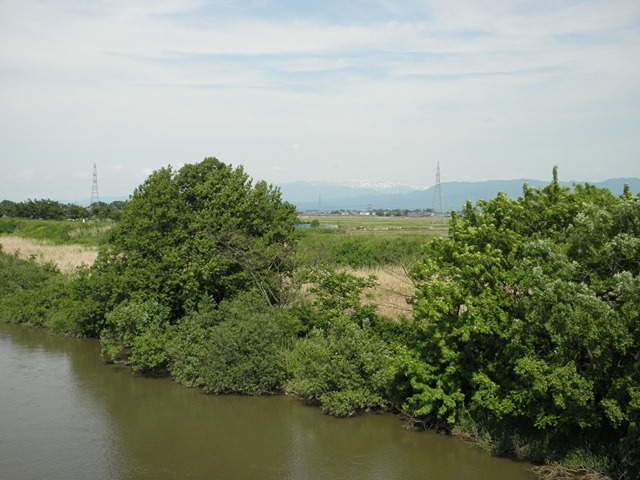
When the local train crossed a river, I saw Gozu Mountains that had got some new snow. It was dark. Yes winter days in Niigata are always under the dark clouds.


p00382

I took a Shinkansen, or Bullet train in Niigata.


p00383

Less than two hours, you can get under the clear blue sky in the Kanto Plain. There are lots of unequal things in this world, you know. People in Kanto can enjoy this fine weather in winter, while people in Niigata have to live under the dark clouds with wet, chilly, and snowy weather.

在日本LQ老师做着什么?! 05

p00375

I got on a local train in the morning.


p00376

I could see a little bit of snow on the rice fields. The coldest weather hit Japan yesterday.


p00377

There was an objet at the west entrance of JR Niitsu station.


p00378

A person gave me a pack of Sushi as a souvenir. The sushi was “Engawa” that was muscle at the base of fin of flatfishes.


p00379

Dipping into soy sauce, I ate the first piece of Engawa Sushi.


p00380

A close-up photo. Of course this is raw fish. Do you want to eat it? I like it.

在日本LQ老师做着什么?! 04

Behind the town runs a river.

p00372

There is a small ship building yard. The factory can be seen behind the three vessels on the river. But I am not sure the company is still doing shipbuilding.


p00373

I went to Niigata in the evening. I had a dinner with one of my students who learned Japanese from me. The Izakaya restaurant was just near the JR Niigata station. Sashimi or slices of raw fish were fresh and tasty.


p00374

Niigata is famous for Sake that is rice wine. I ordered three brands assortment. One was Kirinzan, the other was Hokusetsu, but I forgot the third one. In front of three bottles, that was oyster fries. Anyway I enjoyed food and talk.

Morning Market in Niitsu, Akiha-ward, Niigata, JAPAN

Morning market is held on the 1st and 6th date of every month in Niitsu. Niitsu is a town that is located southern Niigata. JR local trains in every 20 minutes take you from Niigata to Niitsu. It takes about 20 minutes. Since it is called “morning market”, so better to get there by 11 a.m.

p00362

If you walk to the market from Niitsu JR station, this is the entrance of the market.


p00363

I always buy Kimchi at Ms.Minami Yamashita’s shop. She is shy so she hid herself behind the board.


p00364

Inside her cooler box. You can see there are Radish Kimchi and Cucumber Kimchi.


p00365

A man was selling seafood. He was talkative very much. He said he didn’t take photographs but liked reviewing other’s photographing. Sliced salmons were on his shelf.


p00366

There were some flower shops in the market.


p00367

I like this old person’s fruit shop.


p00368

Western pear “Le Lectier” were being sold with very much reasonable prices. The old person said to me that they were reasonable because it was the end of the season. “Le Lectier” is Niigata’s speciality.


p00369

This is all that I bought in the market;

7- Fuji apples = 500 JPY

2 packs of Yellow Kiwi = 500 JPY

1 – Chinese Cabbage Kimchi = 500 JPY

1 – Radish Kimchi = 500 JPY

Green vegetable = 100 JPY

So it costed 2,100 JPY in total. If I apply foreign currency rate of  1 USD = 109 JPY, it would be 19 dollar 27 cent. Expensive or reasonable? It depends on you. I have no complaint about the prices because I enjoyed talking with buyer. That is the beauty of morning market.


p00370

I got back home, cut Chinese Cabbage Kimchi into small pieces, and then put it into a small grass container.


p00371

Actually, yellow kiwi was not so yellow. It was yellow green. I wanted to change color of this photo so that it could look yellow. But I couldn’t make it, although I tried to adjust colors by an imaging software.


Morning market in Niitsu is small. Please do not expect a large market. It is just a tiny small market using a space of parking lot by the JR railway line. Some towns in Niigata area hold this kind of morning markets. Dates are different town by town. In Niitsu, 1st and 6th. In some town, it is 2nd and 7th, or 4th and 9th. I am not sure you would be interested in the market, but please check the date before you visit some of them.