Online Teaching for Class 1836 (Composition) on May 9, 2020

Date: May 9th on Saturday, 2020 from 15:30 to 17:00 (16:30 – 18:00 in JST)

Course: Japanese Basic Composition 2

Used app: Streaming on DingTalk, Presentation by Powerpoint with 80 slides

Numbers of Students: 28

25 students participated for whole 90 minutes.

3 students were recorded for their short attendances: 57, 44, 32 minutes

Responses to my requests like Quiz answers onto BBS:

– Attendance check by reporting his/her-selves: 28.

– 1st Quiz: 26 students responded. This was to correct the erroneous sentence with over-generalization of “Wa-ga construction”.

– In the rest of the class, the students were given 5-question quiz. A student answered a question by taking a memo, and sent five answers right after the class. This also worked as an attendance check at the end of the class.

Teaching:

– Feedback about the students’ compositions about a health care worker from abroad.

– Review and summary of the first half of this semester.

Homework:

– Homework assignment was suspended. Although the second drafting for the essay about a health care worker must be assigned, I haven’t yet evaluated their first draft.

Issues and Problems:

The result of the quiz showed that some students didn’t understand the difference between “-teiru” and “-tekuru”. For other issues, however, I have no time to write them right now.

Took a Walk in the Afternoon. Late Spring in Niigata, JAPAN.

It was 4:10 in the afternoon when I finished the online Japanese teaching. I had two online classes yesterday. Since I prepared for them almost through the night, I just wanted to go outside. The sky was clear yesterday, although it had become not so clear when I started walking in late afternoon.

00432

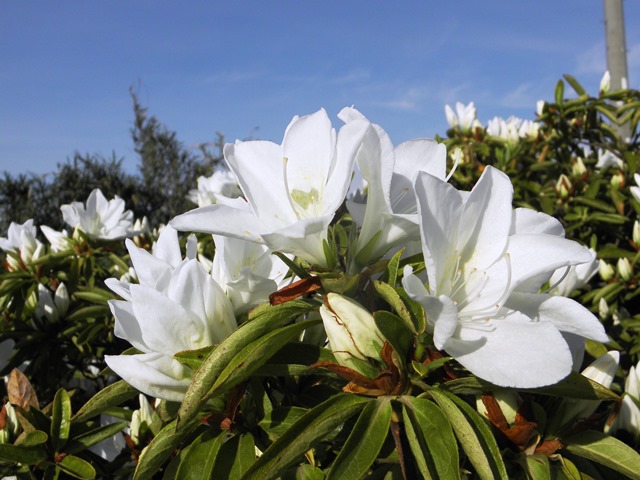
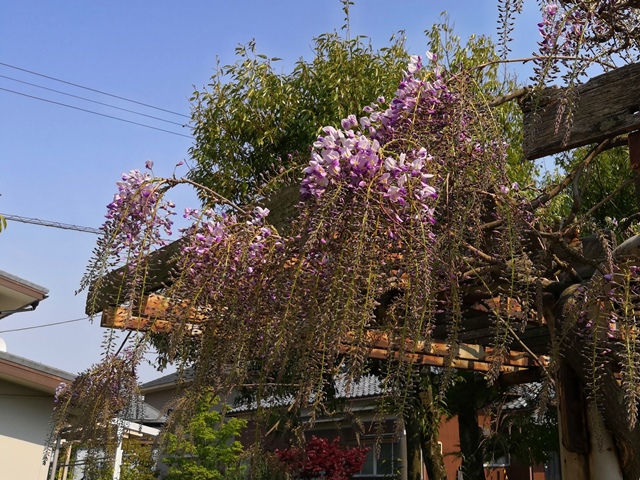
Wisteria flowers were in full bloom in the play ground of nearby junior high school. I think the tree is very old because I think it has been there since I was a kid.


00433

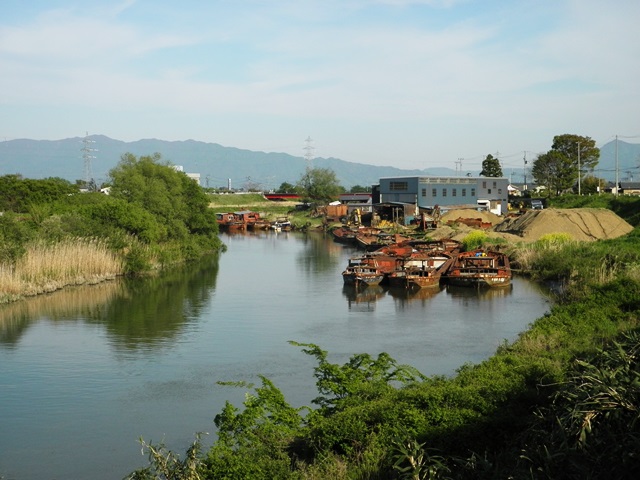
A view from the bank that is just behind the junior high school. There is a small ship building factory there. Community paper said that some American people came to the ship builder there to make an old style wooden boat, if my memory was correct.

I think there were many boats that went up and down the rivers in Niigata Plain (Echigo Plain) in the past like 19th century. Of course those navigation are now very rare. But what I thought was that if I devoted to a research about the history of water transportation in Niigata Plain, what would it be like? For example, writing a dissertation about it.  Uh.., it would be just a micro history in a small rural community. No one would be interested in such a tiny issue. I think I will not do a such research, probably.


00434

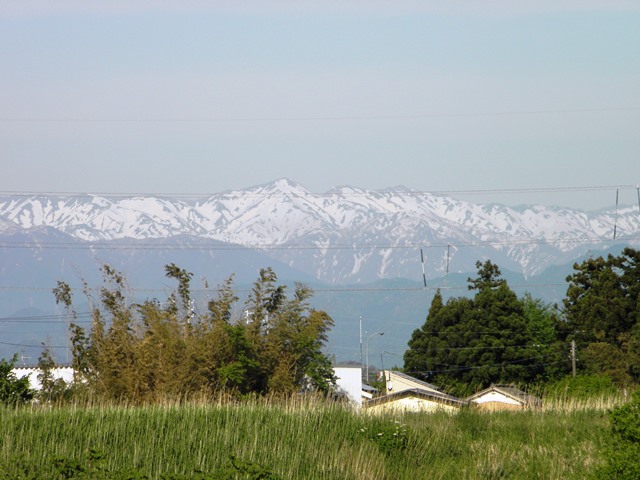
Snow is melting on the Iide Mountains that is located among Niigata, Fukushima and Yamagata Prefectures.


00435

I should have paid attention to the utility pole when I took this photo.


00436

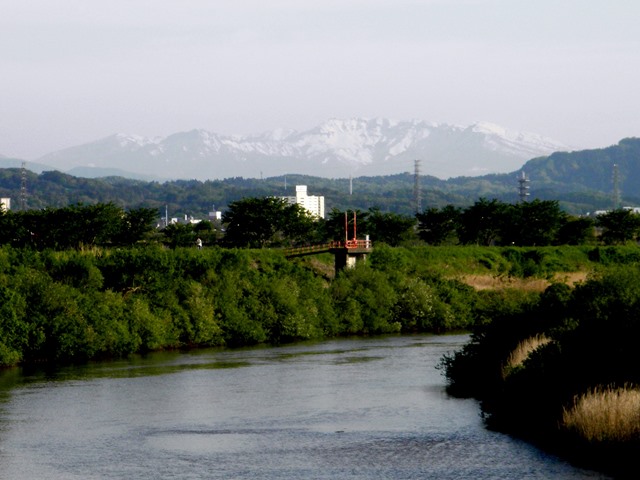
I was walking on a bridge that was almost the same age as me. The peak of the mountain in the photo is 1,293 meter if my memory is correct.


00437

I don’t know this mountain’s altitude exactly. Probably it may be 1500 meter. Its cliff looks like an inside of split bowl. It was said that the cliff was the mouth of the volcano in the very old time, but I am not sure.


00438

So the paddy fields are now filled with water. It seems that the rice seedlings have already been planted there.


00439

This was the last photo I took yesterday.

Online Teaching for Class 1837 (Conversation) on May 8, 2020

Date: May 8th on Friday, 2020 from 13:40 to 15:10 (14:40 – 16:10 in JST)

Course: Japanese Conversation 4

Used app: Streaming on DingTalk, Presentation by Powerpoint with 59 slides

Numbers of Students: 26 out of 28, Number of completely absent was 2

Fully attendant for 90min : 16

Shorter signing-in: 86, 82, 63, 37, 24, 16, 16, 6, 4 minutes, and the shortest was 2 seconds.

Responses onto the BBS:

– Attendance check by a student his/herself: 24. Two students came late.

– 1st Quiz: 19 students responded. The quiz was to find a sentence using the conditional conjunctive particle “-to” from four sentences.

– 2nd Quiz: 21 students responded. The question was to check the students’ understanding for limitation of use of the conditional conjunctive particle “-to”.

– 3rd Quiz: 23 students responded. The question was to make a student complete a conversation by filling the blanks correctly with understanding the difference between “-temo” and “-to”.

– Attendance check at the end: 19 students responded. Like the quiz No.3, this was also to ask proper uses of conditional conjunctive particles “-temo” and “-to”.

Teaching: 

– Conditional conjunctive particle “-to”, especially for  its limitation for the latter clause. Expressions like intention, invitation, and/or command are not used in the latter clause when the preceding clause uses “-to,”.

– Introduction of another conditional conjunctive particle “-tara,” including comparison with other conditional conjunctive particles “-to,”, “-ba,”, and “-nara,”.

Homework Assignment:

– Nothing to submit to the teacher this time. The students were asked to evaluate a short test for the section 12 by him/herself.

– Six students were asked to send a voice mail by speaking the script of conversation of two part time job workers.

Issues and Problems:

A lot of rote exercise (mechanical trainings) for sentences with “-to” and “-tara”. The students must have been tired and fed up with.

Online Teaching for Class 1837 (Composition) on May 8, 2020

Date: May 8th on Friday, 2020 from 8:00 to 9:30 (9:00 – 10:30 in JST)

Course: Japanese Basic Composition 2

Used app: Streaming on DingTalk, Presentation by Powerpoint with 79 slides

Numbers of Students: 24 out of 28

90 minutes attendance: 14 students

Shorter attendances: 87, 86, 84, 69, 58, 51, 14, 5, 4, and 3 minutes.

completely absent: 4 students

Responses to my requests like Quiz answers onto BBS:

Attendance check: 24. But, of these, one student was recorded as “Completely Absent” on the system. One student came late.

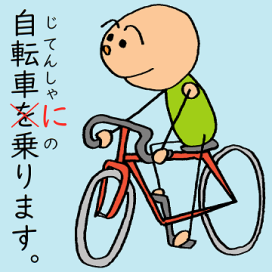
Quiz 1 : 23 students responded. The question was to find an error on use of particle. Not “-ga” but “-o” must be used for the object of an intransitive verb.

Only the quiz No.1 was done using BBS during the class. Instead, five questions were given to the students. And they were asked to send five answers immediately after the class.

Teaching:

– Feedback about the homework assignment which was to write an essay about an episode of a health care worker from abroad.

– Review of the first half of this semester. Five questions were given to the students in order to check their understanding for the issues that were already explained in the classes so far.

Homework:

– HW is suspended until I evaluate and send back the first drafts that were expressions about reading health care workers from abroad.

Issues and Problems:

<No time to write them right now>

Spring Flowers in the Garden on May 4th

And again, this is not my garden but my parents’.


00426

White flowers of strawberry. Until 3 years ago I had been growing many vegetables in this garden. A neighbor gave me seedlings of strawberry at that time. Now I don’t cultivate anything, but these strawberries are still alive on the ground. Do I need to sing Beatles’ “Strawberry Fields Forever” so that they can last long?


00427

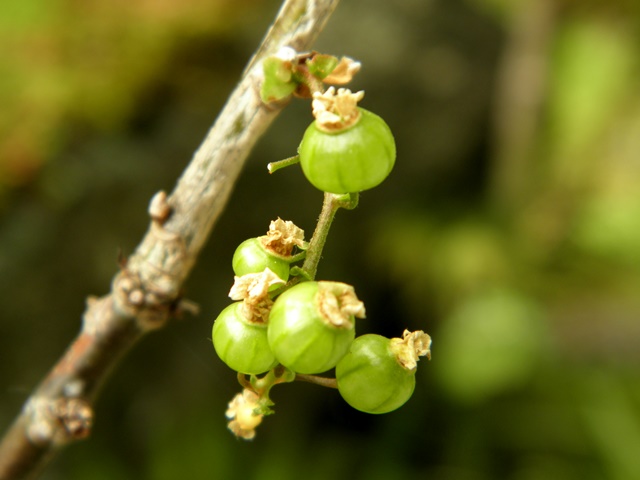
Growing fruits of gooseberry. So the gooseberry’s fruits look more beautiful than the flowers. Can you imagine what color these fruits will become? Answer will be shown if I can take the photos when they get color.


00428

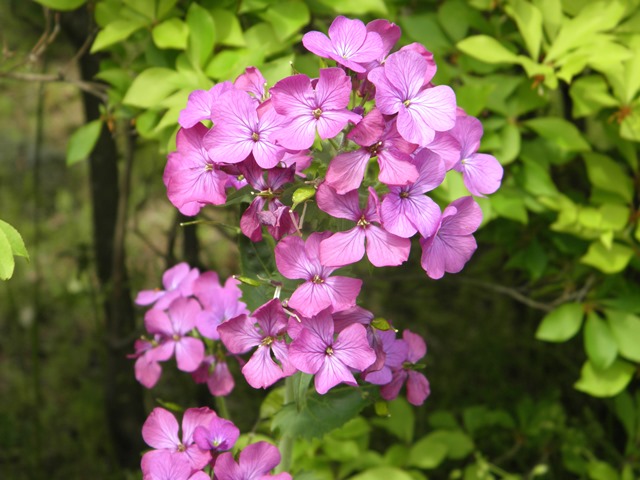
I found flowers of purple vege-flower (Murasaki-Nabana) on the edge of vegetable field. They are kinds of oilseed and radish. Seeds are sometimes sold as an ornamental plant. I had never planted their seeds. So seeds came from somewhere.


00429

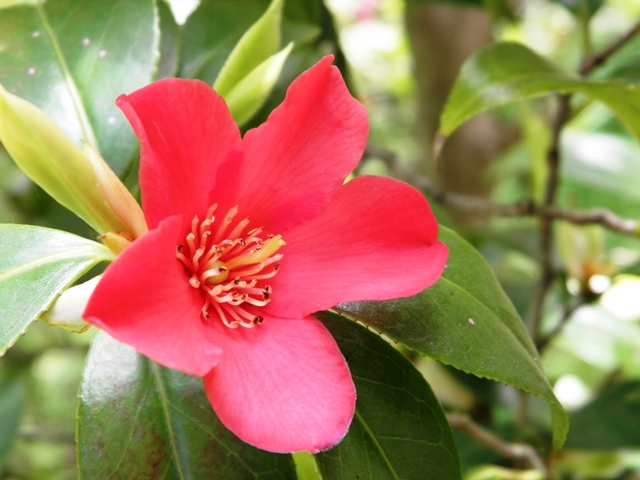
Camellia flower. They are almost ended for this spring. I am not sure how to call it, but this single layer petal camellia looks simple. Camellia usually has multi-layer petals. I like this one.


00430

Purple-pink azalea. Azalea lasts very short. I don’t know why, but the gardening people planted many white azalea on my parents’ garden, with a little purple pink one. Usually purple pink is preferred, though.


00431

So white azalea. They last very short. When they were buds, I wrote that it made me think of vanilla ice cream. How do I call it now?

Online Teaching for Class 1836 (Composition) on Apr.28, 2020

Date: April 28th on Tuesday, 2020 from 15:30 to 17:00 (16:30 – 18:00 in JST)

Course: Japanese Basic Composition 2

Used app: Streaming on DingTalk, Presentation by Powerpoint with 65 slides

Numbers of Students: 28

24 students participated for whole 90 minutes.

4 students were recorded for their short attendances: 84, 83, 82, 74 minutes

Responses to my requests like Quiz answers onto BBS:

– Attendance check by reporting his/her-selves: 28.

– 1st Quiz: 24 students responded. This was to ask whether or not the students know the old story about how the word for proofreading and revising a document “Suikou came from. Actually the question was asked not that if he/she knows it but that if a student have been taught this story in the school. All of them answered they learned the story in school.

– 2nd Quiz: 24 students responded. This question was the same as asked in the class 1939  just two days before. The question was about “Wa-ga conflict”. 24 students of 1st grade answered 18 wrong and 6 right answers. In this class, all of second grade students answered right one although it was likely some of them were just referring to answers already written on the BBS.

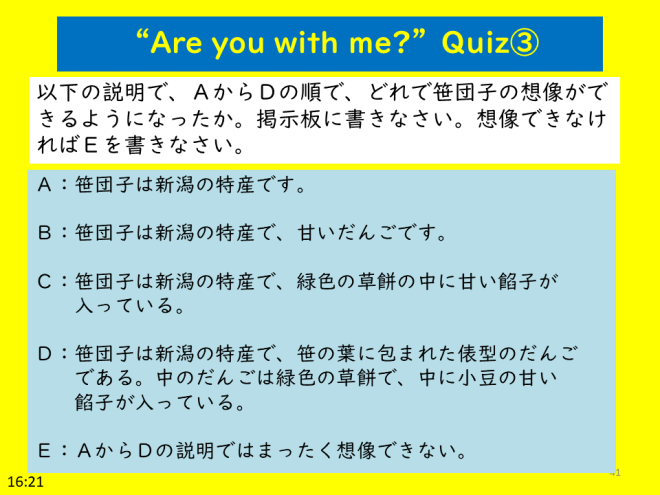
– 3rd Quiz; 24 students responded. This was a quiz but its purpose is to make the students understand the importance of detailed and concrete explanation. The question asked how much detailed explanation was needed until a student got the concept of “Sasa-dango” which is Niigata’s specialty. All the students answered that they figured out what it was like by the D that is shown in Figure 1 below.

– Attendance check at the end : 26 students responded.The students were asked to submit 5 answers that were asked during the class. The five quiz were given separately from three “Are-You-with-Me Quiz” above. Although I asked to sent it immediately after the class, 2 students sent to me 1 day or 2 days late. For those student, the half of the score was added to their gradings.

Teaching:

1st half:

– Review of the short test about particles.

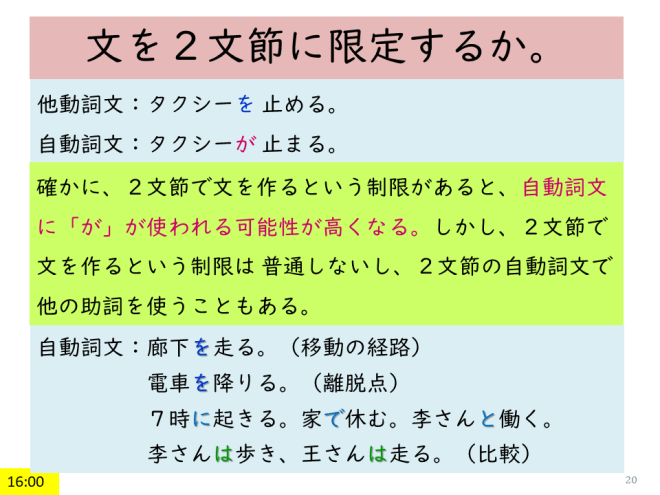
– Feedback about the second drafts of compositions “How to Use ‘-ga’ and ‘-o'”. I corrected students’ misunderstanding that ‘-ga’ is to be used in an intransitive verb predicate sentences. It is likely that ‘-ga’ is used in sentences of intransitive verb, but it is not always as shown in Figure2.

2nd half

– From the textbook; it was a little detailed word to word cautions.

– Explanations for the homework assignment.

Homework:

1: Write a short essay for student’s expression about an article.

2: Read part of a book about job seeking.

Issues and Problems:

<No time to write them right now>


i00324

Figure 1. How far an Explanation must be Done for Readers’ Understanding


i00325

Figure 2. Use of Particle “-ga” in Two-Segment Sentences

No Kids in the Park, Saturday Afternoon

Although today is a day of spring holiday so-called “Golden Week”, people are asked to stay home because of Corona virus pandemic. I went shopping by walk in this afternoon. On the way I just dropped by a small park.

00422

Might have sung Chicago’s “Saturday in the Park”? Nope. This is a small park in small town in northern part of Japan. There is no man selling ice cream. Even kids are not there because of Japan’s aging society.


00423

It was a little early for wisteria flowers to be full bloom.


00424

But actually the pink flowers of dogwood have gone already. I think the white one is also almost ended.


00425

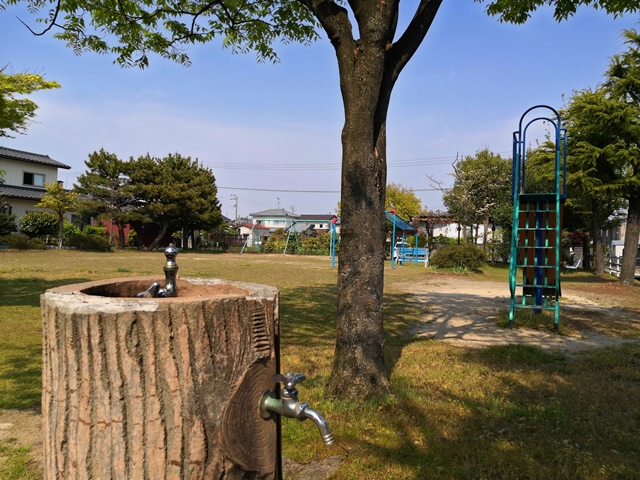
I am not sure if this tap water is hygienically okay to drink or not. Anyway, I left the park and went to a supermarket to get food for my supper.

Online Teaching for Class 1837 (Conversation) on Apr.27, 2020

Date: April 27th on Monday, 2020 from 8:00 to 9:30 (9:00 – 10:30 in JST)

Course: Japanese Conversation 4

Used app: Streaming on DingTalk, Presentation by Powerpoint with 60 slides

Numbers of Students: 22 out of 28, Number of completely absent was 6

Fully attendant for 90min : 17

Shorter signing-in: 79*2, 67, 59 minutes, and the shortest was 19 seconds.

Responses onto the BBS:

– Attendance check by a student his/herself: 25. Of these, three students were recorded as completely absent by the system.

– 1st Quiz: 15 students responded. The quiz was to measure students’ understanding about the listenin material.

– 2nd Quiz:17 students responded. The question was to choose the correct use of the conditional conjunctive particle “-tara” and “-to”. When the students started typing their answers, they were referring to what the first and second students had typed on BBS. Actually those answers “B” were not correct. When about half students typed their erroneous answer “B”, then one student typed the correct answer “A”. Then the last half students typed “A”. It was a simple thing. Most of them didn’t think of answers by themselves. But I thought the student who typed “A” first thought of her answer herself. So I sent a message to praise her courage after the class.

– Attendance check at the end: 21 students responded. It is my fault that I left yesterday’s the-last-quiz unchanged because I have not enough time to check whole through my lengthy power-point slides. However, this quiz was also important to check participation of the students to online class, therefore I asked the students to type their answers.

Teaching: 

– Listening to a conversation between two part time job workers.

– Review and exercise of a little formal negation “-zuni”.

– Exercise of “-ba” and “-nara”

– Listening comprehension of conversation using “-ba” and “-nara”.

– Introduction of a conditional conjunctive particle “-to”.

Homework Assignment:

Since there would be 10 days by the next class, more homework was assigned than usual.

-1 : Small test of the section 13 of the textbook.

-2 : Completing three conversation scripts by filling words.

-3 : Listening and reading aloud the script of two part time job workers.

Issues and Problems:

I had two classes in the day. I didn’t have enough time to prepare for this class, although I started at 3 a.m. and worked by the start of the class at 9 a.m. (in Japan standard time). In order to fill the less teaching material of powerpoint slides, I inserted a listening material from Min’nano Nihongo. That was a conversation in the section 35, which uses the conditional conjunctive particles “-ba” and “-nara”. It, somehow, worked. If I were a seasoned teacher, I would have had enough teaching material that can kill the time. But  I am not. Until I have had enough stock of teaching material, my hard working style through the night will continue.
Online Teaching for Class 1837 (Conversation) on Apr.26, 2020

Date: April 26th on Sunday, 2020 from 8:00 to 9:30 (9:00 – 10:30 in JST)

Course: Japanese Conversation 4

Used app: Streaming on DingTalk, Presentation by Powerpoint with 55 slides

Numbers of Students: 24 out of 28

Fully attendant for 90min : 17,    Completely Absent : 4,

Shorter signing-in: 87, 86, 69, 15, 12*2 minutes, and the shortest was 49 seconds.

Responses onto the BBS:

– Attendance check by a student his/herself: 25. One of these students was actually recorded as completely absent.

– 1st Quiz: 17 students responded. The quiz was just to measure whether or not the students understood the listening material.

– 2nd Quiz:19 students responded. The question was to find an erroneous use of conditional conjunctive particle “-nara” from four sentences. “-Nara” cannot be used in a conditional clause if the condition is 100% sure.

– 3rd Quiz: 19 students responded. The question was to select “If” type conditional conjunctive particle that is applicable in a sentence.

– Attendance check at the end: 21 students responded. It is to ask suitabilities of “-nai” or “-zu” for negations to speech or writing.

Teaching: 

– Listening to a conversation between two part time job workers.

– Review and exercise of conditional conjunctive particle “-ba,” and “-nara”. The emphasis was put on the latter, “-nara” with the following three features; (1) Suggestion can be made in the form of “Noun+nara, (clause)”. (2) In the construction of (Preceding conditional clause with “-nara”, conclusion clause), the conclusion clause has modality that expresses speaker’s feeling like intention, guess, request, and so on. (3) If the conditional clause is definitely certain, “-nara” cannot be used.

– Exercise of “-ba” and “-nara”

– Introduction of expression for negation using “-zu-ni” that is a little formal

Homework Assignment:

Any homework was assigned in this time, too. It was noticed to the students that homework during the holidays would be assigned the following day, 27th.

Issues and Problems:

This is a conversation class. So students’ utterances should be promoted. By far I have just tried teaching listening comprehension and making the students do a kind of  rote exercise. In order to prompt the students’ utterance, I decided to give the students a homework in which he/she need to fill his/her own words into many blanks put in the conversation script.

Online Teaching for Class 1837 (Conversation) on Apr.24, 2020

Date: April 24th on Friday, 2020 from 13:40 to 15:10 (14:40 – 16:10 in JST)

Course: Japanese Conversation 4

Used app: Streaming on DingTalk, Presentation by Powerpoint with 82 slides

Numbers of Students: 24 out of 28

Fully attendant for 90min : 15,    Completely Absent : 4,

Shorter signing-in: 86, 72, 52, 24*2, 18, 10, 5minutes, and the shortest was 5 seconds.

Responses onto the BBS:

– Attendance check by a student his/herself: 25. One of these students was actually recorded as completely absent.

– 1st Quiz: 19 students responded. The quiz was just to ask the right conjugation of 3rd group verb “Kuru/Kimsu” in Nai-form.

– 2nd Quiz:17 students responded. The question was to choose one sentence that was different from other three sentences. The four were all using “If” type conjunctive particles “-to”, “-ba”, “-tara”, and “-nara”. Of these, only the sentence with “-nara” had different construction that was simply “Noun+nara”.

3rd Only one student responded, no one got the right answer.  In fact the question was too difficult for the students. It was to choose one erroneous sentence among four that were using “If” type conjunctive particles.

– Attendance check at the end: 21 students responded. It is to find a sentence that was erroneously using “-nara” because its conditional clause was too definitely determined to be an assumption.

Teaching: 

– Listening to a conversation between two part time job workers.

– Review and exercise of conditional conjunctive particle “-ba,”

– Introduction of another conditional conjunctive particle “-nara,”,

– Exercise of “-ba” and “-nara”

Homework Assignment:

Any homework was assigned in this time. There was no time to check and evaluate a homework because many classes were scheduled in short period of time before the spring holidays from May 1 to 5th.

Issues and Problems:

The purpose of quiz during class is to check whether or not each student is really listening to the online class. It seems that I might have asked too much difficult questions for the purpose these days. Today’s quiz No.3 was so difficult that no student could get the answer. It is necessary to make those questions appropriate for level of students’ understanding.