Agony or Fun?! Second Language Learning
I am a native Japanese speaker who used to teach Japanese in a university somewhere on this planet. Currently I don't work but stayed in my house in Northern part of JAPAN. I hope that you could enjoy reading my posts and know what life in Japan is like.
The followings are quick review on the functions of “-de”.
(1) Way and Tool to do something
– Nihonjin wa Hashi <de> Gohan o Tabe masu.
(Japanese eat meals with chopsticks.)
(2) Place to do something
– Undoujou <de> Sakka’a o Shi masu.
(I play soccer in a sports ground.)
(3) Transportation to get on
– Maisasa, Basu to Chikatesu <de> Kaisha e Iki masu.
(Every morning, I go to the office by bus and subway.)
(4) Language to spreak
– 「Butaniku」 wa Eigo <de> Nan desuka.
(What is “Butaniku” in English?)
(5) Material when making something
– Gyuunyuu de Chi’izu o Tsukuri masu.
(We make cheese from milk.)
(6) Condition/Manner accompanied with Action
-Egao <de> Aisatsu o Shi masu.
(<A person> greets with smile.)
(7) Limitation
– Go-ji <de> Shigoto ga Owari masu.
(My work finishes at 5:00.)
(7)’ Limitation of Scope
– Kudamono <de> Nani ga Ichiban Suki desuka.
(Out of fruits, what is the one you like best?)
(8) Cause/Reason
– O’okina Jishin <de> Tatemono ga Koware mashita.
(Buildings were destroyed in the huge earthquake.
Since the particle “-de” has many functions as shown above, it is difficult to learn how to use it. It seems like that its basic function is to indicate what you use for your action, looking at (1) through (5). Perhaps (6) that is “Condition/Manner accompanied with Action” may cover all the (1) through (6). But such a “Macro” understanding cannot cover everything. There are always exceptions and special cases like (7) and (8) that cannot be covered by the understanding that “-de” is “Condition/Manner accompanied with Action”.
What we are learning today is the function of (8) in which “-de” indicates a reason and/or cause of a result. The following is the sentence construction;
– [Noun]+de, {Main Clause}.
In this sentence, { [Noun]+de } shows you a reason/cause, and {Main Clause} shows you the result.
1. Kaze de Ki ga Taore mashita.
(The tree fell down by the wind.)
The cause why the tree fell down was “Kaze”. The verb “Taoreru/Taoremasu” is an intransitive verb. Note the difference from “Taosu/Taoshimasu” that is a transitive verb.
2. Tsunami de Ie ga Nagasare mashita.
(Many houses were flown by the Tsunami.)
The cause why many houses were flown was Tsunami. “Nagasareru” is the passive form of the transitive verb “Nagasu”. The intransitive verb in pair with “Nagasu” is “Nagareru/Nagaremasu”.
3. Sensou de Hito ga O’ozei Shini mashita.
(So many people died in the war.)
“Sinu/Shinimasu” is an intransitive verb. This is the only Group1-N verb. Look at the conjugation of it;
– Nai-form : Shi<na>nai
– Masu-form : Shi<ni>masu
– Dictionary form : Shi <nu>
– Conditional form : Shi<ne>ba
– Intentional form : Shi<no>u
You can see <na, ni, nu, ne, no> that means the verb “Shinu/Shinimasu” conjugates with letters of Na-column. Te-form and Ta-form are Shinde, Shinda, respectively.
————————————–
This post was written with reference to the exercise A2 on Section39 of “Minna no Nihongo (2nd Edition)” published by “3A Corporation”
There are three major uses of “-te/de” connections.
(1) Sequential Actions (introduced in A1 S16)
Example: Machi ni Itte, Kaimonoshite, Shokujishite, Kaeri mashita.
(I went to the town, did shopping, had a meal, and then came back home.)
(2) Accompanying Action (introduced in A3 S34)
Example: Sumaho o Motte, Machi ni Dekake masu.
(Having my smartphone in hand, I go to the town.)
(3) Action that is Cause/Reason (introduced in A1 S39)
Example: Jishin ga Kite, Totemo Bikkuri shimashita.
(As an earthquake hit, I got surprised much.)
(3) is what we are learning today. In the comparison with (1) and (2), it is important to know what is the subject of each clause in these sentences with “-te/de” connections.
(1)’ (Watashi wa)Machi ni Itte, (Watashi wa) Kaimonoshite, (Watashi wa)Shokujishite, (Watashi wa)Kaeri mashita.
These subjects in clauses are all “Watashi wa”.
(2)’ (Watashi wa) Sumaho o Motte, (Watashi wa) Machi ni Dekake masu.
Also, in use for accompanying action, the subject in clauses are the same.
(3)’ (Jishin) ga Kite, (Watashi wa) Bikkuri shimashita.
But in this one, the subject of subordinate clause is “Jishin”, while that of main clause is “Watashi”.
Therefore, there is a rule about subject in each clause of a sentence with “-te/de” connection;
<1> “-te/de” connection is for “Sequential actions” or “Accompanying action”;
The subjects in clauses need to be the same.
<2> “-te/de” connection is for “Action that is Cause/Reason”;
Either is okay for the subjects in clauses to be the same and to be different.
[1] “-te/de” connections using Te-form of a Verb
1. Shiken ni Ochite, Totemo Gakkarishi mashita.
(Since I failed an examination, I was totally disappointed.)
Having failed an exam is a reason why “I” was disappointed. “Ochite” is the Te-form of “Ochiru/Ochimasu” which is a Group2 verb.
2. Tenkiyohou o Kiite, Kasa o Mochi mashita.
(Since I had heard a weather forecast, I took an umbrella. / I heard a weather forecast, and then I took an umbrella.)
Actually, this is not a good example. If the reason of taking an umbrella is hearing the weather forecast that was saying a rain was coming, “-te” connection in this sentence would be “Action that is Cause/Reason”. But perhaps it is simply saying that I heard a weather forecast and then I picked up an umbrella on my hand, “-te” connection in this sentence would be “Sequesntial Actions. Note that it is sometimes difficult to decide on one out of the three types of “-te/de connections” (1) to (3). In order to avoid such “grey zone”, the writers of Minna no Nihongo use expressions denoting the arousal of emotion for the main clauses in the examples of A1 S39. There must be a reason for an arousal of emotion, and that is the subordinate clause with “-te/de”.
[2] “-te” connections using “-nakute,” of Nai-form of a Verb
3. Yasumi ga Torenakute, Taihen desu.
(Since I cannot take day-off, it is terrible.)
“Torenakute” comes from “Torenai” which is the Nai-form of “Toreru”. And “Toreru” is the potential form of “Torou/Torimasu”.
4. Sensei ni Okorarenakute, Hotto-shi masita.
(I was not scolded by the teacher, so, I was relieved.)
“Okorarenakute” comes from “Okorarenai” which is the Nai-form of “Okorareru”. And “Okorareru” is the passive form of “Okoru/Okorimasu”.
As seen in 3 and 4, not only Nai-forms obtained directly from dictionary forms, Nai-forms coming from potential and passive forms are also able to be used in subordinate clauses to say reason/cause.
[3] “-te” connections of I-adjectives, and “-de” connections of Na-adjectives
Not only verbs but also I-adjectives and Na-adjectives can be used for today’s sentence construction;
– {Subordinate Clause of Reason/Cause}+te/de, {Main Clause}.
5. Tenki ga Warukute, Yama ni Nobore masen.
(Since the weather is too bad, we can’t climb the mountain.)
“Warui” is an I-adjective, which becomes “Warukute” for “-te” connection. Don’t say (WRONG) “Waruide”. “Nobore masen” comes from Nai-form of Potential form “Noboreru” whose origin is “Noboru/Noborimasu”.
6. Setumei ga Teineide, Yoku Wakari mashita.
(The explanation was thorough, and I understood it well.)
“Teinei(na)” is a Na-adjective, which becomes “Teineide” for “-de” connection.
————————————–
This post was written with reference to the exercise A1 on Section39 of “Minna no Nihongo (2nd Edition)” published by “3A Corporation”
We have been learning how to use “no” that functions to make a verb a noun-equivalent in the section 38. Since whether a word is verb or noun is strictly distinguished in Japanese, you cannot connect a verb and a particle directly.
(WRONG) Sampo-suru wa Tanoshii desu.
(RIGHT) Sampo-suru no wa Tanoshii desu.
The wrong sentence above connects the verb “Sampo-suru” and the particle “wa” directly. This isn’t accepted. The right one puts “no” between “Sampo-suru” and “wa”. Note that this “no” is a little different kind from “no” that modifies a noun with another noun like “Nihon no Kuruma”. By connecting a verb and “no”, the verb can be a noun-equivalent. Therefore, you can connect “V+no” to a particle.”
– { [V]+no } + [Particle] => {[Sampo-suru] + no } + wa
In this section 38, the exercises A1 through A4 apply “V+no” as below;
A1 : { [V]+no } + wa [Predicate].
A2 : [Topic] wa { [V]+no } + ga [Predicate].
A3 : { [V]+no } + o Wasure mashita.
A4 : { [V]+no } + o Shitte imasuka.
In A1 through A3, the verbs are all in dictionary form. But in A4, not only dictionary form, but also Nai-form and Ta-form are used for the “V+no”. The followings are just repetition of yesterday’s sentences, but;
(1) [V-dic + no] o Shitte imasuka.
Example: Ashita Satou-san ga Taiin-suru no o Shitte imasuka. (Do you know Sato-san will be discharged from the hospital tomorrow?)
(2) [V-nai + no] o Shitte imasuka.
Example: Raishuu no Kayoubi, Gomi no Shuushuu ga Nai no o Sitte imasuka. (Do you know that garbage collecting will be done in Tuesday next week?)
(3) [V-ta + no] o Shitte imasuka.
Example: Kinou Satou-san ga Taiin-shita no o Shitte imasuka. (Do you know Sato-san was discharged
And today, more expansion of use of “no” is introduced. “no” has the function to make a verb a noun-equivalent, but not only for a verb, “no” has that function also for I-adjectives and Na-adjective. So, to be exact, “no” has the function to make a conjugating word a noun-equivalent.
1. Chichi to Haha ga Hajimete Deatta no wa Daigaku no Toshokan deshita.
(The place my dad and mom met first time was the library in the university.)
“Deatta” is the Ta-form of a verb “Deau/Daimasu” which means “encounter”, and its conjugation pattern is Group1-W.
2. Watashi ga Tabetai no wa Suigyouza desu.
(What I want to eat is boiled dumplings.)
A5 in Minna no Nihongo uses an I-adjective “Hoshii” for the sample sentence. As mentioned above, “[I-adj]+no” is also used as well as “[V]+no”. However, “-tai” of “Tabetai” in this sentence is not an I-adjective, but an auxiliary verb whose conjugation pattern is the same as I-adjective (-tai, -takunai, -takatta, -takereba). Since auxiliary verbs are also conjugating words, they take the form of “[auxiliary verb]+ no+ [particle]”.
3. Ichiban Anzen’na no wa Soto ni Denai koto desu.
(The safest is not to go outside.)
“Anzenna” is a Na-adjective. It is said that Na-adjectives came from the combination of nouns and the auxiliary verb(da/desu). Therefore, sometimes a stem of Na-adjective connects to a particle like “Anzen ga Daiichi desu. (Safety is the top priority.)”. But “[stem]+[particle]” usually sounds uncomfortable. Please don’t say “(No Good) Kirei ga Ippai, Suteki ga Takusan (There are many beautiful and nice things)”, even if Japanese are saying like this. They are just playing with words.
We have learned “[conjugating words]+no +[particle]” today. The conjugating words in front of “no” take the following forms;
– Verbs : [V-dic] + no, [V-nai] + no, and [V-ta] + no
– I-adjectives : [Stem of I-adj] + i + no
– Na-adjective : [Stem of Na-adj] + na + no
Is there anything that you can find from these forms of conjugating words? These words take forms that can be connected to a noun. Therefore, “no” that we learn in the section 38 has a certain nature as a noun. Probably it is obvious because “no” is the word that can make a conjugating word a noun-equivalent, and because a word in front of a particle is usually a noun.
Again, “no” has the function that makes a conjugating word a noun-equivalent. But haven’t we already learned a word that has the same function? It is a formal noun “koto” that was introduced in the section 18. The following argument would be issues for intermediate and advanced level Japanese learners, but it is a little difficult to learn how “koto” and “no” are interchangeable each other. In fact, “koto” can take places of “no” for most of the sentences in A1 through A4. For example;
(A1) Tomodachi to Isshoni Gohan o Taberu no wa Tanoshii desu. (It is fun to eat a meal with my friends.)
=> Tomodachi to Isshoni Gohan o Taberu koto wa Tanoshii desu.
(A2) Watashi wa Ongaku o Kiku no ga Suki desu. (I like listening to music.)
=> Watashi wa Ongaku o Kiku koto ga Suki desu.
(A3) Shukudai o Motte kuru no o Wasure mashita. (I forgot to bring the homework (that I have done).)
=> Shukudai o Motte kuru koto o Wasure mashita. In this case, “Motte kuru no o” is more common.
(A4) Kinou Satou-san ga Taiin-shita no o Shitte imasuka. (Do you know Sato-san was discharged from the hospital yesterday?)
=> Kinou Satou-san ga Taiin-shita koto o Shitte imasuka.
So, for these, “no” and “koto” are almost interchangeable. But it is not always so. Let us look at today’s sentences again.
1. Chichi to Haha ga Hajimete Deatta no wa Daigaku no Toshokan deshita.
(The place my dad and mom met first time was the library in the university.)
=>(WRONG) Chichi to Haha ga Hajimete Deatta koto wa Daigaku no Toshokan deshita.
“koto” cannot take place of “no” for this particular sentence1. “no” is a functional word usually without meaning. But in the case of the sentence 1, “no” has a meaning of “place” as the English translation indicates. On the other, “koto” is also functional word usually, but “koto” has an original meaning that is “an event”. “Daigaku no Toshokan (Library in university)” is a place, not an event. Therefore, “koto” cannot be used as alternative of “no” in this particular sentence.
2. Watashi ga Tabetai no wa Suigyouza desu.
(What I want to eat is boiled dumplings.)
=>(WRONG) Watashi ga Tabetai koto wa Suigyouza desu.
Likewise, “What I want to eat” and “boiled dumplings” are not events. They are concrete objects, in other words, foods. Also in this case, “koto” cannot substitute “no”.
3. Ichiban Anzen’na no wa Soto ni Denai koto desu.
(The safest is not to go outside.)
=>(sounds a little funny) Ichiban Anzen’na koto wa Soto ni Denai koto desu.
It is a little difficult to explain why this isn’t good. Because the sentence is consistent in respect that the subject is “koto” and the predicates is “koto”. In this case, the sentence says “The safest countermeasure is not to go outside.” Therefore, the countermeasure is not an event, but a movement for you to take.
So please note that “no” and “koto” are often interchangeable, but sometimes not, and it is difficult to explain the reason of cases being interchangeable or not.
The following is yet another intermediate/advanced level issue. What we learned in the section 38 is how to apply “no” in sentences. “no” is not for the restrictive modification of a noun by another noun, but for making a conjugating word a noun-equivalent. Let us review where such “no” is used in the sentences in the exercise A1 through A5. Let [Verb] represent [Conjugation words] in the followings;
A1 : { [V]+no } + wa [Predicate]. — “no” is applied to the subject.
A2 : [Topic] wa { [V]+no } + ga [Predicate]. — “no” is applied to “ga-word” in wa-ga construction.
A3 : { [V]+no } + o Wasure mashita. — “no” is applied to the object.
A4 : { [V]+no } + o Shitte imasuka. — “no” is applied to the object.
A5 : { [V]+no } + wa [Predicate]. — “no” is applied to the subject.
As indicated above, in the section 38, there is no sentence that uses “no” in the predicates. What will happen if “no” is used in a predicate of a sentence? In fact, we have already learned the sentences that use “no” in the predicates. And there, not only predicates of conjugating words, but also noun predicates can use “no”(a noun doesn’t conjugate). The following sentences are what were introduces in A4 S26.
– Watashi wa Kaimono ni Ikimasen. Shigoto ga Aru ndesu. (I won’t go shopping. Because I have to work.)
Actually, “Shigoto ga Aru ndesu.” is shortened from “Shigoto ga Aru no desu.”. This is an example that “no” is used in a predicate. Most of time, especially in conversation, “no” in predicate is shortened to be “n”. Then, what will happen when “no” in words other that predicates are contracted to be “n”?
(A1) Onsen ni Hairu no wa Kimochi ga Ii desu.
=> Onsen ni Hairun wa Kimochi Ee.
(A2) Watashi wa Ongaku o Kiku no ga Suki desu.
=> Ore wa Ongaku o Kikun ga Suki ya.
(A5) Ichiban Anzen’na no wa Soto ni Denai koto desu.
=> Ichiban Anzen’nan wa Soto ni Denai koto ya.
If you contract “no” to be “n” in subject, object, or any other than predicate, it sounds like Kansai-dialect. Although Kansai-dialect is an important part of Japanese language, my posts about Japanese learning does not deal with it. If you live in Kansai region, knowing and understanding Kansai-dialect is important. But those who are beginners of Japanese language living in other areas of Japan, there is no need to speak like people in Kansai. Therefore, as to “no” that has the function to make conjugating words noun-equivalents, it would be better to say as below;
– In a predicate, it is usually “n”. Saying “no” is also okay.
Iku<n>desu, Samui<n>desu, Kireina<n>desu, Byoukina<n>desu.
Iku<no>desu, Samui<no>desu, Kireina<no>desu, Byoukina<no>desu.
– In a subject, object, other than predicate, it is better to say “no”.
Iku<no>wa — Don’t use “Iku<n>wa”
Kiku<no>ga — Don’t use “Kiku<n>ga”
Suru<no>o — Don’t use “Suru<n’>o”
Of course, if you really want to speak like Kansai people in casual conversation, saying “Ikunwa”, “Kikunga”, and “Surun’o” is okay.
————————————–
This post was written with reference to the exercise A5 on Section38 of “Minna no Nihongo (2nd Edition)” published by “3A Corporation”
Yesterday we learned sentences in which “V-dic + no” is applied to the object of a transitive verb predicate sentence, particularly;
(Watashi wa) [{V-dic} + no ] o Wasure mashita.
Example : Shukudai o Suru no o Wasure mashita. (I forgot to do the homework.)
Today’s sentences are also similar kinds that have “V+no” in the object part of a transitive verb predicate sentence.
(Anata wa ) [ V + no ] o Shitte imasuka.
“Anata wa” is the subject, but Japanese hardly use “Anata” in conversation. “Anata” is used only when a wife calls her husband. Therefore, it’s better for you to avoid saying “Anata” in conversation with ordinary people. The transitive verb for predicate was “Wasure mashita” for yesterday, which was a simple past tense. But today’s predicate verb is different, “Shitte imasuka”. It is a question because the last letter “ka (か)” is an ending particle for question. More importantly, “Shitte imasu” is a “V-te iru”. Note that “Shiru” is an instantaneous action as a verb, and “Shitte iru” is stative. Therefore, English verb “know” is translated into not “Shiru/Shirimasu” but “Shitte iru/Shitte imasu”.
Another important thing is that verbs for “V+no” are not only dictionary form but also Nai-form and Ta-form. When you ask a question “Do you know?”, the question can be about a thing about to happen, about a thing that “isn’t”, or about a thing in the past or completed.
(1) [V-dic + no] o Shitte imasuka.
(2) [V-nai + no] o Shitte imasuka.
(3) [V-ta + no] o Shitte imasuka.
The examples are shown below in the comparison with verb in other forms;
1. Ashita Satou-san ga Taiin-suru no o Shitte imasuka. (Do you know Sato-san will be discharged from the hospital tomorrow?)
2. Kinou Satou-san ga Taiin-shita no o Shitte imasuka. (Do you know Sato-san was discharged from the hospital yesterday?)
“Taiin-suru” is dictionary form, while “Taiin-shita” is Ta-form.
3. Raishuu no Kayoubi, Gomi no Shuushuu ga Aru no o Sitte imasuka. (Do you know that garbage collecting will be done in Tuesday next week?)
4. Raishuu no Kayoubi, Gomi no Shuushuu ga Nai no o Sitte imasuka. (Do you know that garbage collecting will be done in Tuesday next week?)
The sentence 3 uses the dictionary form of “Aru” for positive context. Since the sentence 4 is of negative context, you need to use a Nai-form. But be careful, the Nai-form of “Aru” is not “Aranai” but “Nai”.
5. Machi no Higashi ni Atarashii Shoppingu Mo’oru ga Dekita no o Shitte imasuka.
(Do you know the new shopping mall was built in the eastern part of the town?)
“Dekiru” is used for the potential form of “Suru”. But “Dekiru” is also used as a verb that means something is built, comes up, and is completed. If you say “Shoppingu Mo’oru ga Dekiru no o Sitteimasuka.”, your question means “Do you know a shopping mall will be completed?”. The sentence 5 is a question about a shopping mall that has already completed. Therefore, the verb “Dekiru” needs to be Ta-form “Dekita”. Remember that Ta-form is for past/perfect tense.
————————————–
This post was written with reference to the exercise A4 on Section38 of “Minna no Nihongo (2nd Edition)” published by “3A Corporation”
Yesterday we learned the application of “V-dic+no” to a Ga-word in Wa-ga construction. Today we are learning application of “V-dic+no” to another important component of a sentence. The sentence is a different kind from wa-ga construction. It is a transitive verb predicate sentence.
(1) [Subject] wa/ga [Object] o [V-t] masu/mashita.
This is a basic sentence construction of Japanese, which is often depicted as SOV. The following is an example of (1);
1. Watashi wa Shukudai o Wasure mashita. (I forgot the homework.)
Actually, this sentence 1 isn’t enough to convey the situation about having forgot the homework, because we can imagine the following situations;
(1) The speaker forgot what homework the teacher assigned.
(2) The speaker forgot to do the homework.
(3) The speaker forgot to bring the homework done to the school.
In today’s sentences, “V-dic+no” is inserted into the Object of the above sentence. And the “[Subject] wa” is omitted. Plus, the predicate uses “Wasure mashita (forgot)” only.
2. Shukudai o Suru no o Wasure mashita. (I forgot to do the homework.)
3. Shukudai o Motte kuru no o Wasure mashita. (I forgot to bring the homework (that I have done).)
Don’t say 3 in the case of 2. Anyway, using “V-dic + no” for the object instead of a simple noun, the sentences 2 and 3 can convey the situation of forgetting more accurately than the sentence 1.
————————————–
This post was written with reference to the exercise A3 on Section38 of “Minna no Nihongo (2nd Edition)” published by “3A Corporation”
Yesterday we learned to make a verb a noun-equivalent using “no”. What we are learning today is to apply that noun-equivalent to a Wa-ga construction. Actually, there was already a wa-ga construction in which “Verb + no” is applied.
1. Onsen ni Hairu no wa Kimochi ga Ii desu.
(Bathing Onsen makes me feel good.)
As you see in the sentence1, “Verb + no” is applied to “Wa-word”. Let’s review about Wa-ga construction a little. There are several type of Wa-ga constructions, but today, wa-ga constructions whose predicates is I- and Na-adjectives only like below;
2. Watashi wa Ongaku ga Suki desu. (I like music.)
3. Watashi wa Ryouri ga Heta desu. (I am not good at cooking.)
4. Watashi wa Ashi ga Osoi desu. (My legs don’t run fast.)
The above sentences have adjective predicates; Suki(na) and Heta(na) are both Na-adjectives and Osoi is an I-adjective. As these sentences, some or many adjectives tend to be used in wa-ga construction. It is common to explain wa-ga constructions as below;
– [Topic] wa [Subject] ga [Predicate].
But when we look at the sentence 2 to 4 and their English translations of sentences 2 and 3, the sentence looks like;
– [Subject of sentence] wa [Subject of predicate] ga [Predicate].
And “-ga” is to identify and/or specify in conjunction with the predicate. For example, “Ongaku ga” expresses what I like (Suki) in the sentence 1, “Ryouri” expresses what I am not good at (Heta) in the sentence 2, and “Ashi ga” expresses what is slow in the sentence 3.
The review of wa-ga construction ends here, and from here, today’s construction is going to be introduced. “Ga-word”s in the sentence 2 to 4 are all nouns; Ongaku, Ryouri, and Ashi. “-ga” is a particle, which is usually attached to a noun from behind as I explained in the A1. In today’s construction, a noun-equivalent “Verb + no” is inserted to the noun in front of “-ga”.
– [Topic] wa [Subject] ga [Predicate].
=> [Topic] wa [{V-dic} + no ] ga [Predicate].
5. Watashi wa Ongaku o Kiku no ga Suki desu. (I like listening to music.)
6. Watashi wa Ryouri o Tsukuru no ga Heta desu. (I am not good at cooking a meal.)
7. Watashi wa Hashiru no ga Osoi desu. (My running is slow.)
These sentences use only dictionary forms of a verb. If we deal with Nai-form, Ta-form, I-adjective, and/or Na-adjective for what to put in front of “no ga”, things are going to be unnecessarily complicated. Thinking about frequency of use and simplifying the leaning, it would be better to introduce only dictionary form of verbs.
————————————–
This post was written with reference to the exercise A2 on Section38 of “Minna no Nihongo (2nd Edition)” published by “3A Corporation”
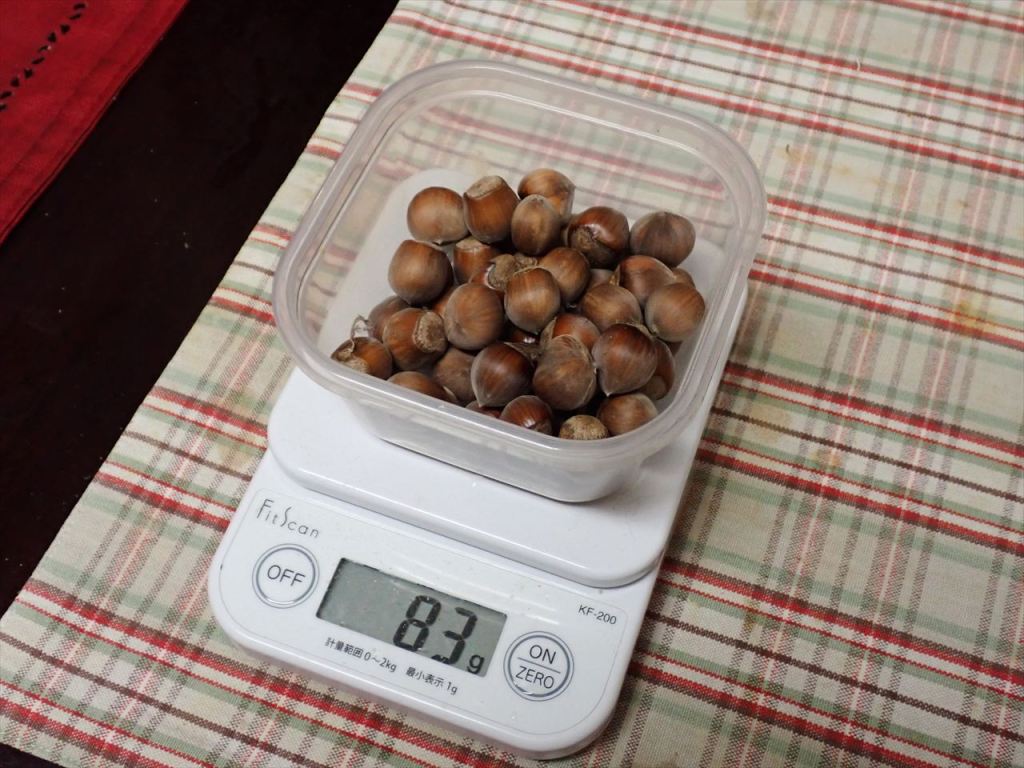
Their weight with shells was 83 gram. Of course the weight of the plastic container is excluded.
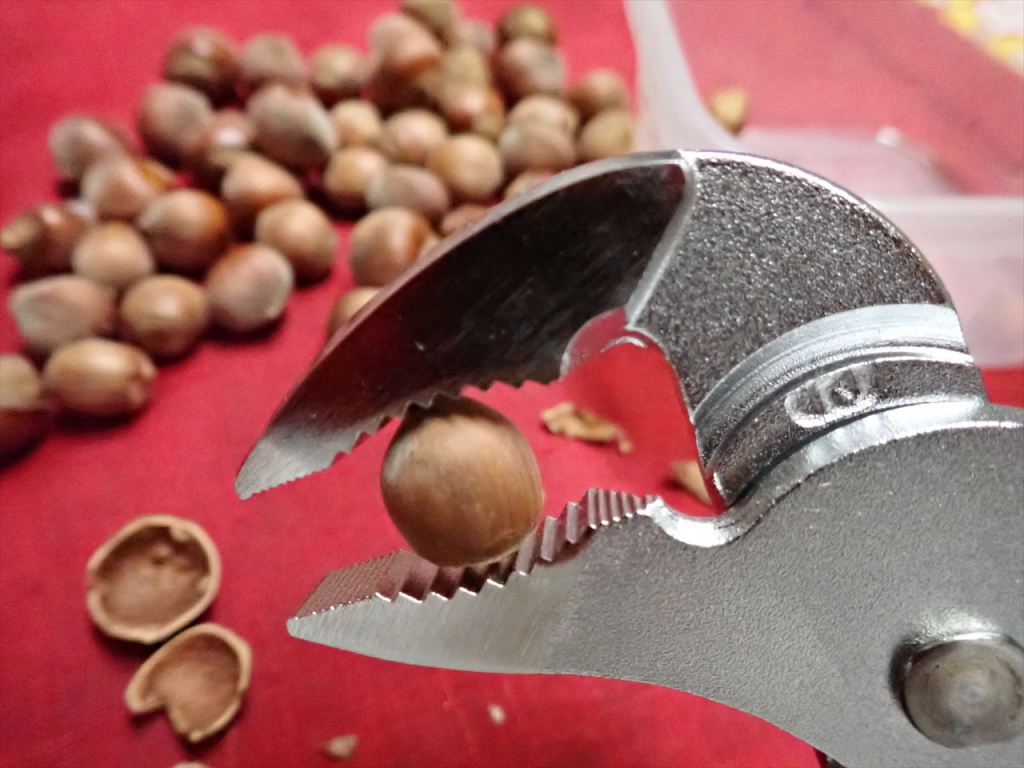
I used a “water pump pliers” to break the shells.
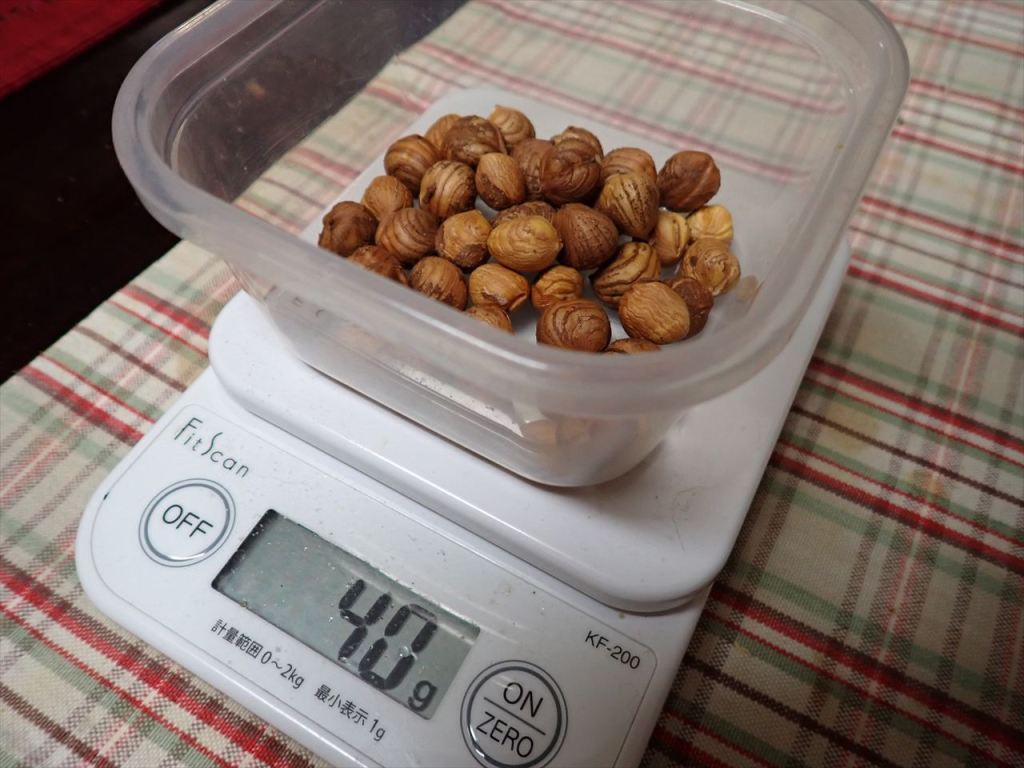
Some were rotten inside, some ran into the air, I got 40 gram of Hazelnuts without shells.
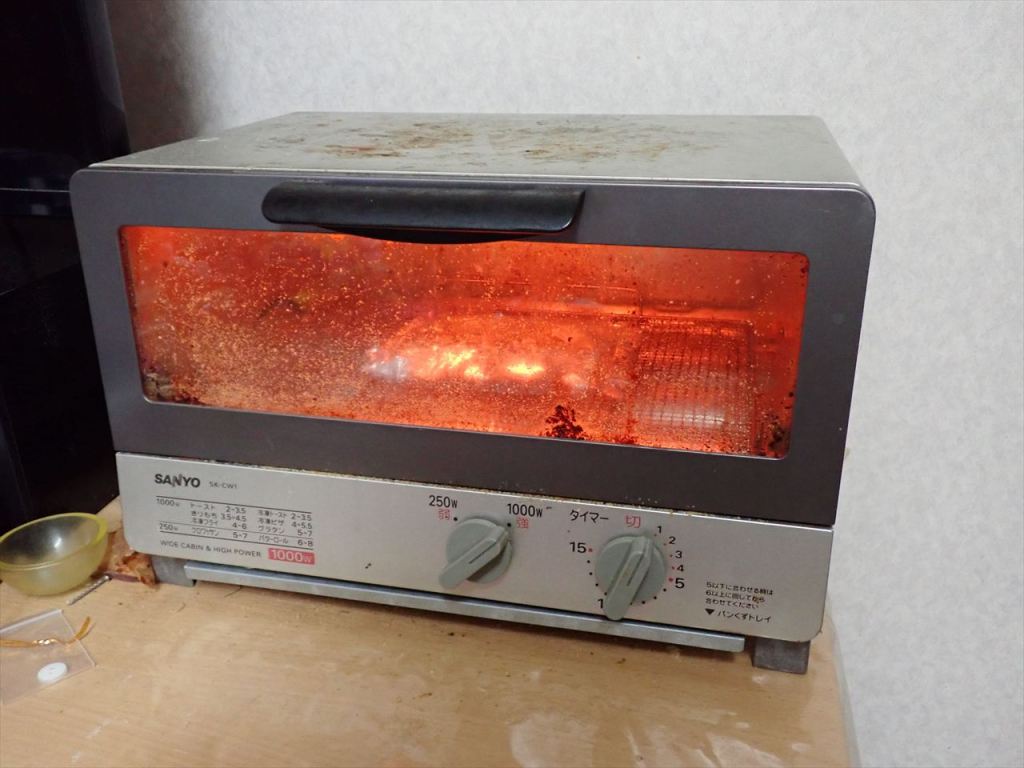
I roasted them Four minutes by an electric oven toaster.
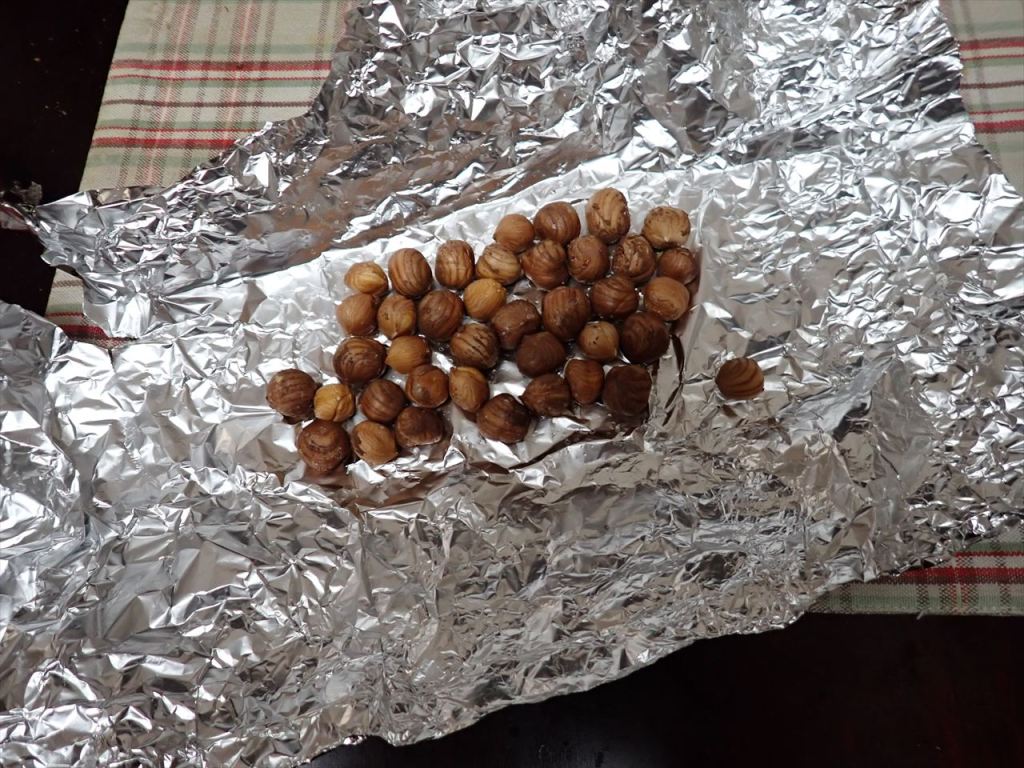
To be honest, neither their taste nor quality of roasting were good. Since they were what I could get this year, I hope I will be able to harvest more next year. And roasting procedure needs to be improved.
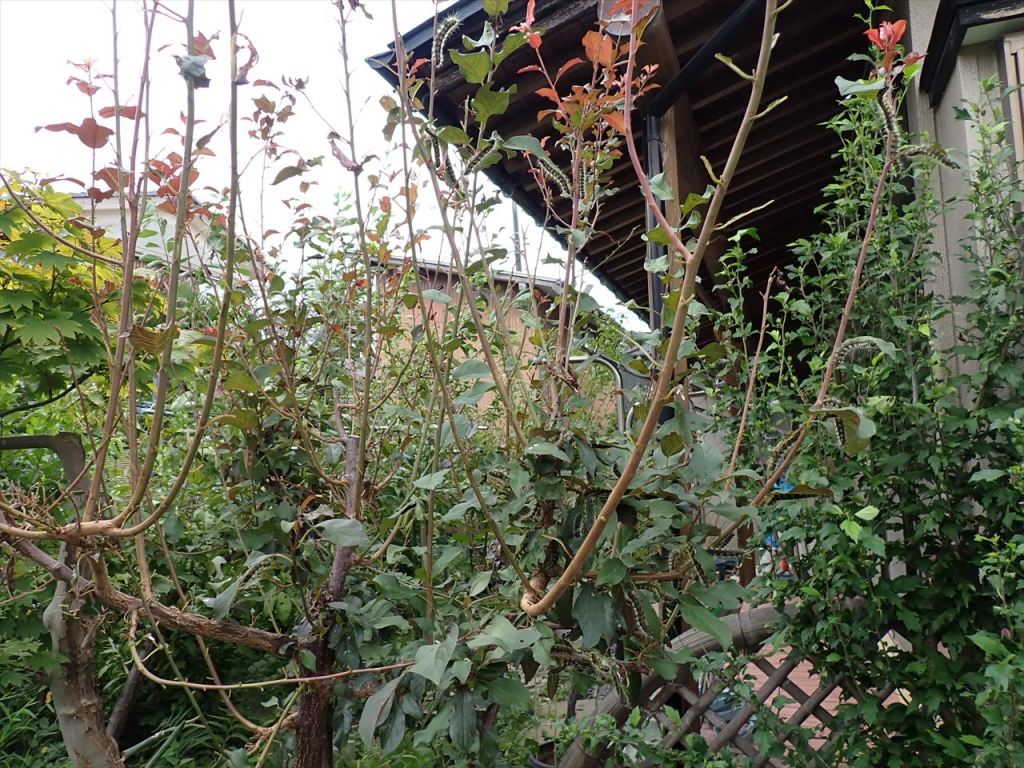
The tree was “Hollywood” which I planted for pollification to the plum “Soldam”. I don’t expect much about Hollywood to have fruits, but to have flowers so that Soldam would be able to have fruits. One thing that is impressive about Hollywood is its color of leaves. It’s dark purple. I planted that tree in the entrance of my field.
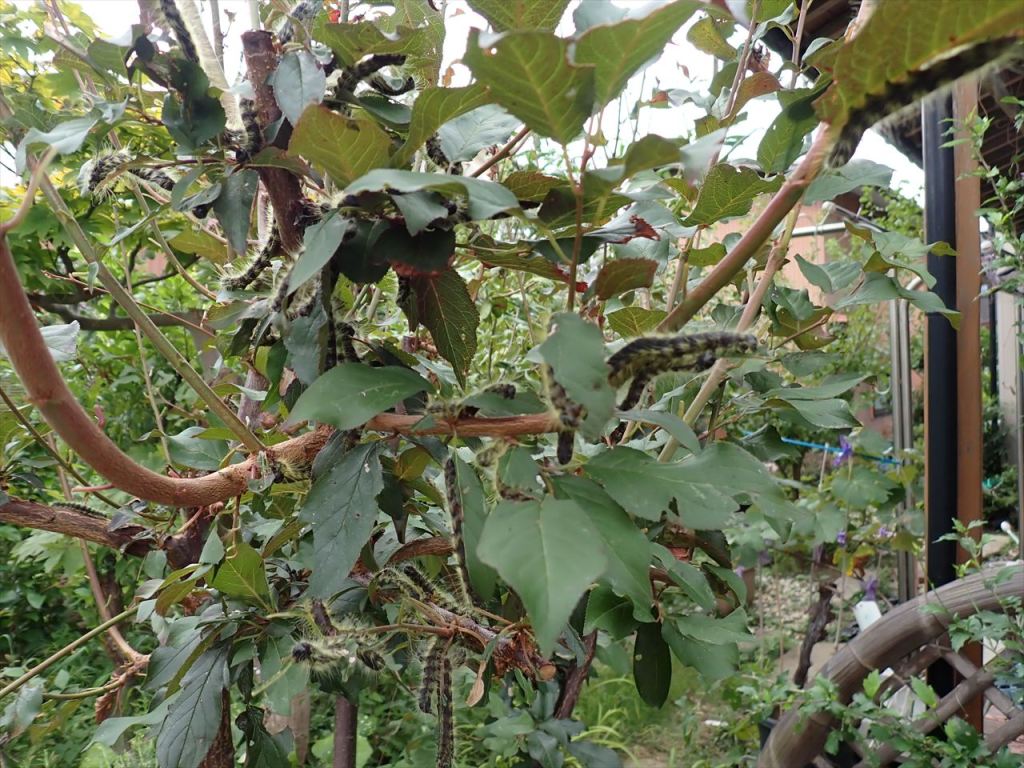
But today in the morning, I found that a lot of worms were eating the leaves. Everyday I walk through by the tree. But it is wondering I haven’t noticed until the situation has gone that worse.
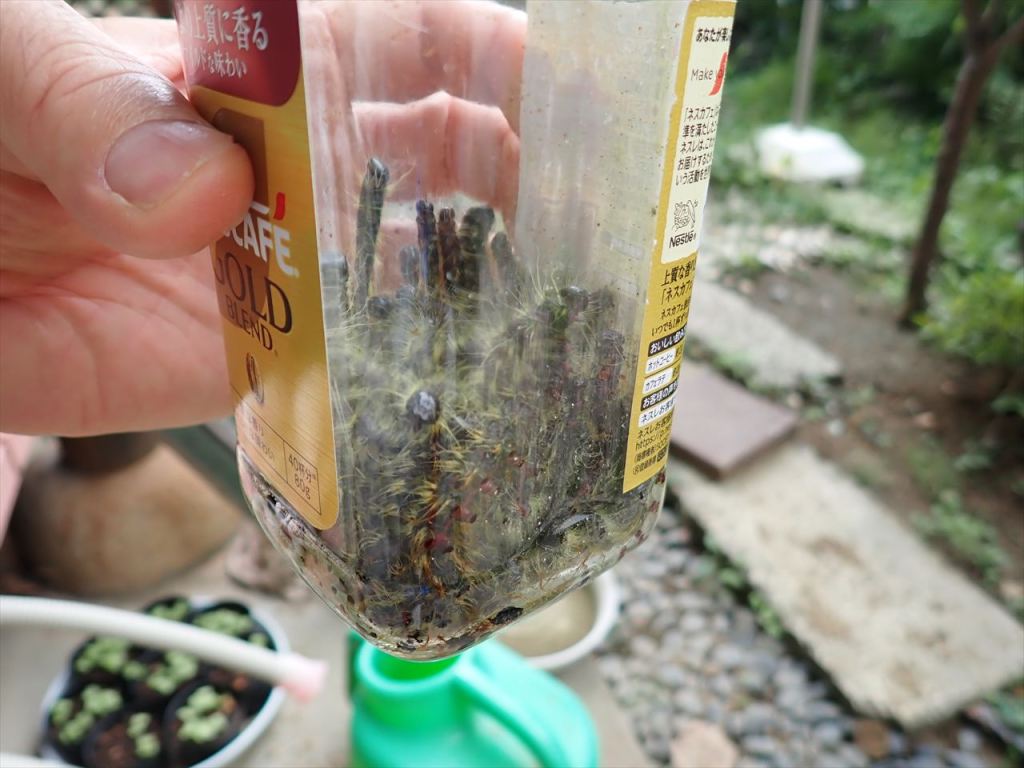
I picked them one by one with disposable chop sticks, and put them into a grass bottle of “Ne##afe”. And then I poured pesticide into the bottle and put the lid. They were moving, but some minutes later, – – – – – – – – –
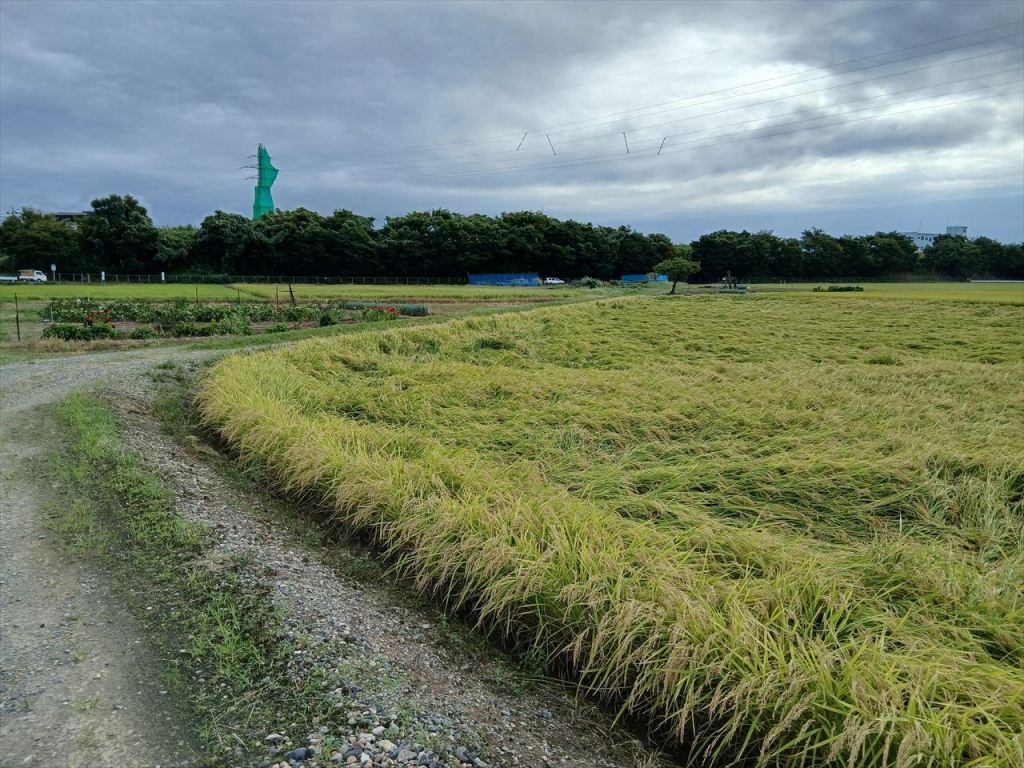
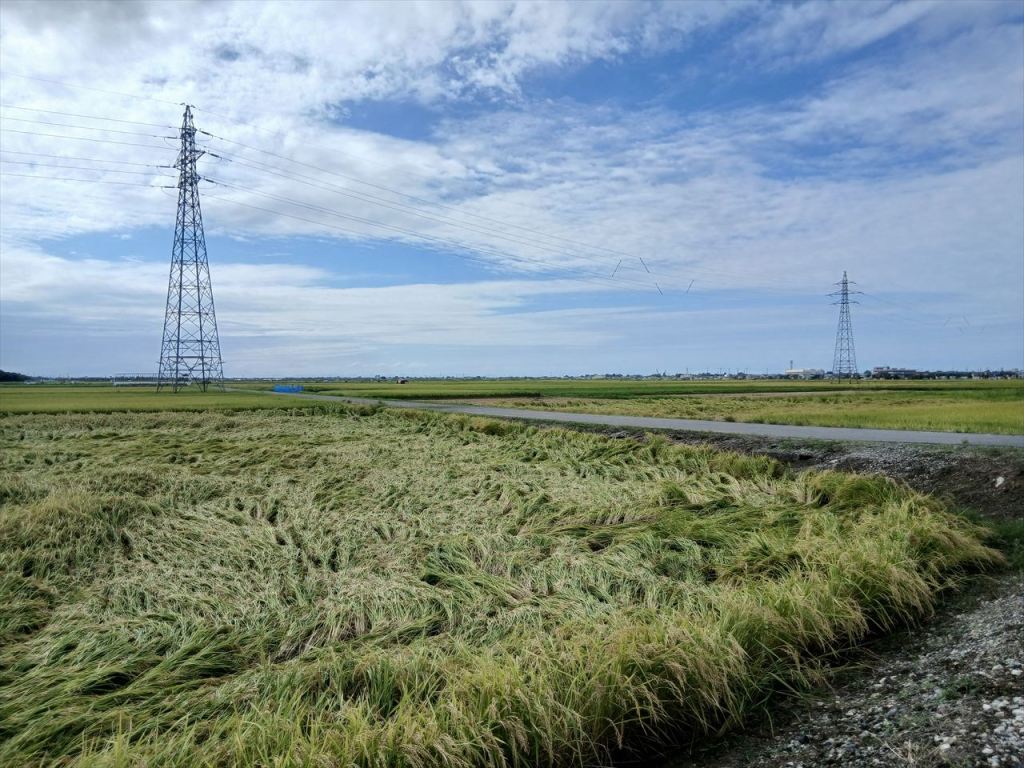
The photos were taken in the Campus on September Eighth in 2024.
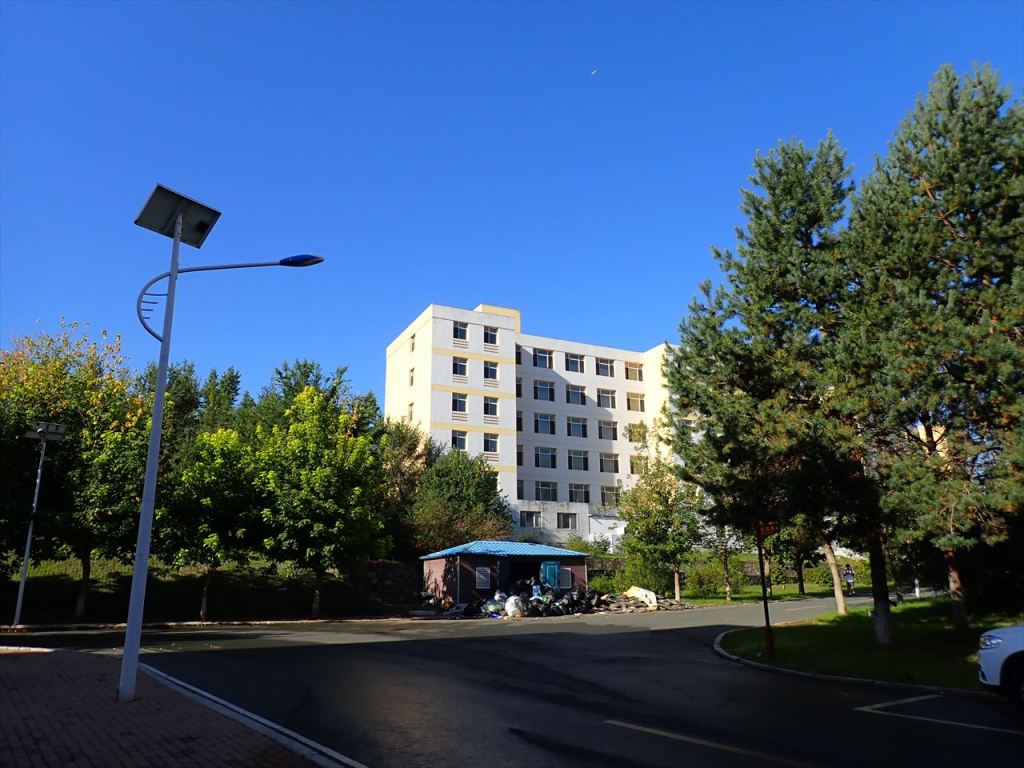
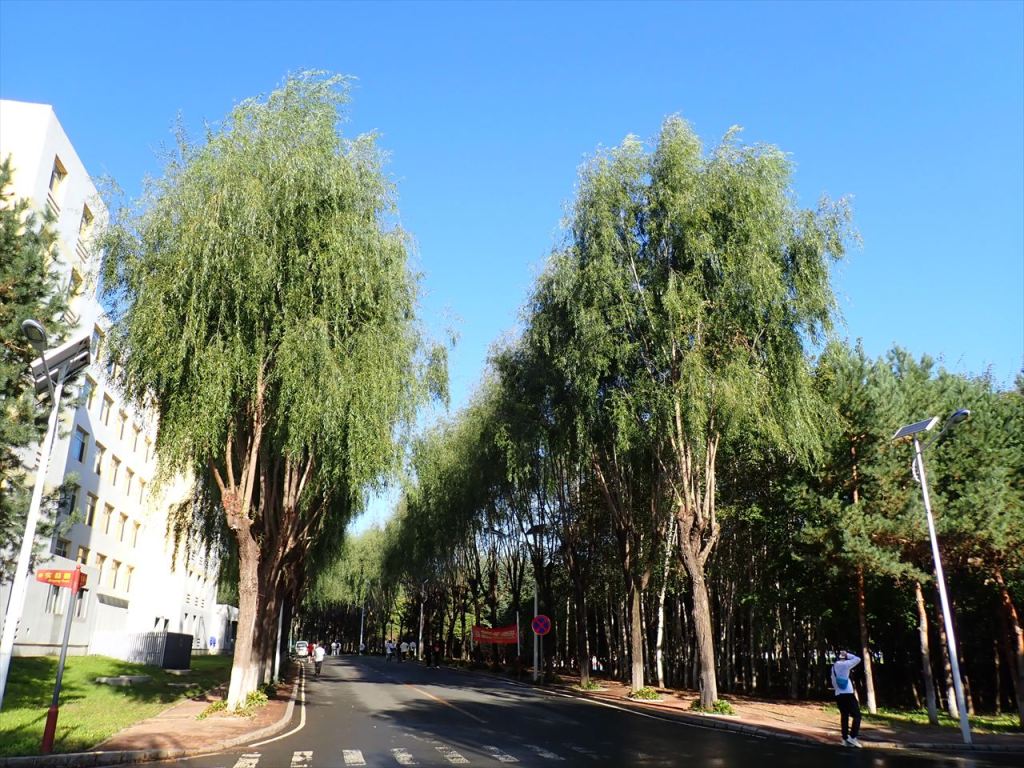
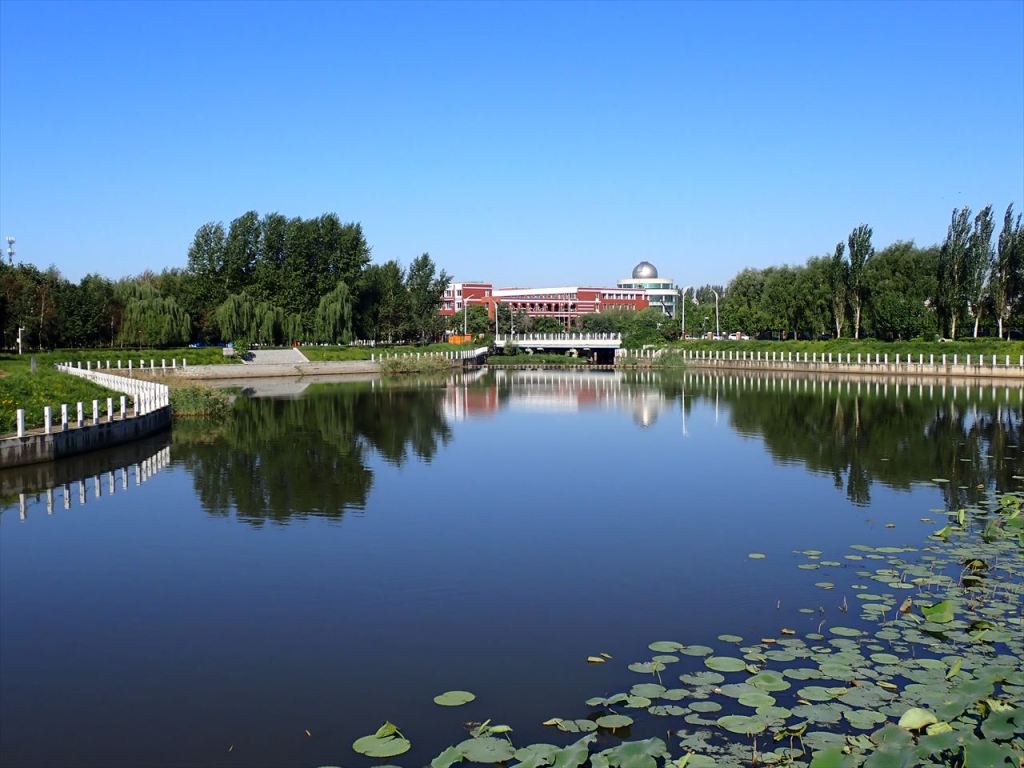
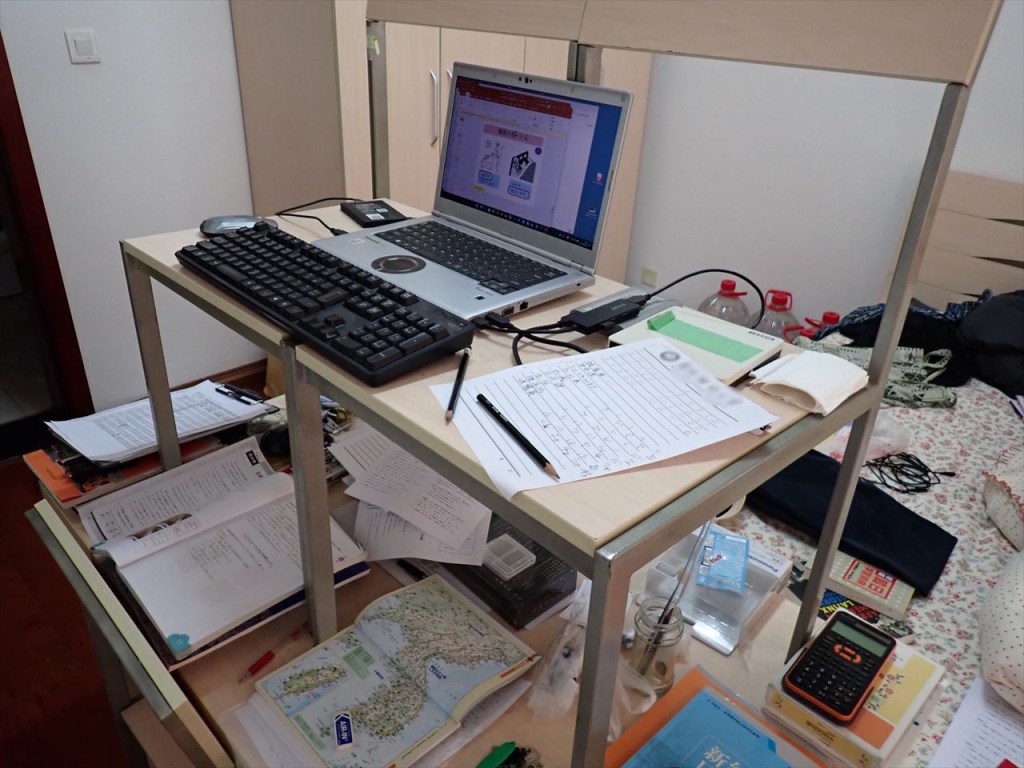
The sky was clear but my desk was dirty. Actually, I was standing when I was working with my computer, because my back was too much aching to sit on a chair. So the computer is on top of two chairs side by side, which were put on the desk.
 Agony or Fun?! Second Language Learning