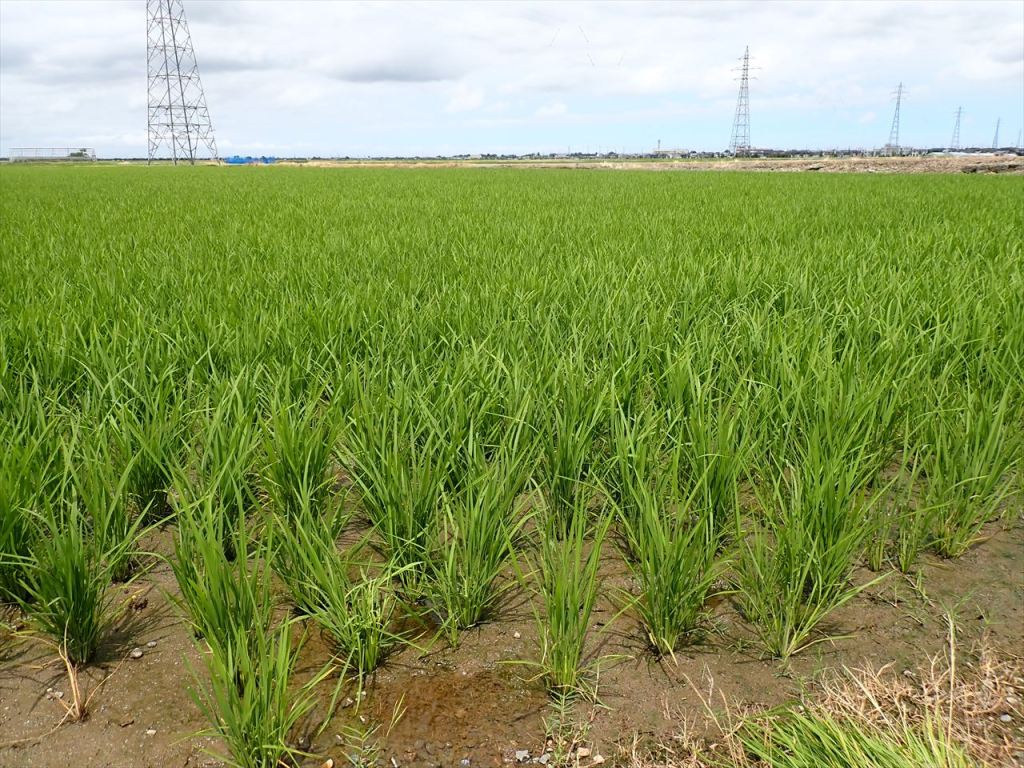
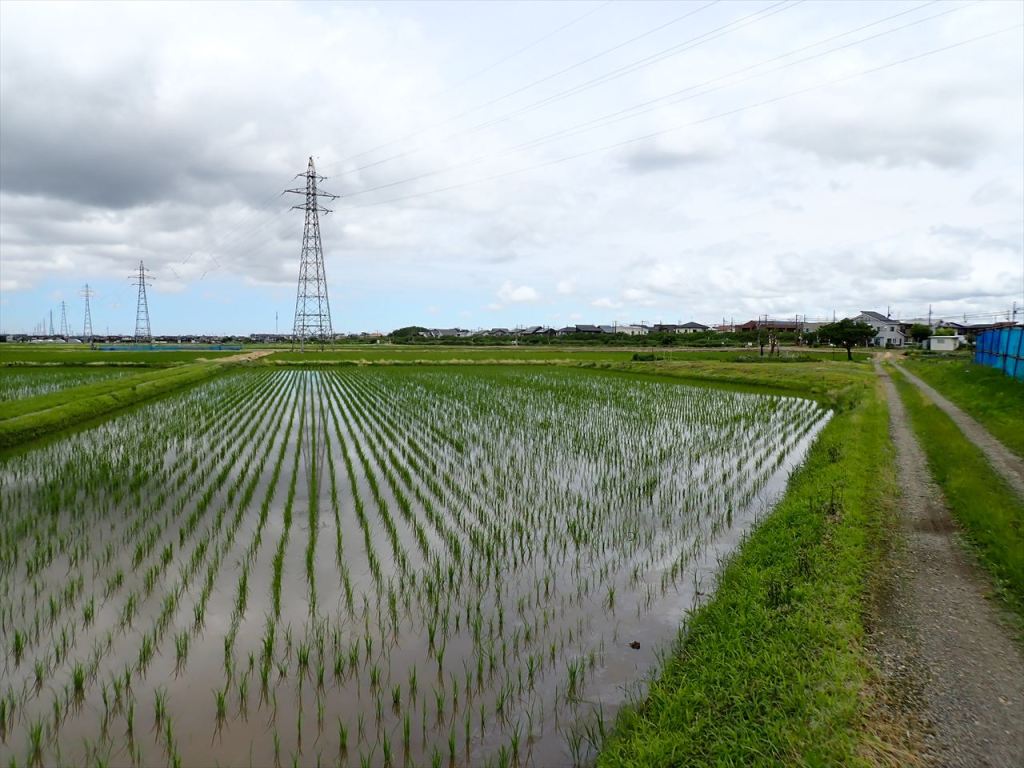
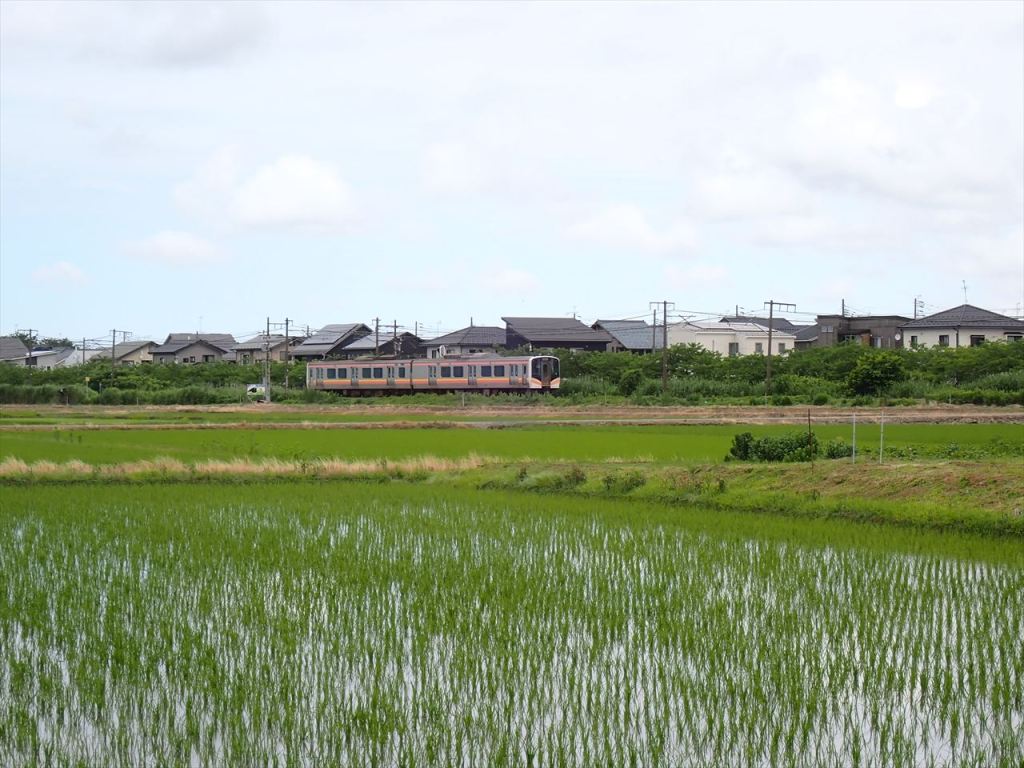
I just went to buy 15KG of chicken droppings as fertilizer. It was just 174 JPY(1.1USD) so I said to the shop clerk “I am sorry”.
Agony or Fun?! Second Language Learning
I am a native Japanese speaker who used to teach Japanese in a university somewhere on this planet. Currently I don't work but stayed in my house in Northern part of JAPAN. I hope that you could enjoy reading my posts and know what life in Japan is like.
I just went to buy 15KG of chicken droppings as fertilizer. It was just 174 JPY(1.1USD) so I said to the shop clerk “I am sorry”.
Here comes another conjugation pattern of verbs. It’s potential form that can be used to express “I can do something”. But there is a prerequisite to learn potential forms of verbs. It is to be able to use the potential expression which we have already learned;
[V-dic]+ koto ga Dekimasu.
Examples are;
1. Watashi wa 1000 me’etoru Oyogu koto ga Dekimasu. (I can swim one thousand meters.)
2. Kono Pu’uru wa Yoru 9-ji made Oyogu koto ga Dekimasu. (We can swim in this pool until 9 p.m.)
This type of potential expressions can be shortened by using potential form.
– “Long” potential expression = [V-dic] + koto ga Dekimasu.
– “Short” potential expression = [V-pt] + masu.
In general, as an expression becomes longer, it could be more polite. This is also applicable to these long and short potential expressions; the long potential expression is more polite, the short is more casual, though there is not much difference.
In the second language learning, it is likely to learn two or more expressions having similarities. And sometimes those expressions are introduced at the same time. But in “Minna no Nihongo”, the long potential expression is introduced in the section 18, and the short one in the section 27. Apparently, a time lag is placed intentionally by the writers. The following is just my thought, but, if there are two similar expressions, it is better to introduce them separately, unless the comparison between the two is much effective (*). The more basic one from the view of developmental sequence of second language learning and the more widely used one should be taught first. For example, there are two particles that can be a subject marker; they are “-wa” and “-ga”. “-wa” comes the first day of Japanese course, and “-ga” comes later. If a teacher teaches two similar expressions separately with enough time interval, a learner could master the first one well, and later learn the second one on the foundation of the first. Even if a learner fails to master one, he/she may be able to master the other one.
But quite often times, a textbook writer chooses to place two similar expressions in the same chapter of the textbook. I guess that they are doing so because it makes their job easier. What will happen is that; a teacher needs to tell the difference between the two exactly. They are similar but not identical. That means there is a small difference. Sometimes they are interchangeable, sometimes not. On the learners’ side, learning two expressions at the same time means the study load becomes double. It is likely to end up like the learner has master none of the two.
The conclusion is that I agree with the approach of “Minna no Nihongo”. Now we are going to learn Potential Form of verbs for “Short” potential expression with prerequisite that a learner has already got used to “Long” potential expression = [V-dic] + koto ga Dekimasu.”
POTENTIAL FORM of VERBS
Dictionary Form / Masu Form — Potential Form with “-u” ending / Potential Form with “masu”
<Group 2 Verbs>
Okiru / Okimasu (get up) — Okirareru / Okiraremasu
Oshieru / Oshiemasu (teach/tell) — Oshierareru / Oshiraremasu
Taberu / Tabemasu (eat) — Taberareru / Taberaremasu
<Group 3 Verbs>
Kuru / Kimasu (come) — Korareru / Koraremasu
Suru / Shimasu (do) — Dekiru / Dekimasu
<Group1 Verbs>
Gr1-W : Utau / Utaimasu (sing) — Utaeru / Utaemasu
Gr-K : Hiku / Hikemasu (play music instruments) — Hikeru / Hikemasu
Gr1-G : Oyogu / Oyogimasu (swim) — Oyogeru / Oyogemasu
Gr1-S : Naosu / Naoshimasu (repair, correct) — Naoseru / Naosemasu
Gr1-T : Motsu / Mochimasu (hold) — Moteru / Motemasu
Gr1-B : Asobu / Asobimasu (play for fun) — Asoberu / Asobemasu
Gr1-M : Yomu / Yomimasu (read) — Yomeru / Yomemasu
Gr1-R : Hashiru / Hashirimasu (run) — Hasireru / Hashiremasu
I wrote above “Potential Form with “-u” ending” but actually it is “-ru” ending. And if making Nai-form of Potential form, any of them becomes “-enai” that means that all the potential form is a kind of Group2 verb.
Example; Hashireru => Nai form : Hashir-enai
One difficult thing is to distinguish between the Group 2 verbs and Group1-R verbs.
Gr2 : Kangaeru (think) => Kangae+rareru — There is “ra” in front of “reru”.
Gr1-R : Tsukuru (make) => Tsuku+reru — There is not “ra” in front of “reru”.
If you put “ra” in the middle of G1-R, it will be a passive form and/or honorific form. That’s another difficult matter.
Gr1-R : Hairu (get into) => Haireru — Potential form
=> Hairareru — Passive form (in sec 37) or Honorific form (in Sec49)
(*) Probably the followings are cases in which comparison is effective between two expressions having similarity; “-tara,” and “-temo,” in the section 25. “-ba,” and “-nara” in the section 35.
————————————–
This post was written with reference to the exercise A1 on Section27 of “Minna no Nihongo (2nd Edition)” published by “3A Corporation”

