Online Teaching for Class 1837 (Conversation) on May 29, 2020

Date: May 29th on Friday, 2020 from 13:40 to 15:10 (14:40 – 16:10 in JST)

Course: Japanese Conversation 4

Used app: Streaming on DingTalk, Presentation by Powerpoint with 59 slides

Numbers of Students: 25 of 28, 3 were recorded as completely absent by the system.

Fully attendant for 90min : 21

Shorter signing-in: 12, 7, 2 minutes, and 29 seconds. Those who were recorded for their short participation sometimes sent 5-question quiz answer. Probably they are running other applications on their computer while the online class is ongoing.

Responses onto the BBS:

– Attendance check by a student his/herself : 26 students input “Shusseki” onto BBS. One of the 26 was actually recorded, by the system, as completely absent.

– 1st Quiz: 24 students responded. The quiz was to find a passive sentence that was correctly converted from an active sentence with four selections. Everyone got the right answer.

– 2nd Quiz: 23 students responded. The question was to find a difference of types of conjunctive particles (c.p.). Four sentences were shown to the students; three were using c.p.s that were contradictory to expectation,  one was using c.p. that was conforming expectation. The students were asked to choose the latter one. But all the students got the wrong answer. That meant the students had not got the concept of two types of conjunctive particles correctly yet; one is used when the main clause is conforming the preceding clause, the other is used when the main clause is contradictory to the preceding clause.

– 3rd Quiz: 23 students responded. The question was to check if the students understand the conversation that was of Section 37 of “Min’nano Nihongo”.

– Attendance check at the end: 21 students responded. Students were asked to compose a passive sentence from their own experience in which he/she was damaged by someone or something.

Teaching: 

– Basic concepts of Japanese passive sentences. Four types were explained.

– Exercise using the textbook.

– Listening activity using script that contained passive sentences. The convesation “Kinkakuji-wa….” in section 37 of “Minnano Nihongo” was used.

– One sentence composition at the end of the class

Homework Assignment:

– Short test of section 13 that is about passive sentences.

– Four students were asked to send a mp3 or m4a sound data by speaking the script of conversation of two part time job workers; Park-san and Chin-san that was in Dekiru Nihongo (yellow).

Issues and Problems:

Many students wrote passive sentences using intransitive verbs. It is fact that intransitive verbs also can be used for passive sentences in Japanese. However, I think that the passive sentence using transitive verbs should be prioritized in order to understand the concept of passive sentences. It seems that Japanese textbooks in this country are just trying dealing with everything about grammar. The textbook writers don’t care about what is basic or detail, what is useful to the students in practical sense, what teaching order helps student understand and so on.
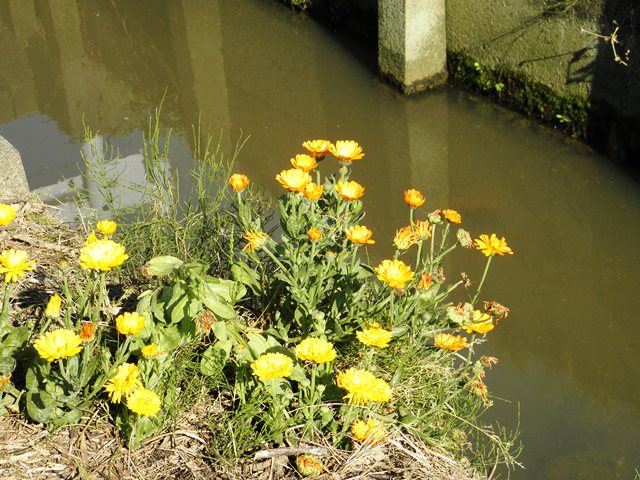
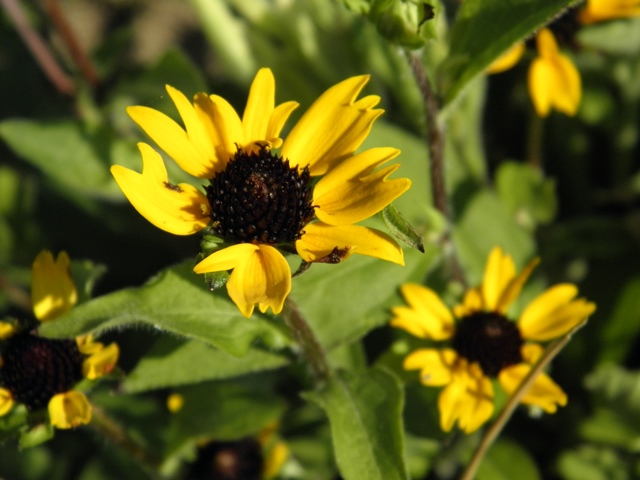
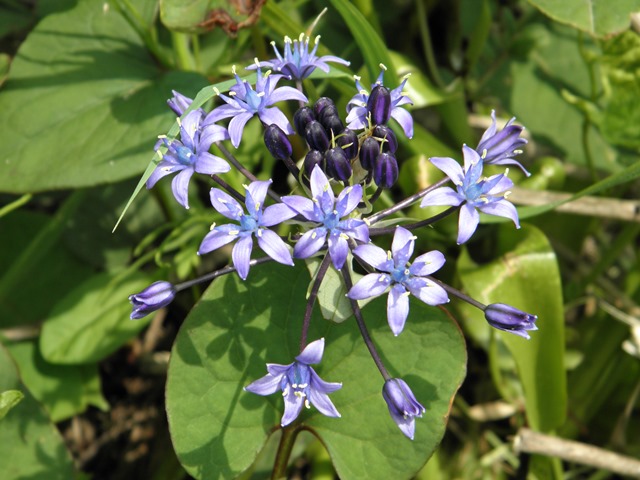
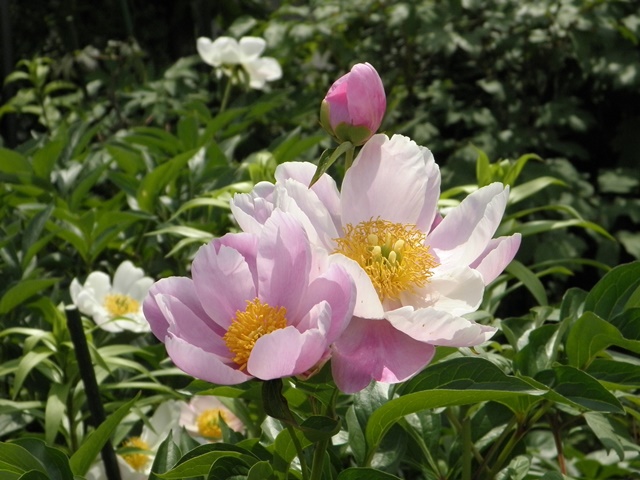
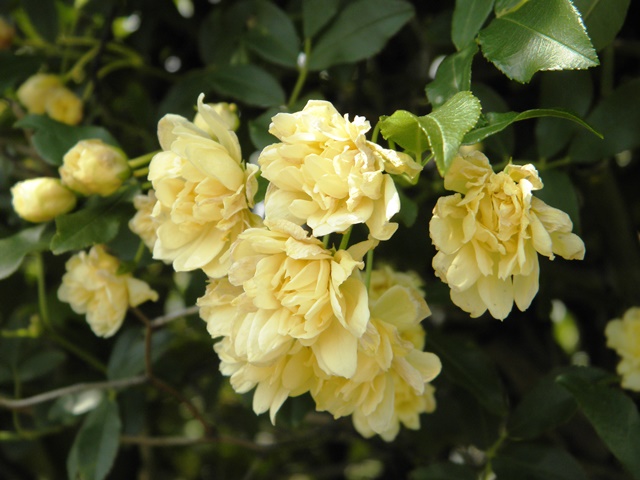
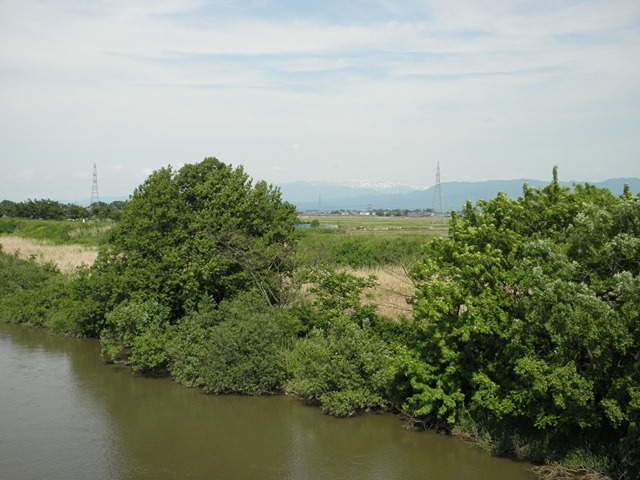
Just only for “Posting Everyday”, Pictures taken on May 28

00491

00492

00493

00494

00495

00496

00497


00498

I taught two classes today. I was so exhausted that I couldn’t go outside for a walk today. I just pulled weeds in the garden a little while after the afternoon class.

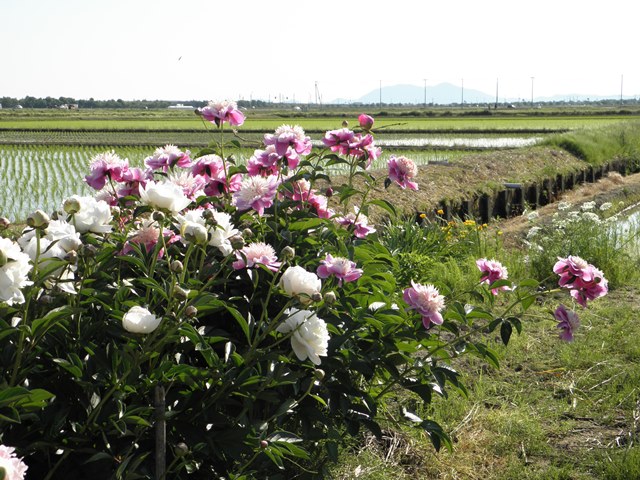
These photos were taken yesterday. I think things around here look beautiful probably because this place is where I was born and raised. When I was young I just thought about get out of my hometown. But things and I myself had changed from those years. I live here now because of corona virus pandemic. I cannot go back to my university right now, so I am doing online teaching on the internet. I will leave here for my job when things get better. I don’t know my future, but if it’s possible, I want to come back here when I retire from the job.

Online Teaching for Class 1837 (Composition) on May 29, 2020

Date: May 29th on Friday, 2020 from 8:00 to 9:30 (9:00 – 10:30 in JST)

Course: Japanese Basic Composition 2

Used app: Streaming on DingTalk, Presentation by Powerpoint with 59 slides

Numbers of Students: 25 out of 28

90 minutes attendance: 22 students

Shorter attendances: 76, 18, and one student was recorded as completely absent by the system.

completely absent: 3 students. The system record says that four students didn’t watch the streaming at all. However, one student sent me 5-questions quiz which means he listened to my class. It is possible that someone helps him, but a guy who is likely to help him was completely absent today. Therefore, I guess this student listened to my class and sent 5-question quiz answer by himself.

Responses to my requests like Quiz answers onto BBS:

Attendance check: 27. Of the 27, three students were recorded that they didn’t watch the streaming. One student sent me the 5-question quiz answer, while two sent nothing. This is why I think there were 25 students in today’s class.

5-question quiz took a place of quiz by answering on BBS. What I call 5-question quiz is  that I ask the students to write their answers onto a sheet of paper during the class and then, right after the class, the students sent 5 answers to me.

Today too, I did this 5-question quiz. However, I wanted to confirm if the students were really connected or not, I asked the students to input A, B, or C onto BBS in the middle of the class once. A meant “I live in a city”, B meant “I live in a countryside”, and C meant “I live in a remote area”.

Teaching:

Teachings were almost identical to the class for 1836 on Tuesday.

Homework:

Homework assignment was also almost identical to what was assigned for class 1836.

Issues and Problems:

I have got a problem with this composition class for sophomore students. Actually I don’t have enough resource to teach under current circumstance. Even I don’t have the designated textbook. I think I can continue the class with writing a paper for tourism. But other than that, how I continue to teach until the end of semester? This is a quite serious issue.

An Isolated Blog has got a lot of Pictures, May 28

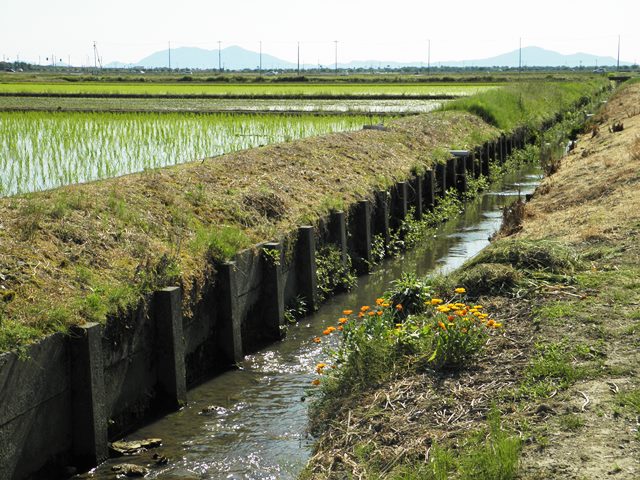
I got clear sky near the end of May in Niigata. I don’t have any online Japanese class on Thursday. No class and fine weather mean that I need to take a walk.

00484

Two mountains behind are Mt. Yahiko and Mt. Kakuda. Roughly Mt.Yahiko is 600 meter  and Mt.Kakuda is 400 meter in height.


00485

Believe me. I am not a railway geek.


00486

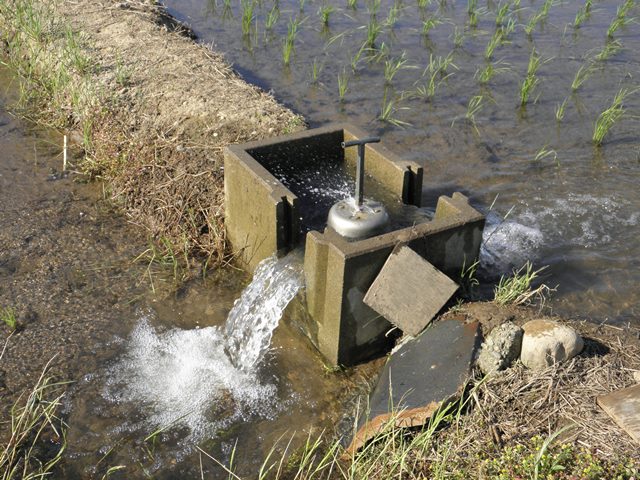
Fill the rice field with fresh water! It makes me feel good to see water is splashing and streaming.


00487

By the way, Niigata is a land of paddy rice. So wheat growing is very rare.


00488

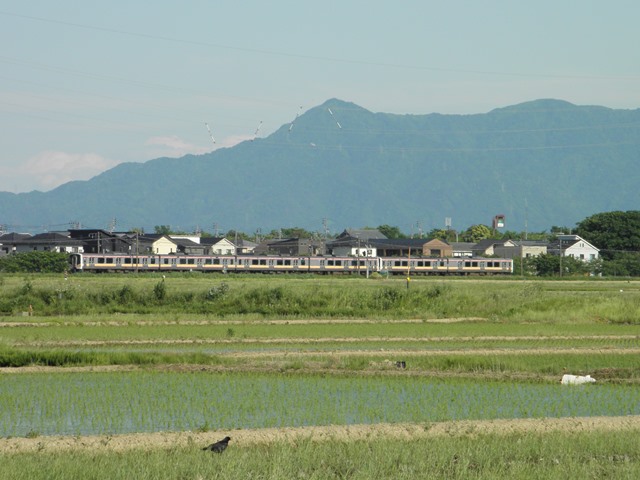
Mt.Sugana-dake, a local train, and black bird. The sharp peak is impressive, but it is not the peak of Mt. Sugana-dake. I guess, not-sharp, a gentle peak in right is the real peak of the mountain.


00489

This is a kind of magic by telephoto lens.


00490

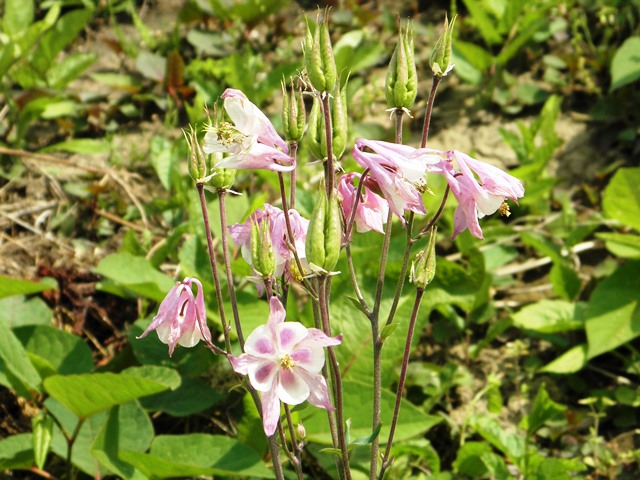
White flowers of clover. This time I didn’t forget to bring a face mask. So I could go to a nearby supermarket to buy some food for my supper.

I have other pictures taken on Sunday, May 24

00478

00479

00480

00481

00482

00483

Today is May 27, Wednesday. I have done a listening class for the first grade in the morning. Actually, I didn’t sleep on a bed yesterday. Since I had been preparing for the class through the night, I slept on the hard tatami mat just for a several hours. If I felt good during the day, I would like to work in the garden to take a care of vegetables that the neighbor planted for me. But I didn’t feel well today. And it started raining in the afternoon. I wanted to take a walk and go shopping, but because of rain, I decided to stay home. The state of emergency has already been lifted here, so it is no problem to go outside now, but still I need to put a face mask when I go to shopping.

Online Teaching for Class 1836 (Composition) on May 26, 2020

Date: May 26th on Tuesday, 2020 from 15:30 to 17:00 (16:30 – 18:00 in JST)

Course: Japanese Basic Composition 2

Used app: Streaming on DingTalk, Presentation by Powerpoint with 58 slides

Numbers of Students: 28

25 students participated for whole 90 minutes.

3 students were recorded for their short attendances: two students were with me for 85 minutes, and one students left the shortest record of 1 minute.

Responses to my requests like Quiz answers onto BBS:

– Attendance check by reporting his/her-selves: 28.

– 5 Quiz were given to the students during the class. Answers to the 5-quiz were sent to me right after the class. Quiz to be posted on BBS was not given today. 27 students sent the answers to me.

Teaching:

1. Review for the 5-q quiz of the last class.

Use of “-made” that indicates the end of continuity of something.

2. Writing a paper about the sightseeing of a particular prefecture of Japan.

A caution was given to the students. They shall not make an unauthorized reproduction of photograph when writing a paper.

3. Some tips for writing a composition using the textbook.

Intransitive verbs “mieru” and “kikoeru”.

Homework:

Style corrections on their draft and proofreading themselves.

Issues and Problems:

This class starts at 4:30 p.m. in J.S.T. every Tuesday. I started preparing for the class in the morning and tried making enough PPT slide without having a break until 4:30 p.m. I didn’t think of what to teach to the students until the last minutes. As a result, my 58 PPT slides were neither short nor too many. So I could somehow teach 90 minutes composition class with hodge-podge topics. However, this time was surely an embarrassing and regretful experience to me because of my ill-preparedness, not having a good idea for what to teach.

Online Teaching for Class 1837 (Conversation) on May 25, 2020

Date: May 25th on Monday, 2020 from 8:00 to 9:30 (9:00 – 10:30 in JST)

Course: Japanese Conversation 4

Used app: Streaming on DingTalk, Presentation by Powerpoint with 68 slides

Numbers of Students: 25 out of 28. 3 students were recorded as completely absent.

Fully attendant for 90min : 21

Shorter signing-in: 81, 72, 59, and 3 minutes.

Responses onto the BBS:

– Attendance check by a student his/herself: 25. However, one student of the 25 was recorded as completely absent by the system. Two came late and stayed shorter times.

– 1st Quiz: 21 students responded. This was to know which verbs need to be “-rareru” for passive form instead of  “-reru”.

– 2nd Quiz: 21 students responded. This was to choose a sentence using a conjunctive particle regretful “-noni” .

– 3rd Quiz: 19 students responded. This was just a joking that asked who built the Osala Castle; Toyotomi Hideyoshi or carpenters. If one answered “Toyotomi Hideyoshi”, then the asking person will change the answer to carpenters. If one answered “carpenters”, then the asking person will change the answer to Toyotomi Hideyoshi. The purpose of this question was to introduce one type of passive sentences like “The main castle was built in 1931.”

– Attendance check at the end: 20 students responded. This was to choose a passive sentence from the four.

Teaching: 

– How to make a passive form of a verb, focusing on which verbs could be “rareru”.

– Basics of passive sentences in Japanese.

– Review of the passive sentences in which a person who made an action was clear.

– Introduction and exercise of passive sentences using intransitive verbs.

– Introduction and  exercise of passive sentences that do not difine who made the action.

Homework Assignment:

– No homework was assigned.

– Three students were asked to send a MP3 or M4A by Wednesday night. Those students were asked to record their own speaking of conversation between two part time job workers.

Issues and Problems:

Since this is conversation class, I should facilitate students’ utterances. But I feel it technically difficult for me to do so under the current conditions. I mean, I don’t think the online teaching can be a substitute of class activities. No way.

Online Teaching for Class 1837 (Conversation) on May 22, 2020

Date: May 22th on Friday, 2020 from 13:40 to 15:10 (14:40 – 16:10 in JST)

Course: Japanese Conversation 4

Used app: Streaming on DingTalk, Presentation by Powerpoint with 62 slides

Numbers of Students: 24 of 28, 4 were recorded as completely absent

Fully attendant for 90min : 21

Shorter signing-in: 65, 59, and 44 minutes.

Responses onto the BBS:

– Attendance check y a student his/herself : 26 students input “Shusseki” onto BBS. Two of the 26 were actually recorded by the system, as completely absent.

– 1st Quiz: 23 students responded. The quiz was about “Ra-omission” among younger generation. The students were asked to choose one sentence that could  be “Ra-omission”. There were three sentences using passive, respectful, and potential “V-rareru”.

– 2nd Quiz: 21 students responded. The question was to find a similarity in use of the particle “-ni” in one sentence from the four. The particle “-ni” indicates a person who initiates an action in passive sentences as well as give-and-take sentences.

– 3rd Quiz: 23 students responded. The question was to think about emotions in the four situations in the textbook. Only one was positive (pleased), but three were negative emotions. The purpose of the question was to make the students know that Japanese passive sentences are used, in many cases, to express when a person gets damaged.

– Attendance check at the end: 22 students responded. Students were asked to input a passive form of a verb with ending “-ta”. Some students input passive forms of intransitive verbs. It is an interesting nature of Japanese to use intransitive verbs for passive expression. However, in order to introduce the concept of passive sentences, I should have limited the verbs for this question to transitive verbs only.

Teaching: 

– Review for short test that was about conditional conjunctive particles “-to,” and “-tara,”.

– Introduction of passive sentences using Dekiru Nihongo (Yellow).

– Practices of passive sentences using the textbook. The types of passive sentences were limited today to types in which the person making action was clear.

– Introduction of a conjunctive particle; regretful “-noni”

Homework Assignment:

– No homework assignment to submit that was for every students.

– Only four students were asked to send a mp3 or m4a sound data by speaking the script of conversation of two part time job workers; Park-san and Chin-san that was in Dekiru Nihongo (yellow).

Issues and Problems:

This is a conversation class. Therefore I don’t think it is my duty to introduce grammatical things about passive sentences. However, I was not sure how much the students have already got used to passive sentences. Perhaps I may need to spend more time for rote exercise like conversion to passive form together with exercise for meaningful conversation.

Online Teaching for Class 1837 (Composition) on May 22, 2020

Date: May 22th on Friday, 2020 from 8:00 to 9:30 (9:00 – 10:30 in JST)

Course: Japanese Basic Composition 2

Used app: Streaming on DingTalk, Presentation by Powerpoint with 57 slides

Numbers of Students: 25 out of 28

90 minutes attendance: 16 students

Shorter attendances: 86, 86, 85, 84, 76, 57, 44, 37 and almost 0 minutes.

completely absent: 3 students

Responses to my requests like Quiz answers onto BBS:

Attendance check: 25. One student sent the message of his?her attendance, but the system recorded that student as “Completely Absent”. One student came late.

BBS was not used for quiz in this class as class 1836 on Tuesday. A student wrote 5 answers on his/her note or memo whatever, and then he/she was asked to send five answers right after the class.

Teaching:

Teachings were almost identical to the class for 1836 on Tuesday.

1. Review for the 5-q quiz of the last class.

2. Writing a paper about the sightseeing of a particular prefecture of Japan.

3. Some tips for writing a composition using the textbook.

– Differences between particles “-wa” and “-ga”.

– A sentence that could avoid being “Wa-ga construction” for a Na-adjective “Yuumei-na” by particle “-de”.

– Intransitive verbs for perception ;”mieru” and “kikoeru”

Homework:

As mentioned in teaching #2, some tasks for writing a paper were assigned as homework.

– Enhancement for the document style.

– Shading your prefecture on the map of Japan.

– Making a table to introduce your prefecture with basic information

– Pasting these figure and map on the draft.

– Start writing the chapters for the introduction of the prefecture and its tourism.

Issues and Problems:

Perhaps it could be questionable as to what I am doing now. The question is whether or not it would be appropriate to teach how to make document style for a research paper in a composition class. There are two reasons why I do this. One is that I was actually criticized by another teacher for what I have done for composition class in the first semester. In order to avoid duplication or “encroachment on other teacher’s territory”, I chose this task. I don’t think any other teachers teach how to write a research paper. The other reason is that this is the only thing that I can deal with right now. I am less experienced to teach composition, but have some experience of technical writings.