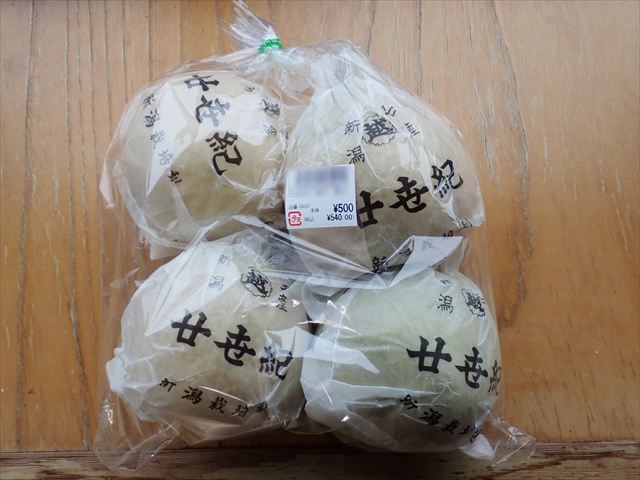
Now it’s twenty-first century. But when I was a kid, it was twentieth century. Interestingly enough, there was one kind of pears whose name was “Nijyusseiki”. This “Nijyusseiki” means “Twentieth Century(二十世紀)”. When I was a kid, I had eaten that pear quite often, because it was a major pear in Japan. But recent years, it is very rare to see the “Twentieth Century” on the shelves in supermarkets. According to a book that I bought recently, the percentages of planting areas are as follows : 幸水(Kousui) 40%, 豊水(Housui) 27%, 新高(Niitaka) 9%, 二十世紀(Nijyusseiki) 9%*. In my impression, those major pears like Kousui and Housui are sweeter than Nijyusseiki. I think that is the reason why Nijyusseiki is no longer a major pear in the supermarkets in Japan.
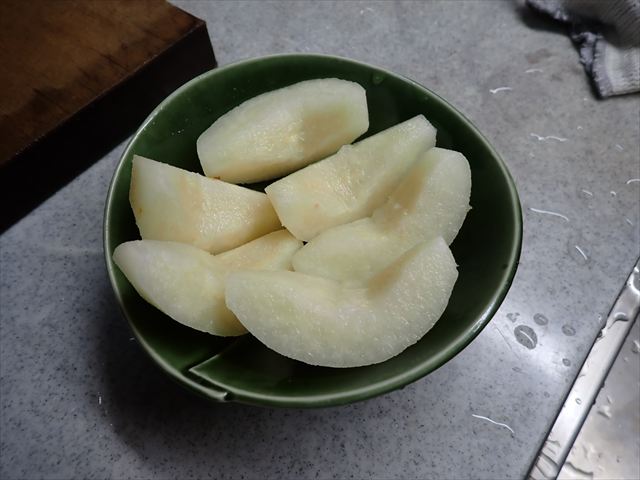
There is a small corner in the supermarket where I go once in two days. The corner sells products coming through the more direct supply route from farmers. I found that the pear “Twentieth Century” was being sold by 500 JPY in that corner. There were four in one package. It was rare and I just wanted to taste what I ate in my childhood again. I bought one package.
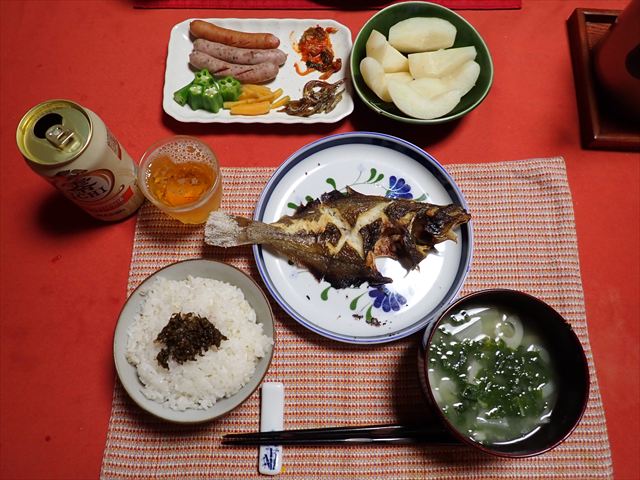
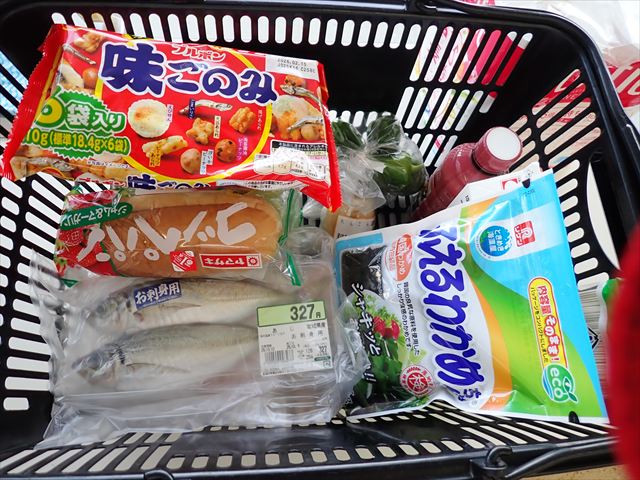
Oh, by the way, I really want you to know that a grilled fish must be placed with its head towards LEFT. It is one of the very basics of Japanese cuisine. However, you see in the above photo, the fish’s head facing right. It is natural to place the grilled fish with its belly in front, and its back in the back. So, this type of flounder (鰈:カレイ) is put on a dish so that it would face right. Otherwise, the fish would be up-side-down. In the other type of flounder (平目:ヒラメ) is put on a dish facing left like other fishes.
*伴野潔ほか、”農学基礎シリーズ 果樹園芸学の基礎”, 一般社団法人 農村漁村文化協会, 2013.10.25, p24, 図2-II-3









 Agony or Fun?! Second Language Learning