
Agony or Fun?! Second Language Learning
I am a native Japanese speaker who used to teach Japanese in a university somewhere on this planet. Currently I don't work but stayed in my house in Northern part of JAPAN. I hope that you could enjoy reading my posts and know what life in Japan is like.
A new conjugation pattern is introduced in the section 37, which is the Passive form. Example sentences will be shown in A2 through A6. So for today, only patterns of the passive form of verbs are shown in this post. Plus, this post discusses the difference between passive and potential forms of Group1-R verbs.
PASSIVE FORM of VERBS
Dictionary Form / Masu Form — Passive Form with “-u” ending / Passive Form with “masu”
<Group 2 Verbs>
Miru / Mimasu (see, watch, look at) — Mirareru / Miraremasu
Homeru / Homemasu (praise) — Homerareru / Homeraremasu
Kuraberu / Kurabemasu (compare) — Kuraberareru / Kuraberaremasu
<Group 3 Verbs>
Kuru / Kimasu (come) — Korareru / Koraremasu
Suru / Shimasu (do) — Sareru / Saremasu
<Group1 Verbs>
Gr1-W : Tsukau / Tsukaimasu (use) — Tsukawareru / Tsukawaremasu
Gr-K : Kiku / Kikimasu (listen to, hear) — Kikareru / Kikaremasu
Gr1-G : Kagu / Kagimasu (smell(as transitive verb)) — Kagareru / Kagaremasu
Gr1-S : Osu / Oshimasu (push) — Osareru / Osaremasu
Gr1-T : Matsu / Machimasu (wait) — Matareru / Mataremasu
Gr1-B : Yobu / Yobimasu (call) — Yobareru / Yobaremasu
Gr1-M : Fumu / Fumimasu (tread on) — Fumareru / Fumaremasu
Gr1-R : Kiru / Kirimasu (cut) — Kirareru / Kiraremasu
When it comes to verb conjugation, it is always confusing as to difference between Group2 verbs and Group1-R verbs. In the case of passive form, it seems that both are just “stem plus raremasu”. But a difficult thing happens to Group1-R verbs. Take a look at the followings;
1. Mira’a-san wa Sashimi ga Taberaremasu. (Mr.Miller can eat Sashimi.)
“Taberaremasu” is the potential form of “Taberu/Tabemasu”.
2. Mushi wa Tori ni Taberaremasu. (An insect is eaten by a bird.)
“Taberaremasu” is the passive form. Therefore, in the case of “Taberu/Tabemasu” that is a Group2 verb, the potential form and the passive form are the same. Both are “[Stem]+raremasu”.
3. Sato-san nara, Tesuto de Kyuujuu-Go ten Toremasu. (When it comes to Sato-san, she can get 95points in the examination.)
“Toremasu” is the potential form of “Toru/Torimasu”.
4. Son’na Tokoro ni Saifu o Oitara, Toraremasu. (If you leave your wallet on such a place, you will be stolen it.)
“Toraremasu” is the passive form of “Toru/Torimasu”. Then you will find that the potential form and the passive form are not the same. Examining the verb “Toru/Torimasu” by making Nai-form, it is To<ra>nai. It indicates that “Toru/Torimasu” is a Group1-R verb. So, it is important to know that the potential form and the passive form of Group1-R verbs are not the same.
– Potential form of Gr1-R = [Stem]+ reru/remasu.
– Passive form of Gr1-R = [Stem]+ rareru/raremasu.
The following examples show you in the order of Dictionary form/Masu-form — Potential form — Passive form
– Uru/Urimasu (sell) — Ureru/Uremasu — Urareru/Uraremasu
– Okuru/Okurimasu (send) — Okureru/Okuremasu — Okurareru/Okuraremasu
– Kiru/Kirimasu (cut) — Kireru/Kiremasu — Kirareru/Kiraremasu
– Sawaru/Sawarimasu (touch) — Sawareru/Sawaremasu — Sawarareru/Sawararemasu
– Suwaru/Suwarimasu (sit) — Suwareru/Suwaremasu — Suwarareru/Suwararemasu
– Tsukuru/Tsukurimasu (make) — Tsukureru/Tsukuremasu — Tsukurareru/Tsukuraremasu
– Tomaru/Tomarimasu (stay at night) — Tomareru/Tomaremasu — Tomarareru/Tomararemasu
– Toru/Torimasu (take) — Toreru/Toremasu — Torareru/Toraremasu
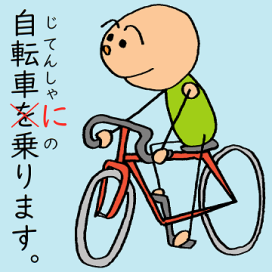
– Noru/Norimasu (ride) — Noreru/Noremasu — Norareru/Noraremasu
– Hairu/Hairimasu (enter) — Haireru/Hairemasu — Hairareru/Hairaremasu
The above examples are all Group1-R verbs. I don’t want to confuse you, but the potential form and the passive form are the same for Group2 verbs, for example;
Karitu/Karimasu (borrow) — Karirareru/Kariraremasu — Karirareru/Kariraremasu
Wasureru/Wasuremasu (forget) — Wasurerareru/Wasureraremasu — Wasurerareru/Wasureraremasu
How to distinguish whether a verb is Group1-R or Group2 is as follows;
<1> Make Nai-form
<2> What is the letter(s) in front of “nai”?
<3> If it’s [ra]nai, the verb is Group1-R
If it’s [i]nai or [e]nai, the verb is Group2
Example;
Kiru/Kimasu (wear) => Nai-form is Kinai => Group2
Kiru/Kirimasu (cut) => Nai-form is Kiranai => Group1-R
————————————–
This post was written with reference to the exercise A1 on Section37 of “Minna no Nihongo (2nd Edition)” published by “3A Corporation”

