Japanese Learning: One of Verb Conjugation Forms, “Te-Form”; [Verb Stem]+ te/ite/ide/tte/nde/shite

Some of words in Japanese conjugate. The word groups that conjugate are Verb, I-adjective, Na-adjective, and Auxiliary verb. These conjugating words change at the end part of the word, while the head of the word does not change.

[Word to conjugate] = [Unchanging Part] + [Changing Part]

Take a look at verb “Kau” which means “buy” in English.

– Dictionary form = Kau

– Nai form = Kawanai

– Masu form = Kaimasu

You can see that the head of the word “ka” doesn’t change, and its end part changes to be “u”, “wanai”, and “imasu”.

There are many conjugation forms in addition to the three above. But here is a basic thing about conjugations of Japanese words. It is not only for verbs, but also for I-adjectives and Na-adjectives. You need to know two patterns; one is a conjugating word being placed in front of a noun, the other is a conjugating word being placed in front of another conjugating word.

1. [Conjugating word] + [Noun]

2. [Conjugating word] + [Another conjugating word]

For sake of simplicity, let us think of 2 as [Conjugating word] + [Another verb]. Using these basic concepts, we can classify properties of those conjugation forms.

– Dictionary form = Kau — can be placed in front of a Noun

– Nai form = Kawanai — can be placed in front of a Noun

– Masu form = Kaimasu — must be the ending of a sentence

– Te form = Katte — can be placed in front of another verb

So “Te-form” of a verb is a conjugation pattern that can be placed before another verb (or another conjugating word, too be exact).

The followings are examples of “Te-form” of verbs. Note that the list is written in the order of a Masu-form and a Te-form.

Group 2 Verbs

– Imasu — Ite

– Mimasu — Mite (Be careful, it’s not “Mitte”)

– Nemasu — Nete

– Okimasu — Okite (This is “Get up/wake up”. Not “put on”)

Group 3 Verbs

– Kimasu — Kite

– Shimasu — Shite

– Benkyoushimasu — Benkyoushite

Group 1 Verbs

– Tsukaimasu — Tsukatte

– Kakimasu — Kaite

– Ikimasu — Itte

– Isogimasu — Isoide

– Hanashimasu — Hanashite

– Machimasu — Matte

– Tobimasu — Tonde

– Yomimasu — Yonde

– Tsukurimasu — Tsukutte

Te-form of verbs is so important. More detailed explanation will be done soon.

This post was written with reference to the exercise A1 on Section 14 of “Minna no Nihongo (2nd Edition)” published by “3A Corporation”
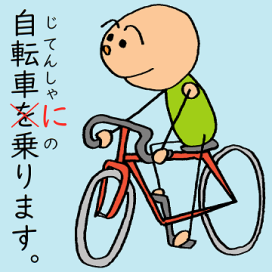
Japanese Learning: Purpose of Movement; [Verb in Masu-form without “masu”]+ni Ikimasu. / [Action Noun]+ni Ikimasu.

We learned yesterday a sentence construction to describe purpose of movement. The example conversation was as follows;

A : Satou-san, Hokkaidou e Nani o Shi ni Ikimasuka. (Sato-san, for what to do are you going to Hokkaido?)

B : Watashi wa Hokkaidou e Kani o Tabe ni Ikimasu. (I am going to Hokkaido to eat Crab.)

Since Hokkaido is a famous place for tourism, there are many activities you can do. Let me show you more examples for B. As for question A, the same sentence as above A can be used.

<example for B>

1. Watashi wa Hokkaidou e Onsen ni Hairi ni Ikimasu. (I am going to Hokkaido to bathe in hot springs.) — { Hairimasu =>Hairi ni }

2. Watashi wa Hokkaidou e Sukii o Shi ni Ikimasu. (I am going to Hokkaido for skiing.) — { Shimasu =>Shi ni }

3. Watashi wa Hokkaidou e Mizuumi o Mi ni Ikimasu. (I am going to Hokkaido to see lakes.) — { Mimasu =>Mi ni }

The above sentences for purpose of movement use verbs in “Masu-form without masu”. In addition, there is simple version that uses “Action Noun”.

2. Watashi wa Hokkaidou e Sukii o Shi ni Ikimasu.

2’. Watashi wa Hokkaidou e Sukii ni Ikimasu.

Compare 2 and 2’. 2 uses the verb “Shimasu”, while 2’ doesn’t. The noun “Skii” has nuance of “doing ski”. If you use “Action Noun”, the construction for purpose of movement can be shortened as below;

4. [Subject] wa [Place] e [Action Noun] ni Ikimasu.

examples;

– Watashi wa Kombini e Kaimono ni Ikimasu. (I am going to a convenience store for shopping.) — Kaimono is an action noun

– Watashi wa Nihon e NihonRyouri no Benkyou ni Ikimasu. (I am going to Japan to study Japanese cuisine.) — Benkyou is an action noun.

This post was written with reference to the exercise A4 on Section 13 of “Minna no Nihongo (2nd Edition)” published by “3A Corporation”
Japanese Learning: Purpose of Movement; [Verb in Masu-form without “masu”]+ni Ikimasu.

We already know that verbs in Japanese conjugate. When we learned expressions of desire for action, verbs needed to be “Masu-form without Masu” in order to be followed by the auxiliary verb “-tai”. Today’s expression also uses “Masu-form without Masu” of a verb.

Suppose a winter vacation is coming. you are talking to your friend, Sato-san. The topic is what you are going to do in the vacation. Hearing that Sato-san is going to Hokkaido, you want to know what kind of activities she will take in Hokkaido. The conversation with Sato-san would be like as following;

A : Satou-san, Hokkaidou e Nani o Shi ni Ikimasuka. (Sato-san, for what to do are you going to Hokkaido?)

B : Watashi wa Hokkaidou e Kani o Tabe ni Ikimasu. (I am going to Hokkaido to eat Crab.)

Look at Sato-san’s comment (B), “Ikimasu” which means “am going” is in Masu-form. Can you find “Masu-form without Masu” in B? It’s “Tabe” whose masu-form is “Tabemasu”. Given that today’s title is “Purpose of Movement”, two verbs in the comment B, Ikimasu and Tabemasu, can be thought of as below:

– Purpose : Kani o Tabemasu

– Movement : Hokkaido e Ikimasu

Therefore, in the construction;

1. [Subject] wa [Place] e [V1-masu] ni [V2].

(V1-masu: Masu-form without masu)

[V1-masu] is the purpose of movement, which is in “Masu-form without masu”

[V2] is a verb to describe movement for which “Ikimasu” is often used.

Then, let us think about time sequence of V1 and V2 of above construction.

Sentence B is;

B : Watashi wa Hokkaidou e Kani o Tabe ni Ikimasu. (I am going to Hokkaido to eat Crab.)

At first, Sato-san goes to Hokkaido. Once she has arrived in Hokkaido, and then she eats crab. So, V2 happens first, and V1 happens after V2. The order in the sentence is V1 and then V2, but in the time sequence, the order is in reverse, V2 first, V1 second.

Not today, but we will soon learn the other construction that uses two verbs.

2. [Subject] wa [V1te], [V2].

In this construction, V1 becomes “Te-form”. And V1 happens first and V2 second. The order of V1 and V2 in the sentence is the same as the order of time that V1 and V2 happen. Many of Japanese learners like the construction 2 better than 1. If Sato-san’s comment B is changed to be 2;

B2 : Watashi wa Hokkaido e Itte, Kani o Tabemasu.

However, if the purpose of going to Hokkaido is to eat crab, the construction 1 is much better. The construction 1 should be learned well before the construction 2 is introduced to Japanese learners of beginner’s level.

This post was written with reference to the exercise A4 on Section 13 of “Minna no Nihongo (2nd Edition)” published by “3A Corporation”
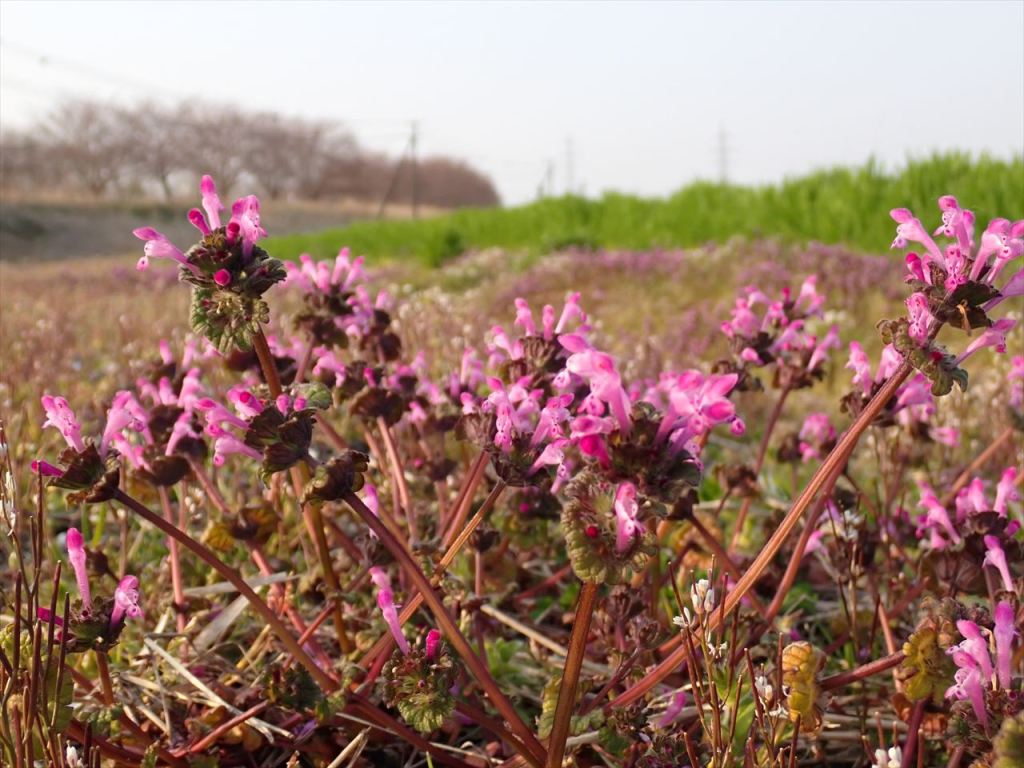
What I saw while I was walking in the paddy fields in Niigata, Northern JAPAN(2).

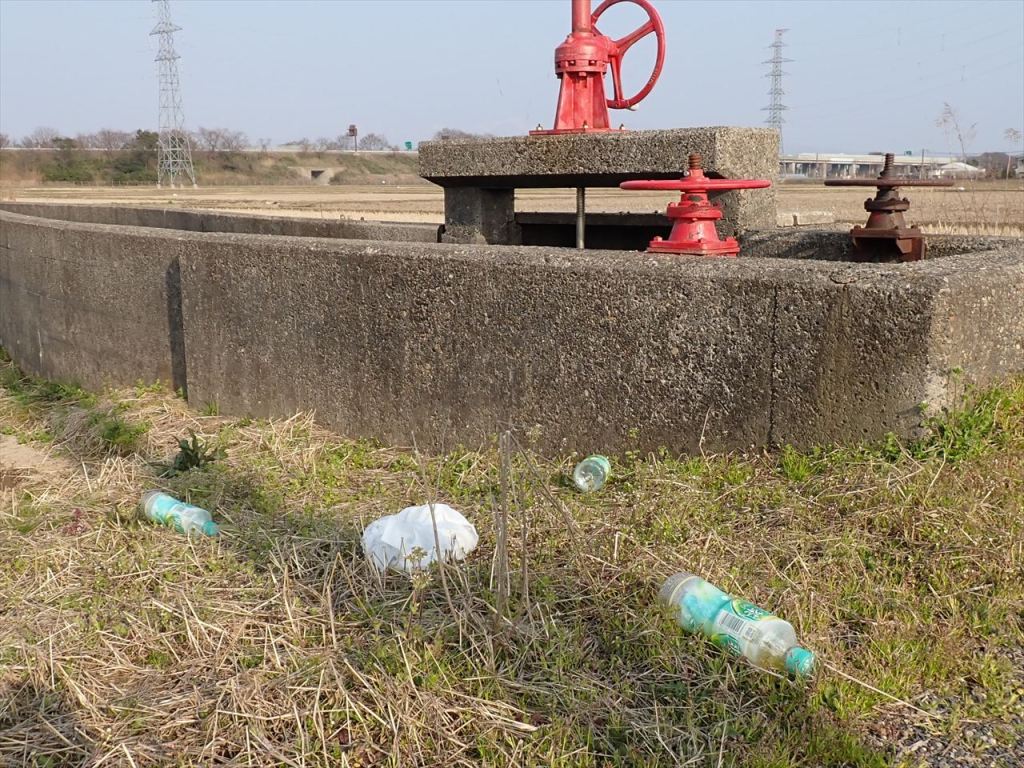
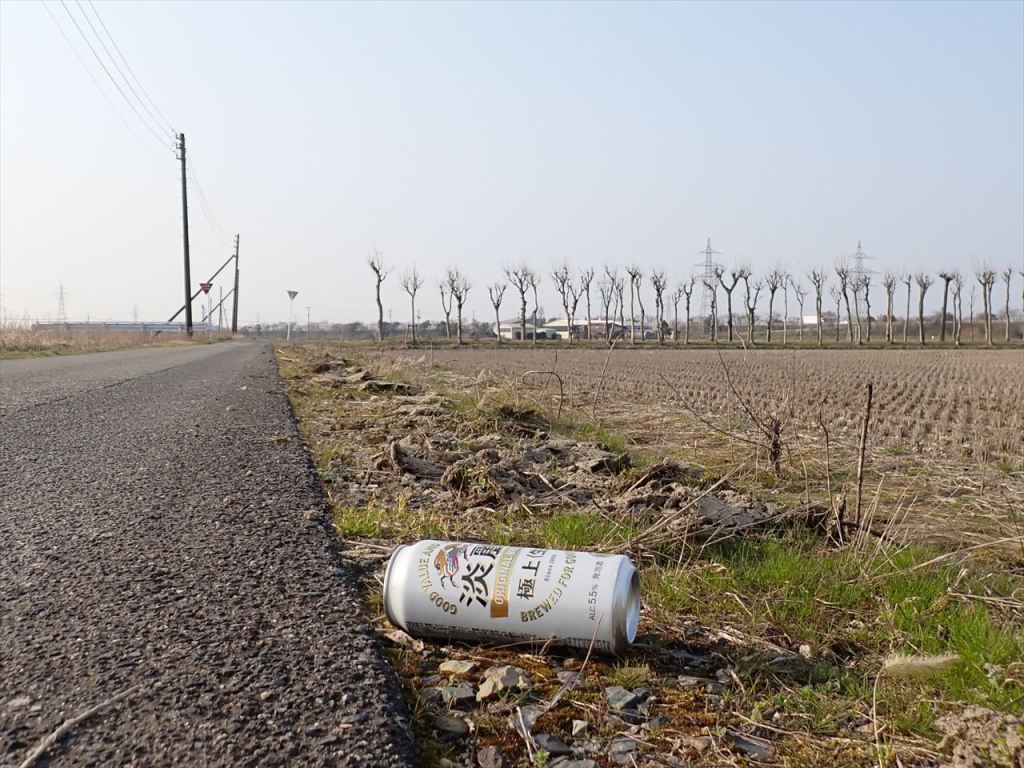
I saw these trashes thrown onto the ground.
I hope that it was not a drunken drive.
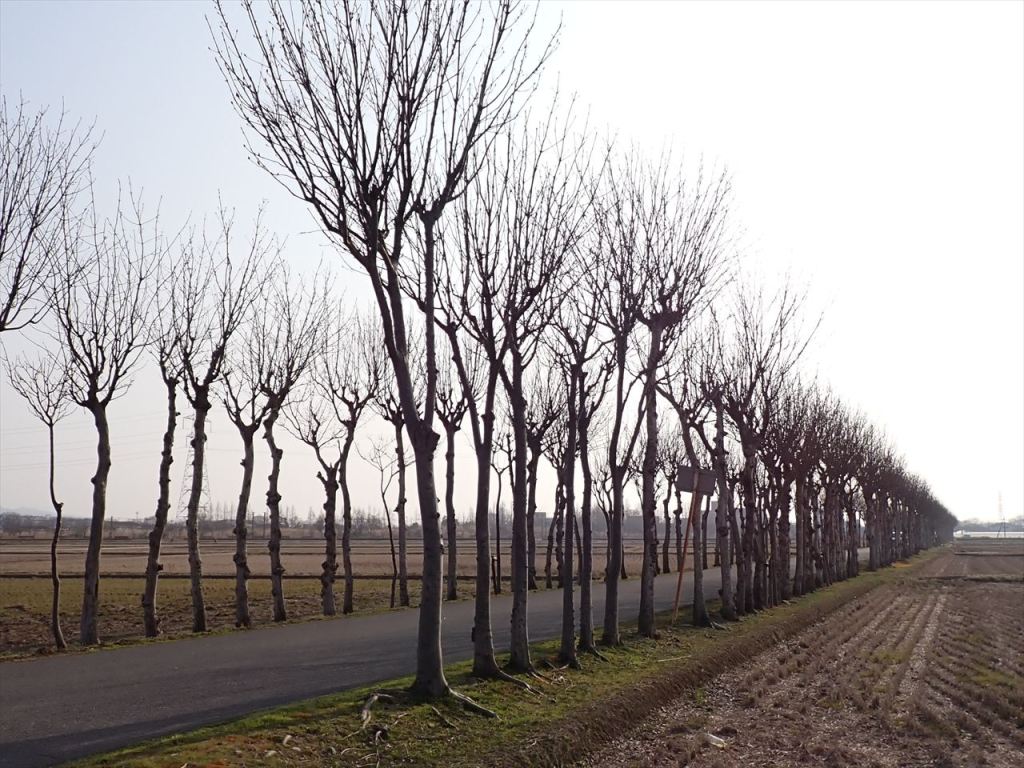
In the old years, rice had been hung on that trees to dry them up.
I don’t know the name of these flowers.
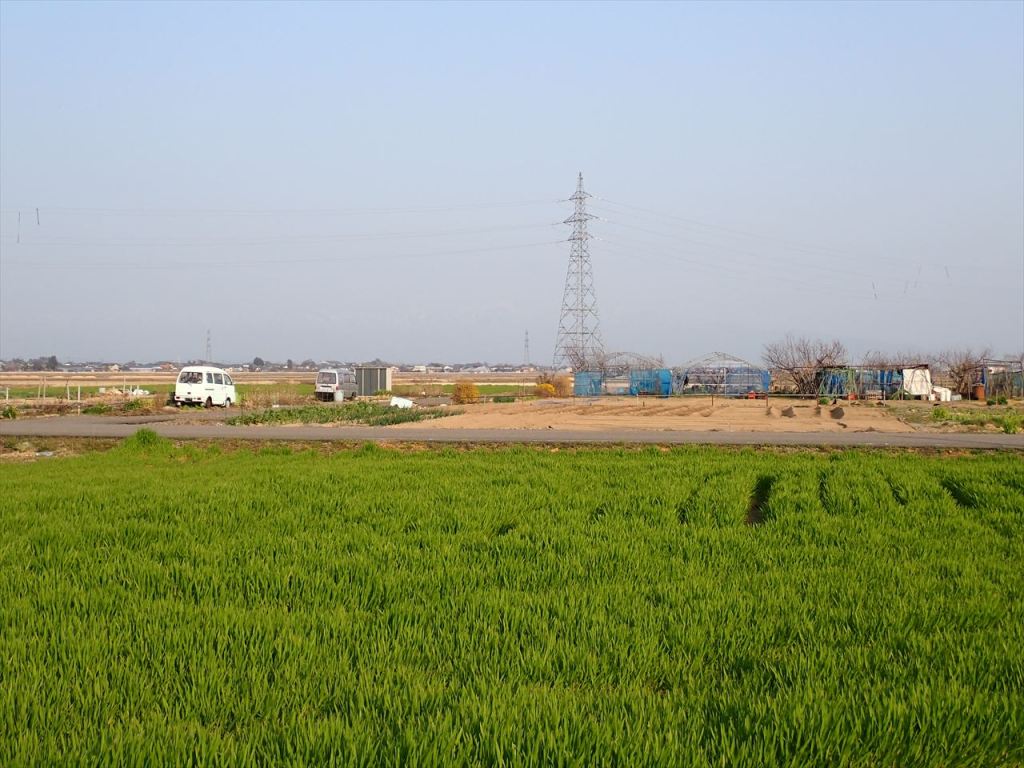
It is rare to see green leaves because it’s still early spring.
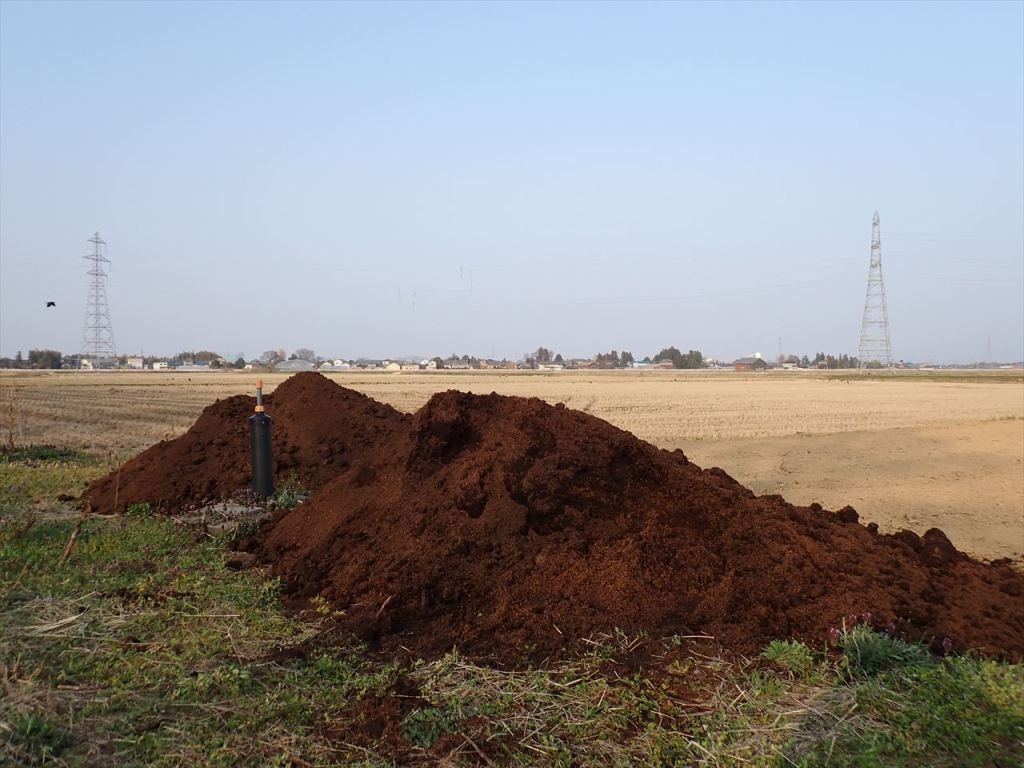
Cattle’s droppings can be a good fertilizer.
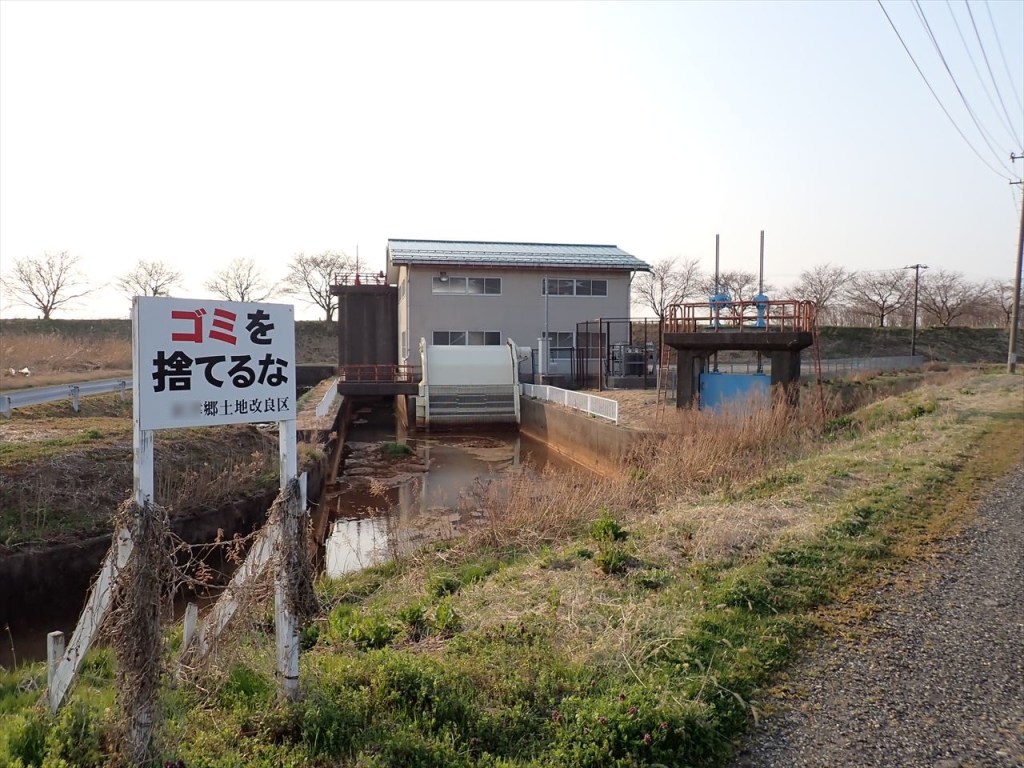
“Do not throw the garbage”
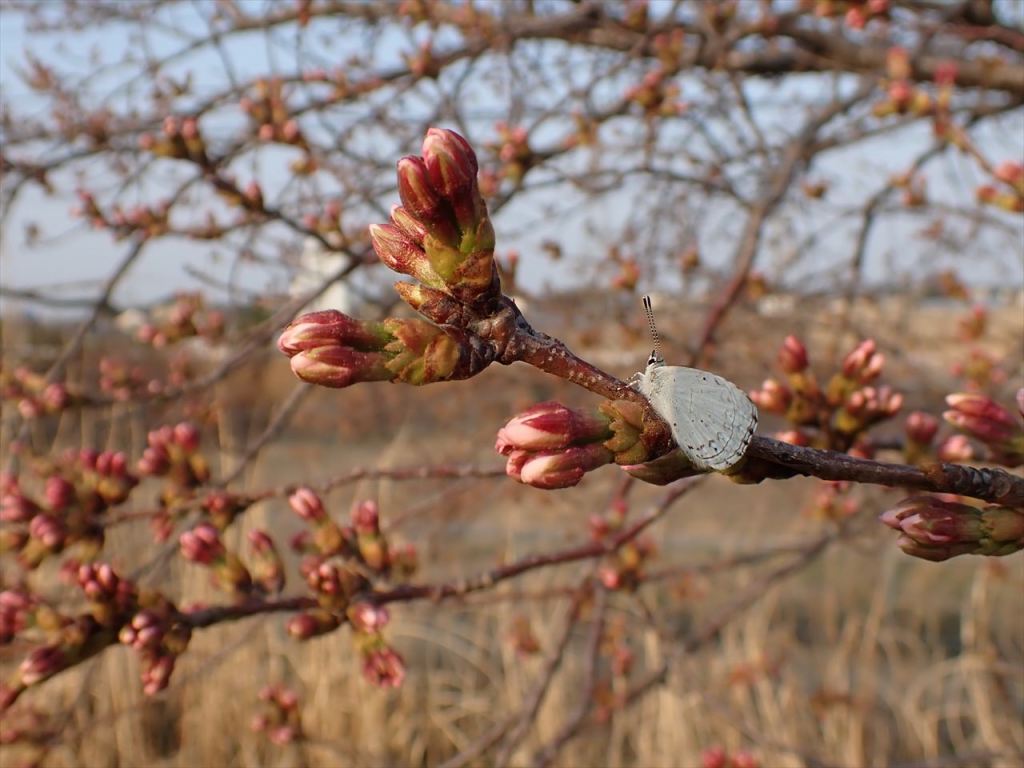
Cherry flowers are still buds.

As of April 1st, It was declared that Cherry flowers had started blooming in Niigata.