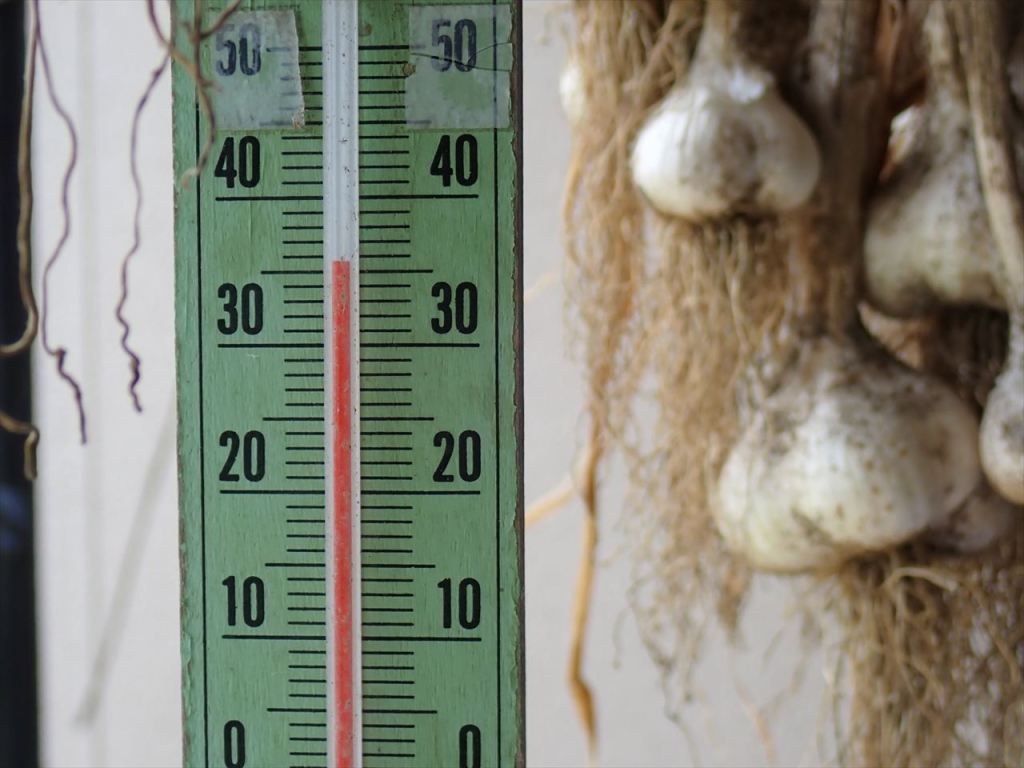
I have started saving up for my funeral expenses

Most of people in my neighborhood save up money for their own funeral expenses well before the last day in this world. There are two major funeral companies in this region, competing to get customers who could sign up such savings. Let me call them A and B. My father had paid for his own funeral to the company A, while he was still alive. After the funeral of my father, my mother started to pay monthly likewise. Her course was 36-Man’en(approximately 2,300USD), by paying 3000JPY every month, 120 times. She has already paid 70 times. Recently the company A said to me that they wanted to confirm her condition and to give her a birthday present. And today, one of their employees came to my home. I thought it was a good chance for me to start payment for my own funeral. Because I was satisfied with the service they provided in my father’s funeral, and it was a little nuisance that the company B made phone calls to me often.

I signed today the 24-Man’en course, which is way cheaper than my mother’s. I just thought my funeral would not cost so much because very few people will come to my funeral. My payment is 2000JPY, 120times. It continues ten years. I hope my funeral will happen after my payment has finished, but future is unknown. When it comes to predicting future, we Japanese think that “A devil will laugh at me”.

Japanese learning (A2 S23): Adverbial Clause similar to “When-Clasue” that describe a Timing of an Action in Main Clause: [V-dic/V-ta Clause] toki, [Main Clause].

Yesterday, we learned the sentence construction in which the adverbial clause ending with “-toki,” modifies the main clause. And verbs in the adverbial clause are in Dictionary form or Nai-form so that they can be placed in front of a noun “toki”. Examples are as follows;

1. Eigo no Hon o Yomu toki, Denshi-Jisho o Tsukaimasu. (When I read an English book, I use an electronic dictionary. — Dictionary form + toki

2. Denwa ni Derarenai toki, Me’eru o Kudasai. (If you can’t answer my phone call, send me an email.) — Nai-form + toki   

There adverbial clauses ending with “toki,” in 1 and 2 are a kind of conditional clauses. You see “if” in English translation of the sentence 2. Conditions are;

<1> Condition is that the action “Yomu (read)” takes place.

<2> Condition is that the situation “Derarenai (can’t answer the phone)” exists.

It is like these conditions are “when you do” and “when you don’t (can’t) do”. But think about verbs. For most of verbs, things change from before the action taking place to after the action had been done. In Japanese, an action which is not yet taken place becomes Dictionary form. An action which has already been done becomes Ta-form. So for today, let us learn the difference between the following two;

[V-dic] + toki, [Main Clause].

[V-ta] + toki, [Main Clause].

(1) Main Clause of Present tense

– Maiasa Kaisha ni Iku toki, Densha ni Norimasu. (When I go to my company every morning, I get on a train.) — Dictionary form + toki,

– Maiasa Kaisha ni Itta toki, Minna ni Aisatsu o Shimasu. (When I get to my company every morning, I say hello to my co-workers.) — Ta-form + toki,

(2) Main Clause of Past tense

– Narita Kuukou e Iku toki, Kaban o Kaimashita. (While I was on the way to Narita Airport, I bought a bag.) — Dictionary form + toki,

– Narita Kuukou e Itta toki, Kaban o Kaimashita. (When I got to Narita Airport, I bought a bag there.) — Ta-form + toki,

In the above examples, you can see that tenses do not agree between subordinate clause and the main clause. Paying attention to tense agreement is good, but it is more important to decide the tense of each verb based on if it’s action of “already done” or “about to be done”.

This post was written with reference to the exercise A2 on Section23 of “Minna no Nihongo (2nd Edition)” published by “3A Corporation”
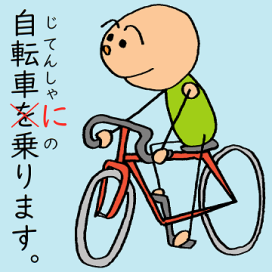
Japanese learning (A1 S23): Adverbial Clause similar to “When-Clasue” that describes a Condition: [V-dic/V-nai Clause] toki, [Main Clause].

Recently, we have learned how to modify a noun using a verb clause. In today’s sentence construction too, a verb modifies a noun. The noun is “toki” which basically means “time” and “when”.

1. Densha ni Noru toki, Kippu o Kaimasu. (When getting on a train, I buy a ticket.)

Let’s analyze the construction of the sentence 1;

– [Densha ni Noru]+toki, Kippu o Kaimasu. = [Verb Clause]+toki, [Main Clause].

In this construction, “[Verb Clause]+toki” works as an adverbial for the main clause, especially its predicate, the verb “Kaimasu”. And sentences of this construction don’t simply express when to do something, but also have a nuance of preconditions for the main clause. For example, look at the sentence 1 again;

1. Densha ni Noru toki, Kippu o Kaimasu.

English translation is (When getting on a train, I buy a ticket.)

But it can also be translated as follows (If I get on a train, I will buy a ticket.), which has more nuance of precondition in the “V+toki”.

The sentence 1 uses the dictionary form of the verb “Noru/Norimasu” just in front of “toki”. If a Nai-form is used, the nuance of precondition becomes more clear as shown below;

2. Kippu no Kai kata ga Wakaranai toki, Ekiin ni Kiite Kudasai.

(If you don’t know how to buy a ticket, please ask a station employee.)

Because “[V-dic]+toki,” and “[V-nai]+ toki,” have a nuance of precondition for the main clause, a sentence of today’s construction tends to talk about the usual state, rather than to be time/date specific.

3-1 Juu ichi-ji ni Douro o Wataru toki, Kuruma ni Ki o Tsukemasu. (Time-specific)

(When I cross a road at eleven o’clock, I will be careful about cars.)

3-2 Douro o Wataru toki, Itsumo Kuruma ni Ki o Tsukemasu. (In usual state)

    (When I cross a road, I always become careful about cars.)

Of course, the sentence 3-1 is not common.

4-1 Suiyoubi ni Shimbun o Yomu toki, Megane o Kakemasu. (Date-specific)

(When I read a newspaper on Wednesday, I put glasses.)

4-2 Shimbun o Yomu toki, Taitei Megane o Kakemasu. (In usual state)

    (When I read a newspaper, I usually put glasses.)

4-1 sounds funny. It should be “Yonda toki” and “Kakemashita” in past tense.

But what I am talking about is not absolute. Look at the following;

5. Mokuyoubi ni Byouin he Iku toki, Hokenshou o Motte Ikimasu. (Date-specific)

(When I go to the hospital on Thursday, I will bring my health insurance card.)

The sentence 5 is date-specific, and it’s likely to be used in some occasion.

Not only “[V-dic]+toki,”, read and remember the following sentences with “[V-nai]+ toki,”;

6. Ryouri ga Dekinai toki, Shokudou de Gohan o Tabemasu.

    (When I can’t cook, I eat my meal in restaurant.)

7. Okane ga Nai toki, Osake o Nomi ni Ikimasen.

    (When I don’t have money, I don’t go drink alcohol.)

Note that the Nai-form of “Aru/Arimasu” is not “Aranai” but just “Nai”.

This post was written with reference to the exercise A1 on Section23 of “Minna no Nihongo (2nd Edition)” published by “3A Corporation”
I went to medical check today

Since I am not a company employee, I don’t have a company health insurance. My health insurance is the national health insurance. Under that health insurance, I can get some health checks once a year. Last week I got X-ray chest test in the community center. And this morning, I went to a local clinic this morning and got urine and blood tests. I need to go to the clinic again in ten days, to hear the results. I hope there will be no bad result that needs a detailed inspection.

Japanese learning (A6 S22): Application of “Verb Modified Noun” to a “ga” word of Wa-ga construction whose Predicate is “Aru/Arimasu”: [Topic] wa {[Verb Clause] + [Noun] }ga + Arimasu.

Yesterday, we learned how to apply a verb modified noun to “-ga” word in wa-ga construction sentences. Today, too, we are going to learn the same construction as below;

[Topic] wa {[Verb Clause] + [Noun]} ga [Predicate].

The difference from yesterday is that;

– Yesterday: the predicates are I- adjectives and Na-adjectives.

– Today: the predicates are intransitive verbs.

In both cases, the predicates are stative words. Wa-ga constructions that came from a transitive verb sentence and its object turned to be the topic (-wa) are not included today’s wa-ga constructions.

The following examples are shown with titles by the predicate verbs.

(1) Aru/Arimasu

Aru/Arimasu is an intransitive verb to describe something is existing.

1. Watashi wa Jikan ga Arimasen. (I don’t have time.)

Unless you say the time is for what you do, the sentence 1 doesn’t have enough information.

1’ Watashi wa Nohongo o Benkyousuru Jikan ga Arimasen. (I don’t have time to study Japanese.)

2. Watashi wa Youji ga Arimasu. (I have a thing to do.)

This sentence 2 is grammatically okay, but the listener would quickly ask you what kind of thing you need to do. It is better to include what you need to do in the sentence.

2’ Watashi wa Byouin ni Iku Youji ga Arimasu. (I need to go to a hospital.)

Although A6 S23 in Minnano Nihongo deals with “Aru/Arimasu” only, let us learn several wa-ga construction sentences using other verbs for predicates.

(2) Iru/Irimasu(要る/要ります)

Note that it’s not “Iru/Imasu(居る/居ます)” meaning an existence of human and animals. This is “Iru/Irimasu” meaning necessity. Japanese sentence “A wa B ga Irimasu.” can be usually translated into English as “A needs B” which is a transitive verb sentence. On the other, “A wa B ga Irimasu.” is an intransitive verb sentence. The particle “-ga” is used in order to specify what is needed.

3. Watashi wa Kutsu ga Irimasu. (I need (a pair of) shoes.)

There are several kinds of shoes depending on the purpose. Some modification needs to be added to the noun “Kutsu”.

3’. Watashi wa Undoujou de Haku Kutsu ga Irimasu. (I need a pair of shoes so that I can put on sports ground.)

(3) Wakaru/Wakarimasu

Wakaru/Wakarimasu means “understand/can tell”. Japanese sentence “A wa B ga Wakarimasu.” can be usually translated into English as “A understand B” or “A can tell B.”, which are transitive verb sentences. On the other, “A wa B ga Wakarimasu.” is an intransitive verb sentence. The particle “-ga” is used in order to specify what is understandable.

4. Watasi wa Nihongo ga Wakarimasen. (I don’t understand Japanese.)

This sentence 4 is grammatically okay, but is it real that the speaker understands nothing at all? At least this person said one Japanese sentence. These should be different level of understanding for each person. Some modification needs to be put in front of “Nohongo”.

4’ Watasi wa Satou-san ga Iu Nihongo ga Wakarimasen. (I don’t understand what Sato-san speaks to me in Japanese.)

Now, “Koto ga Dekimasu” expressing Possibility in A2 to 4 S18 and “Koto ga Arimasu” expressing experience in A2 S19 are also kinds of wa-ga constructions that are using verb clause to modify a noun. The noun for these is “Koto” which doesn’t have a concrete meaning but has the function to make a verb as a noun-equivalent.

This post was written with reference to the exercise A6 on Section22 of “Minna no Nihongo (2nd Edition)” published by “3A Corporation”

Japanese learning (A5 S22): Application of “Verb Modified Noun” to a “ga” word of Wa-ga construction whose Predicate is I/Na-adjectives: [Topic] wa {[Verb Clause] + [Noun] }ga + [I-/Na- Adjective] desu.

We have been learning how to apply a “verb clause to modify a noun” to several types of sentences. Today’s sentence type is “Wa-ga construction” with adjective predicates. Though the same caution repeats every time when “Wa-ga construction” appears, a wa-ga construction and a transitive verb predicate sentence should not be confused.

– Wa-ga construction; [Topic] wa [Subject] ga [Predicate].

Example1; Ke’eki wa Kodomotachi ga Tabemashita. (When it comes to that cake, kids have eaten it.)

– Transitive verb predicate sentence; [Subject] wa/ga [Object] o [Transitive verb].

Example2; Kodomotachi wa Ke’eki o Tabemashita. (Kids ate the cake.)

More simply, the particle “ga” is for a subject, the particle “o” is for an Object. This is very the basic of Japanese language.

Actually, the Example1 is a minor type of wa-ga construction. For sake of simplicity, think there are two types of wa-ga constructions;

(1) Double subject and stative predicate

(2) The object turned to be the topic (-wa) and the predicate is a transitive verb.

Learning wa-ga construction of type (2) would end up confusion about the difference between wa-ga construction and transitive verb predicate sentence (hence confusion about the difference between particles “ga” and “o”). So, let us concentrate on the wa-ga construction of type (1). Type (1) has a stative predicate. At A5 in section22 (today), the predicates are I-adjective and Na-adjective, and at A6 (tomorrow), the predicate is the intransitive verb to describe existence, “Aru/Arimasu”.

Anyway, the purpose of this post is not to explain about wa-ga construction, but to show how “verb clause to modify a noun” can fit in the “-ga” word of a wa-ga construction.

Some of I-adjectives and Na-adjectives tend to be predicates of wa-ga construction. Let us pick up “Sukina” as example of Na-adjective, and “Hoshii” as example of I-adjective.

1. Watashi wa Hito ga Suki desu. (I like a human kind.)

Perhaps there is a person who likes any people. But it must be rare. Feeling information that the sentence1 gave you is not enough, you would like to ask what kind of human kind this person like. To say “what kind of human kind”, some modification needs to be placed in front of “Hito (a human kind)”. If the modification is a verb clause, it might be like below;

1’. Watashi wa Okane o Takusan Motte iru Hito ga Suki desu. (I like those who have a lot of money.)

In 1’, “Okane o Takusan Motte iru” is the verb clause modifying the noun “Hito”.

2. Watashi wa Reizouko ga Hoshii desu. (I want a refrigerator.)

There is no grammatical error in sentence 2. But if you said like this in a home appliances store, people there would ask you what kind of refrigerator you need. To say what kind of refrigerator you want, you put a modification in front of the noun “Reizouko (refrigerator)”. If the modification is a verb clause, the sentence 2 would change like below;

2’. Watashi wa Reitouko ga Aru Reizouko ga Hoshii desu. (I want a refrigerator that has the freezer.)

In 2’, “Reitouko ga Aru” is the verb clause modifying the noun “Reizouko”.

Usually, 1-door refrigerator doesn’t have the freezer. Opening the lid, you will see a small space that can make ice in the 1-door refrigerator. So, if you say that you want a refrigerator with freezer, it means you need to buy a 2-door refrigerator.

As was explained in A3 S22, not the particle “-wa” but “-ga” is used for the subject inside a verb clause that modifies a noun. Such “-ga” is often converted to “no” like the following;

2’’. Watashi wa Reitouko no Aru Reizouko ga Hoshii desu. (I want a refrigerator that has the freezer.)

This phenomenon is called “Ga-No Conversion”.

This post was written with reference to the exercise A5 on Section22 of “Minna no Nihongo (2nd Edition)” published by “3A Corporation”
Japanese learning (A4 S22): Application of “Verb Modified Noun” to an Object of Transitive Verb Sentence: [Subject] wa [Verb Clause] + [Noun] o [Transitive Verb] masu/mashita.

We have already learned how to apply “Verb modified noun” to a Subject and a Predicate. Now we are going to learn how to apply it to an Object. In order to do it, let’s  review the construction of transitive verb predicate sentences;

1. [Subject] wa [Object] o [Transitive Verb] masu.

Of course, sometimes “[Subject] ga” happens, but it’s not our focus now. When we apply “Verb modified noun” to an object, “1.” turns to be like follows;

2. [Subject] wa { [Verb Clause] + [Noun] } o [Transitive Verb] masu.

Look at the following transitive verb sentence;

3: Watashi wa Ko’ohi’i o Nomimasu. (I drink (a cup of) coffee.)

The sentence 3 is okay, but if you want to add some information to the word “Ko’ohi’i (coffee)”, a verb clause could be placed in front of the noun “Ko’ohi’i” as below;

4: Watashi wa Satou o Ireta Ko’ohi’i o Nomimasu. (I drink coffee in which someone poured sugar.)

5: Watashi wa Satou ga Haitte iru Ko’ohi’i o Nomimasu. (I drink coffee which sugar is in.)

Although English translations in parenthesis may seem strange, let us examine the sentences and their verb clauses of 4 and 5’’.

– Sentences’ predicates are “Nomimasu”, which is in present tense for both 4 and 5.

– Verb clauses modifying “Ko’ohi’i”

4; [Satou o Ireta] — “Ireta” is in past/perfect tense.

5; [Satou ga Haitte iru] — “Haitte iru” is in present tense.

You can see that tenses don’t agree between the predicate “Nomimasu” and the verb in noun modifying clause “Ireta” in the sentence 4. As for the sentence 5, tenses do agree between “Nomimasu” and “Haitte iru”, which are both in present tense. The conclusion is that tenses of the predicate and verb in the modifying clause do not always agree. Or even you need to decide the tenses of the two in accordance with reality.

(“Tense of” is omitted in the titles of following <1> through <4>.)

<1> Sentence Predicate is present/future, Verb clause is also present/future

Example: Watashi wa Korekara, Tomodachi ni Ageru Ke’eki o Kai ni Ikimasu.

(Now I am going to buy a sweet cake that I will give to my friend.)

<2> Sentence Predicate is present/future, but Verb clause is past/perfect

Example: Watashi wa Korekara, Tomodachi ni Moratta Ke’eki o Tabemasu.

(Now I am going to eat a sweet cake that my friend gave to me.)

<3> Sentence Predicate is past/perfect, but Verb clause is present/future

Example: Watashi wa Sakki, Tomodachi ni Ageru Ke’eki o Katte Kimashita.

(I just came back from buying a sweet cake that I would give to my friend.)

<4> Sentence Predicate is past/perfect, Verb clause is also past/perfect

Example: Watashi wa Sakki, Tomodachi ni Moratta Ke’eki o Tabemashita.

(I have just eaten a sweet cake that my friend had given to me.)

Things are different between action has been done or not yet done. Therefore, when using a verb, you always need to pay attention to tense. If you want to apply a “noun modifying verb clause”, it is necessary to decide the both tenses of predicate verb and verb in modifying clause taking consideration of sequence of these actions.

This post was written with reference to the exercise A4 on Section22 of “Minna no Nihongo (2nd Edition)” published by “3A Corporation”
Japanese learning (A3 S22): Application of “Verb Modified Noun” to a Subject of Sentence: [Verb Clause] + [Noun] wa [Predicate].

Yesterday we learned the sentence construction in which “verb modified noun” is used in the predicate of “Noun predicate sentence” as below;

 [Subject] wa [Predicate] desu.

=> [Subject] wa { [Verb Clause] + [Noun] } desu.

Example: Kore wa Ichnen-sei ga Tsukau Kyoukasho desu. (This is a textbook that the first-grade students use.)

When a “Verb modified noun” is used in the predicate, the sentence must be a “noun predicate sentence (it may sound like a tautology, but)”. On the other, when a “Verb modified noun” is used in the subject, the predicate is not limited to be a noun. So, we are going to learn today the sentence construction whose subject is “verb modified noun”, while the predicate is either of noun, Na-adjective, I-adjective, and verb.

[Subject] wa [Predicate].

=> { [Verb Clause] + [Noun] } wa [Noun] desu.

=> { [Verb Clause] + [Noun] } wa [Na-adjective] desu.

=> { [Verb Clause] + [Noun] } wa [I-adjective] desu.

=> { [Verb Clause] + [Noun] } wa [Verb] masu.

<1> Predicate is Noun

Example: Haha ga yoku Iku Su’upa’a wa ABC Ma’ato desu.

(The supermarket that my mother goes often is ABC Mart.)

<2> Predicate is Na-adjective

Example: Watashitachi ga Toukyou de Itsumo Tomaru Hoteru wa Kirei desu.

(The hotel that we always stay at in Tokyo is clean.)

! “Kireina” is not an I-adjective but a Na-adjective.

<3> Predicate is I-adjective

Example: Satou-san ga Tsukatte iru No’oto Pasokon wa Karui desu.

(The personal computer that Sato-san is using is light.)

<4> Predicate is Verb

Example: Watashi ga Iku Tokoya wa Eki no Chikaku ni Arimasu.

(The barber I go to is near the train station.)

<IMPORTANT> the Subject marker is “ga” for a verb clause modifying a noun

Look at whether “ga” or “wa” is used for indicating the subject inside verb clause that is modifying a noun. The followings are the same as <1> through <4> above.

– { [Haha <ga> yoku Iku] + [Su’upa’a] } wa ABC Ma’ato desu.

– { [Watashitachi <ga> Toukyou de Itsumo Tomaru] + [Hoteru] } wa Kirei desu.

– { [Satou-san <ga> Tsukatte iru] + [No’oto Pasokon] } wa Karui desu.

– { [Watashi <ga> Iku] + [Tokoya] } wa Eki no Chikaku ni Arimasu.

You can see that “ga” is used for the subject inside verb clause that is modifying a noun.

When choosing “wa” or “ga” as the subject marker, the following criteria works;

– When to say condition or action about a known subject, “wa” is used.

– When the purpose of sentence is to say what the subject is, “ga” is used.

Then, why “ga” is used for the subject inside verb clause modifying a noun? The verb clause modifying a noun strongly specifies what kind of a noun that is. Therefore, the verb clause needs to clearly indicate who performs what action on the noun. Usually, the subject inside verb clause is not known to the listener, is what the speaker needs to specify. This is the reason why “ga” is used for the subject inside the verb clause that modifies a noun.

This post was written with reference to the exercise A3 on Section22 of “Minna no Nihongo (2nd Edition)” published by “3A Corporation”

Japanese learning (A2 S22): Application of Verb Modified Noun to a Predicate of Noun Predicate Sentence: [Subject] wa [Verb Clause] + [Noun] desu.

We have learned how to modify a noun with verb clause at exercise A1 in Section 22. But examples shown there were not sentence, but phrases. How can we use those phrases in a sentence? To begin with, let us think about where a noun is used in sentences.

– Noun predicate sentence: [Subject] wa [Predicate] desu.

=> [Predicate] is a noun => Exercise A2 : [Predicate] = verb-modified-noun

=> [Subject] is a noun => Exercise A3 : [Subject] = verb-modified-noun

– Transitive verb sentence: [Subject] wa [Object] o [Transitive Verb] masu.

=> [Object] is a noun => Exercise A4 : [Object] = verb-modified-noun

– Wa-ga construction : [Topic] wa [Subject] ga [Predicate]

=> [Subject] is a noun => Exercise A5 and A6 : [Subject] = verb-modified-noun

   — Predicates are adjectives in A5, and intransitive verb for existence “Aru/Arimasu” in A6.

Today we are going to learn A2 which uses “verb-modified-noun” for a predicate in noun predicate sentence.

1. [Subject] wa {[Verb clause] + [Noun]} desu.

And a quick review of “verb clause” to modify a noun is that the ending of the verb clause needs to be “concise ending”.

Take a look at the following noun predicate sentence.

2. Kore wa Kyoukasho desu. (This is a textbook.)

The sentence 2 is a correct one. But you may feel this sentence doesn’t have good information. Then let’s apply a verb modification to the predicate “Kyoukasho”.

2’. Kore wa Ichnen-sei ga Tsukau Kyoukasho desu. (This is a textbook that the first-grade students use.)

3. Satou-san wa Hito desu. (Sato-san is a person.)

This is apparently a sentence whose information is not enough.

3’. Satou-san wa Uwagi o Kite iru Hito desu. (Sato-san is the one who is wearing a Jacket.)

4. Koko wa Basho desu. (This is a place.)

This, too, lacks information. Let’s put a modification with a verb in front of the noun “Basho”.

4’. Koko wa Takushii ni Noru Basho desu. (Here is the place we get on a taxi.)

This post was written with reference to the exercise A2 on Section22 of “Minna no Nihongo (2nd Edition)” published by “3A Corporation”

That was the End of Railway

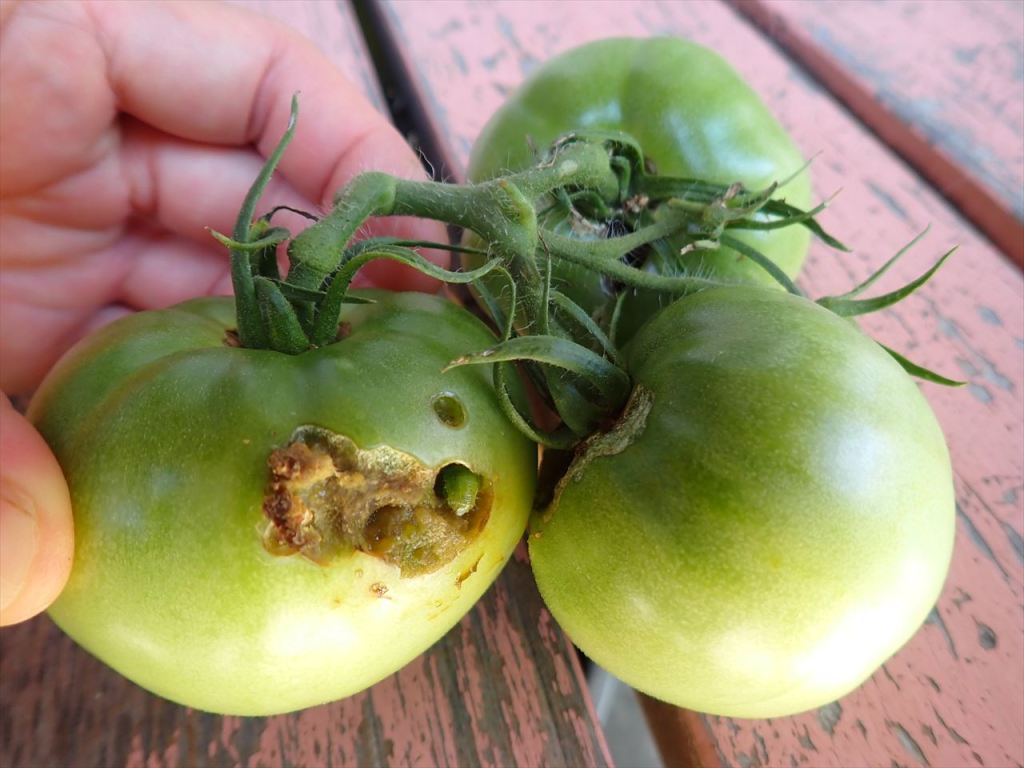
Strong wind has continued blowing all day today. The wind caused some damage on my vegetables in the field. Because of bad weather, I was just staying inside, but I didn’t have time to write about Japanese Learning tonight. It should have been a sentence construction whose predicate is “a noun modified with verb clause”. I hope I can make it tomorrow.

The photo was taken just five years ago. The end of demolished railway was bullied in weeds.