If concise endings with some sentence-ending particles like “yo”, “ne”, and “yone”, such utterances are casual talk to your friends. Do not use such speech style to your teacher.
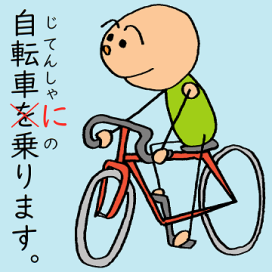
If no sentence-ending particle is attached to concise endings, therefore the concise ending is really the ending of the sentence, then such language production is to be writing like newspapers, report, contract documents, and so on. For a Japanese learner in beginner’s level, the most likely use of concise endings in writing would be diary.
The followings are examples of sentences with concise endings. Although Exercise A2 in Section 20 of Minnano Nihongo shows sentences in present tense only, the following examples contain sentences in past tense.
<This post is incomplete. I will try to finish near future.>
This post was written with reference to the exercise A2 on Section20 of “Minna no Nihongo (2nd Edition)” published by “3A Corporation”

