Japanese Learning: Sentence expressing ownership “[Pronoun] wa [Person] no desu.”; “no” that functions as a noun.

What we learned yesterday was a sentence that expresses ownership as below.

1. [Pronoun] wa [Person] no [Noun] desu.

example; Are wa watashi no Hon desu. (That is my book.)

Today, too, we are going to learn a sentence construction that expresses ownership.

2. [Pronoun] wa [Person] no desu.”

example; Are wa watashi no desu. (That is mine.)

The sentence 2 doesn’t say about “what is mine”. And it seems that the sentence 2 is a contracted form of 1. But “-no” in the sentence 1 and “no” in the sentence 2 are slightly different. “-no” in 1 is a particle. But “no” in 2 functions as if it is a noun. In later stage of Japanese learning (but still in beginner’s level), you will see that this kind of “no” has a function to make verbs, I-adjectives, and Na-adjectives “a noun phrase”.  

For today, it is better to think “no” in 2 is a contracted form of noun “mono” that means “a thing”.

Practice and remember the conversation below;

A : Kore wa dare no desuka. (Whose is this?)

B : Sore wa Satou-san no desu. (It is Ms. Sato’s.)
Japanese Learning: Sentence expressing ownership “[Pronoun] wa [Person] no [Noun] desu.”

Actually, today’s sentence is the same kind as yesterday.

1. [Pronoun] wa [Noun1] no [Noun2] desu.

Using a word for a person into [Noun1] as below, sentence “1” can express ownership.

2. [Pronoun] wa [Person] no [Noun] desu.

“-no” is a particle, and basically “A no B” in Japanese is “B of A” in English. However, in this case of 2, “A no B” can be understood as “A’s B” in English.

Example;

– Kore wa watashi no Hon desu. (This is my book.)

– Sore wa Satou-san no Jisho desu. (It is Ms. Sato’s dictionary.)

– Are wa Sensei no kuruma desu. (That is (our) teacher’s car.)

There are three pronouns “Kore”, “Sore”, “Are” in the examples above. You need to choose one of three based on spatial positions of the speaker, the listener, and the object.

Practice and remember the conversation below;

A : Sore wa dare no Nohto desuka. (Whose notebook is it?)

B : Kore wa Suzuki-san no Nohto desu. (This is Mr. Suzuki’s notebook.)

Japanese Learning: Noun predicate sentence; [Pronoun] wa [Noun1] no [Noun2] desu.

Japanese sentences are classified in three by the type of predicates;

1. Noun predicate sentences

2. Adjective predicate sentences (I-adjectives and Na-adjectives)

3. Verb predicate sentences

So far, we have only learned “1. Noun predicate sentences”. Review one of noun predicate sentences that is using particle “-no” as below;

4. [Noun1] wa [Noun2] no [Noun3] desu.

Example;

5. Watashi wa Niigata Daigaku no Gakusei desu. (I am a student of Niigata University)

-Watashi : personal pronoun ( I )

-wa : particle ; topic marker, and in this case, also subject marker

-Niigata Daigaku : proper noun (Niigata University) ; this modifies “Gakusei (student)” to limit the range of meaning of student.

-no : particle ; “A no B” in Japanese is like “B of A” in English

-Gakusei : noun (a student/students)

5. is a sentence with the construction of 4., and also described as below;

5’. [Person] wa [modifier] no [Noun describing types of people] desu.

But the sentence construction 4. has more variations. In addition to sentences about person/people, let’s take a look at sentences about things.

6. Kore wa Nihongo no Jisho desu. (This is a dictionary of Japanese.)

You know three pronouns “Kore”, “Sore”, and “Are”. You need to choose one of three based on spatial positions of the speaker, the listener, and the object. Suppose that both the speaker and the listener are close to the object for the following conversation.

A : Kore wa Nan desuka. (What is this?)

B : Kore wa Nihon no Ringo desu. (This is an apple of Japan)

Japanese Learning: Multiple (Two) choice questions of Noun Predicate Sentence;

We have already learned two types of interrogatives;

1. Yes-No questions

A : Koukousei desuka. (Are you a high school student?)

B : Iie, watashi wa koukousei dewa arimasen. (No, I am not a high school student.)

A : Ja, Daigakusei desuka. (Then, are you a university student?)

B : Hai, Watashi wa Daigakusei desu. (Yes, I am a university student.)

2. Wh-questions

A : Ano hito wa dare desuka. (Who is that person?)

B : Ano hito wa Sato-san desu. (That person is Ms. Sato.)

Today we are going to learn another type of interrogative sentence. It is one of multiple choice questions, but with the least number of choices.

3. Multiple choice questions

A : Sore wa Hon desuka, Jisho desuka. (Is it a book or a dictionary?)

B : Kore wa Hon desu. (This is a book.)

The sentence A is a “Two-choice question”. When you are asked by the A, you cannot answer with “Hai (yes)” or “Iie (no)”. You need to choose one of the two, and to answer by saying the nouns that was used in the question. Perhaps there may be a situation in which you would say like the follows;

B’ : Iie, Hon demo Jisho demo arimasen. Nohto desu.

(No, this is neither book nor dictionary, but a notebook.)

But I want you to learn one at a time. Don’t care much about the answer B’. What you need to learn today is the question A and the answer B.

Japanese Learning: <Answers for yesterday> How to choose Pronouns “Kore”, “Sore”, or “Are”.

– Kore : a thing very near to the speaker and the listener

– Sore : a thing a little distant from the speaker but very near to the listener

– Are : a thing far from both of the speaker and the listener

Answer for Q1 : Ringo is “an apple”

A : Kore wa nan desuka.

B : Kore wa ringo desu.


Answer for Q2 : Banana is “a banana”

A : Kore wa nan desuka.

B : Sore wa banana desu.


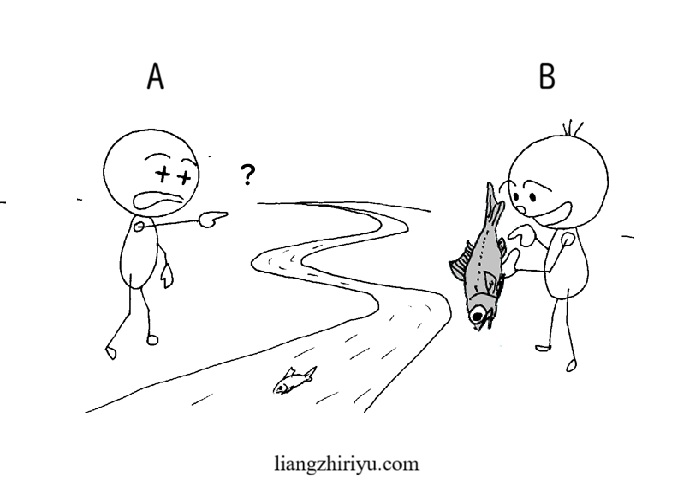
Answer for Q3 : Sakana is “a fish”

A : Sore wa nan desuka.

B : Kore wa sakana desu.


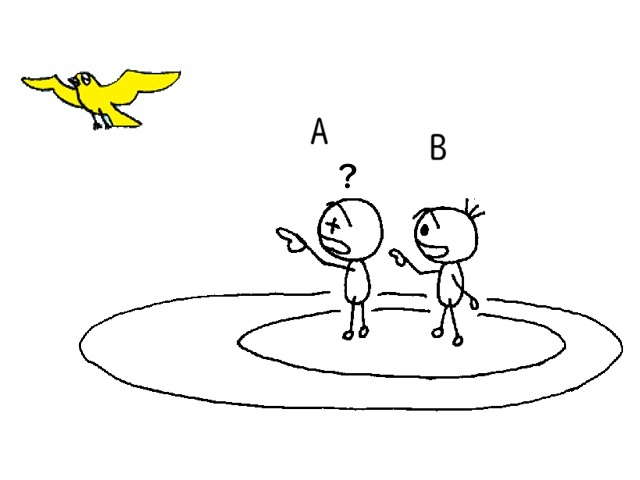
Answer for Q4 : Tori is “a bird”

A : Are wa nan desuka.

B : Are wa tori desu.


Japanese Learning: How to choose Pronouns “Kore”, “Sore”, or “Are”.

Kore, Sore, and Are are pronouns and one of the word groups of “Ko-So-A words”.

– Kore : a thing very near to the speaker and the listener

– Sore : a thing a little distant from the speaker but very near to the listener

– Are : a thing far from both of the speaker and the listener

How the person A and B would choose “Kore”, “Sore”, or “Are”? Think about them from Q1 to Q4.

Q1 : Ringo is “an apple”

A : { Kore or Sore or Are } wa nan desuka.

B : { Kore or Sore or Are } wa ringo desu.


Q2 : Banana is “a banana”

A : { Kore or Sore or Are } wa nan desuka.

B : { Kore or Sore or Are } wa banana desu.


Q3 : Sakana is “a fish”

A : { Kore or Sore or Are } wa nan desuka.

B : { Kore or Sore or Are } wa sakana desu.


Q4 : Tori is “a bird”

A : { Kore or Sore or Are } wa nan desuka.

B : { Kore or Sore or Are } wa tori desu.


The answers for Q1 through Q4 will be shown tomorrow.

Japanese Learning: Pronoun “Sore”; A speaker calls a thing “Sore” which is on a listener’s side.

Yesterday we learned “Kore”. Kore, Sore, and Are are pronouns and one of the word groups of “Ko-So-A words”. Yesterday I wrote that Kore, Sore, and Are are corresponding to “This”, “It”, and “That”, respectively. Another definition is like; Kore is a thing here or near, Sore is a thing in middle distance, Are is a thing that is in distant place. However, “Sore” is not so simple. If a speaker and a listener are together in limited space like inside taxi, the definition “Sore is in middle distance” is okay. But in many situations, what is Sore for a speaker can be Kore for a listener.

– Kore : a thing very near to the speaker and the listener

– Sore : a thing a little distant from the speaker but very near to the listener

– Are : a thing far from both of the speaker and the listener

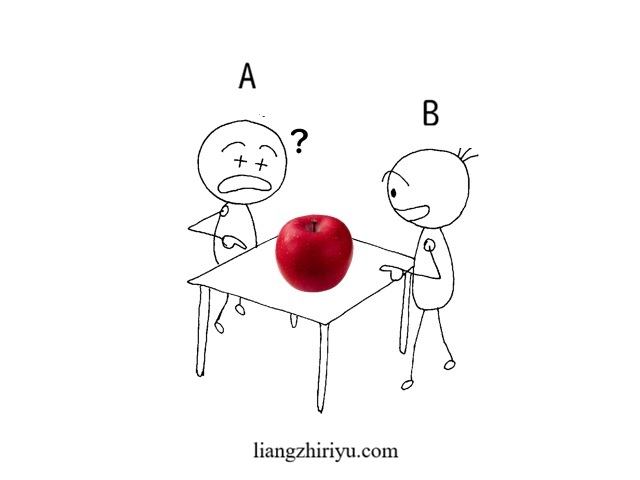
Suppose that there is a dictionary on the table. Person A and B are standing by the table and they are face to face.

A : Kore wa nan desuka. (What is this?)

B : Kore wa Jisho desu. (This is a dictionary.)

This is yesterday’s conversation.

Different from the situation above, suppose that Person A and B are standing face to face with the distance of 2 meters (6 feet) between the two. The person B has a smartphone on her hand.

A : Sore wa nan desuka. (What is it?)

B : Kore wa Sumaatofon desu. (This is a smartphone.)

Japanese Learning: Interrogative form of Noun Predicate Sentences; [Noun1]wa [Noun2]desuka.

When trying to learn a construction of the second language, it is better to know three forms of the construction; Positive, Negative, and Interrogative forms. As for noun predicate sentences, these three forms are shown as below.

1. Positive form: [Noun1]wa [Noun2]desu.

2. Negative form: [Noun1]wa [Noun2]dewa arimasen.

3. Interrogative form: [Noun1]wa [Noun2]desuka.

It is very simple to make an interrogative sentence. You just put a particle “-ka” at the end of the sentence.

Please note that now we are talking about only “yes-no questions” for interrogative form. “Wh-questions” and “alternative questions” are not dealt with today.

So, “[Noun1]wa [Noun2]desuka.” is a “yes-no questions”. How do we answer to the question in Japanese? In general, yes is “Hai”, no is “Iie (in three moras; I-I-E)”, but be careful, “Hai”and “Iie” are not exactly the same as “yes” and “no”.

-Hai : What you are saying is right (The answer is not always followed by a positive expression)

-Iie : What you are saying is not right (The answer is not always followed by a negative expression)

Although this issue “yes-no and hai-iie are not the same” does not has to do with today’s examples, please note the difference between usages of yes-no and hai-iie.

Take a look at examples of yes-no questions and answers with “hai” and “Iie”. “Ja” is the short form of “Dewa”, in the following case means “Then”.

A : Koukousei desuka?

B : Iie, watashi wa koukousei dewa arimasen.

A : Ja, Daigakusei desuka?

B : Hai, Watashi wa Daigakusei desu.

You will find that two questions by A don’t use “Anata (you in English)”. “Anata(=you)” is a word often used when a wife calls her husband. So, use the word “Anata” sparingly, or avoid to use.

Japanese Learning: Present-Negative of Noun Predicate Sentence; [Noun1]wa [Noun2]dewa arimasen.

Japanese sentences are classified in three by the type of predicates;

1. Noun predicate sentences

2. Adjective predicate sentences (I-adjectives and Na-adjectives)

3. Verb predicate sentences

Today, too, we are going to learn “1. Noun predicate sentences”. Yesterday’s “[Noun1]wa [Noun2]desu.” is a positive sentence. A negative sentence is as follows;

[Noun1]wa [Noun2]dewa arimasen.

“Arimasen” is actually a negative form of a verb “aru/arimasu” that means something exists. However, now we are learning noun predicate sentences, not verb predicate sentences. Therefore, I recommend you just remember “dewa arimasen” like a one word. In conversations, “dewa arimasen” is usually contracted to be “ja arimasen”.

Let’s look at the sentence “[Noun1]wa [Noun2]dewa arimasen.”

-Noun1: a name of something.

-wa: this is the particle (post position) to indicate that preceding word is the topic of the sentence. When the topic and the subject are identical in the sentence, “-wa” can be a subject marker as well as topic marker.

-Noun2: a name of something.

-dewa arimasen (-ja arimasen): Being placed at the end of a sentence, this functions to make the sentence present-negative. This ending is polite. Do not use the short form “dewa nai (ja nai)” for an ending of the sentence because it sounds rude.

Let’s make a noun predicate sentence “[Noun1]wa [Noun2]dewa arimasen.” by putting real Japanese words.

Watashi: I (prenoun)

wa: topic marker (particle) — also subject marker in this case

Koukousei : a high school student. Although its spelling is “koukousei”, the pronunciation is like “Koh-koh-se-e”

dewa arimasen: present-negative, polite ending

Watashi wa Koukousei dewa arimasen. (I am not a high school student.)

「ら抜き」について:ある学生へのメッセージ

「ら抜き」とは、動詞の可能形から、「ら」を抜いてしまうことです。

可能形を見てみましょう。
辞書形 → 可能形です。

・一段動詞
(上一段)
見る:みる → みられる
着る:きる → きられる
(下一段)
寝る:ねる → ねられる
食べる:たべる → たべられる

・カ変動詞
来る:くる → こられる

・サ変動詞
する → できる

・五段動詞
ワ行:買う:かう → かえる
カ行:聞く:きく → きける
ガ行:泳ぐ:およぐ → およげる
サ行:話す:はなす → はなせる
タ行:持つ:もつ → もてる
バ行:飛ぶ:とぶ → とべる
マ行:飲む:のむ → のめる
ラ行:作る:つくる → つくれる

上に書いた可能形をよく見てください。「ら」があるのはどの動詞ですか?
・一段動詞
・カ変動詞
この2つです。この2つの可能形から「ら」を取って(抜いて)言うことが多くなっています。

「ら抜き」の例
・一段動詞
○みられる → ×みれる
○きられる → ×きれる
○ねられる → ×ねれる
○たべられる → ×たべれる
・カ変
○こられる → ×これる

このような「ら抜き」は、規範的な日本語としては、まだ認められていません。しかし、若者の間では「ら抜き」が一般的になっています。

ちょっと紛らわしいのですが、ラ行五段動詞の可能形は「ら」がありそうですが、ありません。
・作る → ○つくれる、×つくられる(可能形として)
・取る → ○とれる、×とられる(可能形として)
・帰る → ○かえれる、×かえられる(可能形として)
「ら」の入った方は、動詞や状況によりますが、受身や尊敬で使います。

受身や尊敬との関係で言えば、「ら抜き」は可能形と、受身・尊敬を区別するという効用があります。授業で示した例文は次のようでした。

例:日本から有名な先生が来られます。公開講義をしますから、来れる学生は参加しなさい。

「来られます」は先生に対する尊敬です。「来れる」は「ら抜き」ですが、可能を表します。このような効用がありますが、まだ「ら抜き」は正式には認められていません。しかし、「来れる」などの「ら抜き」は言いやすく、一般的になってしまったので、もう「来られる」に戻ることは難しいと思います。

以上、「ら抜き」の説明でした。