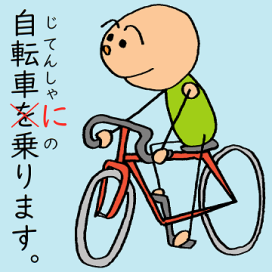
Japanese Learning: Whether or not to use the Particle “ni” which is the marker for when you do it; [when] ni [verb] v.s. [when] [verb]

We have already learned the Particle “ni” as a marker for time (on a clock) of action as below;

A : Satou-san wa Maiasa Nan-ji ni okimasuka. (Ms. Sato, what time do you get up every morning?)

B : Watashi wa Maiasa Shichi-ji ni okimasu. (I get up at seven every morning.)

Now the function is expanded so that “ni” would be the maker not only for time but also for when action is taken place.

A : Satou-san wa Itsu Kuni e Kaerimasuka. (Ms. Sato, when are you going back your home country?)

B : Watashi wa Hachi-gatsu Juu roku-nichi ni Kuni e Kaerimasu. (I am going back my country on August 16th.)

Where;

– Kuni: noun; country, but in this case, home country or home town region

– Kaerimasu: verb; go back

Note that when asking time, the interrogative word is “Nan-ji”, but when asking when, the word “Itsu” is used.

Now look at two sentences below;

1. Watashi wa Ku-gatsu Juu shichi-nichi ni Toukyou e Ikimasu.

2. Watashi wa Ashita Toukyou e Ikimasu.

In the sentence 1, The date “Ku-gatsu Juu shichi-nichi (September 17th )” is followed by the particle “ni. On the other, in the sentence 2, the word for when “Ashita is not followed by “ni”. Therefore, there is a difference between the sentences 1 and 2, about whether or not to use the particle “ni”

As to using “ni” or not right after the word for time or when the action is taken, apply the following rule. But this rule is not a strict one, so take it as a rough guideline. “The word” means that it is time or when the action is taken (e.g. ten thirty, tomorrow…and so on);

– The word is relative to “NOW”, then do not use “ni”.

example; Kinou(yesterday), Ashita(tomorrow), Raishuu(next week)

– The word specifies a certain time, then use “ni”.

example; Gogo Go-ji ni (at 5p.m.), Suiyoubi ni (on Wednesday), Juu-gatsu Juu Hachi-nichi ni (on October 18th)

Quiz: Answer if “ni” is used or not used. The answers will be shown tomorrow.

Q1: Senshuu (with or without ni?), Hataraki mashita. (Last week, I worked.)

Q2: Hachi-ji Juu go-fun (with or without ni?) Gakkou e Ikimasu. (I go to the school at eight fifteen.)

<この投稿は“スリーエーネットワーク、みんなの日本語 初級I 第2版, 第5課A4”の内容を参照しています。>
Japanese Learning: The particle to indicate the reaching point where the action is heading towards; [Place] e

Answers of yesterday’s Quiz :

example; Watashi wa Mainichi Hataraki masu. (I work every day.)

 => Non-past x Positive

1. Ashita, Watashi wa Hataraki masu. (I will work tomorrow.)

=> Non-past x Positive

2. Watashi wa Do-youbi Hataraki masen. (I don’t work on Saturday.)

=> Non-past x Negative

3. Watashi wa Kinou Hataraki masen deshita. (I didn’t work yesterday.)

=> Past x Negative

4. Kinou Watashi wa Hataraki mashita. (I worked yesterday.)

=> Past x Positive

Then let’s start today’s learning. There is a particle to indicate the reaching point of the action. It is similar to the preposition “to” in English. But Japanese particles are postpositions, the particle “e” is put behind a noun which means a place. The sentence construction is as below;

[Subject] wa [noun meaning a place] e [verb meaning move].

example : Watashi wa Kaisha e Iki masu.

Where;

– Watashi: pronoun; I

– wa: particle; topic marker, and in this case also subject marker

– Kaisha: noun; company (with nuance of a place)

– e: particle; the reaching point of the action

– Ikimasu: verb in form of present-positive; go

One thing you need to know is that the pronunciation of particle “e” is “e”, but its spelling is “he: へ”. So for writing, do not use “e: え”.

Let me introduce a just one noun;

Kombini: noun; a convenience store

Practice and remember the following conversation.

A: Sato-san wa Doko e Ikimasuka. (Ms.Sato, where are you going?)

B: Watashi wa Kombini e Ikimasu. (I am going to a convenience store.)

In addition, we learned four patterns of verb predicates yesterday. Four patterns are based on combinations of non-past/past tenses and positive/negative. As a review of yesterday, read carefully the followings:

– Kyou, Watashi wa Kombini e Ikimasu. (Today, I am going to a convenience store.)

=> Non-past x Positive

– Kyou, Watashi wa Kombini e Ikimasen. (Today, I am not going to a convenience store.)

=> Non-past x Negative

– Kinou, Watashi wa Kombini e Ikimashita. (Yesterday, I went to a convenience store.)

=> Past x Positive

– Kinou, Watashi wa Kombini e Ikimasen deshita. (Yesterday, I didn’t go to a convenience store.)

=> Past x Negative

<この投稿は“スリーエーネットワーク、みんなの日本語 初級I 第2版, 第5課A1”の内容を参照しています。”In addition”以下の内容は第4課A7です。>

Japanese Learning: Applying Start and end times to a verb predicate sentence; [Time1] kara [Time2] made [Verb] masu.

Yesterday, we learned a verb predicate sentence. Its construction was the following

[Subject] wa [Time ] ni [Verb] masu.

1. Watashi wa Maiasa Shichi-ji ni okimasu. (I get up at seven every morning.)

The particle “ni” in the sentence 1 has the function to indicate the time of action “seven o’clock”. For the sake of comparison to today’s sentence, note that the action “getting up at seven” is done in very short period of time without duration.

And the day before yesterday, we learned a sentence that didn’t use a verb. The sentence was to say start and end times of the continuous state as shown below.

[Subject] wa [Time1] kara [Time2] made desu.

2. Shigoto wa Hachi-ji kara Yo-ji made desu. (My work is from eight to four.)

Today’s sentence construction is a kind of “verb predicate sentence version of 2”.

[Subject] wa [Time1] kara [Time2] made [Verb] masu.

3. Watashi wa Hachi-ji kara Yo-ji made Hataraki masu. (I work from eight to four.)

where;

– hataraki masu: verb; work

The sentence 3 means that the action “work” continues from 8a.m. to 4p.m. These hours are not short period of time, while the action of sentence 1 was. Actually, the sentence 3 is a little bit simplified because we are still in early stage of learning Japanese verbs. The verb predicate “Hataraki masu” in this case is not the best to express duration of action. The expression for duration of action is “V-te iru”, which will be introduced later. So for today, let us focus not on the verb predicate, but on the part of “[Time1] kara [Time2] made”.

Take a look at sentences 1 and 3 again;

1. Watashi wa Maiasa Shichi-ji ni okimasu. (I get up at seven every morning.)

3. Watashi wa Hachi-ji kara Yo-ji made Hataraki masu. (I work from eight to four.)

What is most important thing today is as follows;

– In 1, the particle “ni” indicates the time of action. And usually, the action is instantaneous.

– In 3, the particle “made” indicates the ending time of continuous action.

Learn the difference between the particles “ni” and “made”.

Here are two quiz;

A. Watashi wa Getsu-youbi kara Kin-youbi made Hataraki masu.

B. Watashi wa Kin-youbi ni Hataraki masu.

Q1: Which of sentences A or B says “My work ends on Friday”?

Q2: Which of A or B says “I work on Friday”?

Answers will be shown tomorrow.

<この投稿は“スリーエーネットワーク、みんなの日本語 初級I 第2版, 第4課A5”の内容を参照しています。>

Japanese Learning: The particle that parallelizes two nouns; [Noun1] to [Noun2]

Yesterday we learned an expression to talk about days of the week;

A : Yasumi wa Nan youbi desuka. (What day of the week is your holiday?)

B : Yasumi wa Moku youbi desu. (My holiday is Thursday.)

If you are “B”, and if your holidays are Saturday and Sunday, then how do you answer to the question that “A” is asking?

1. Yasumi wa Do youbi to Nichi youbi desu. (My holidays are Saturday and Sunday.)

In the sentence 1, you see the particle “to”. This particle “to” is used when saying two nouns parallelly. Although it looks like English preposition “to”, Japanese postposition “to” has completely different function. You may think the Japanese “to” works the same as “and” in English, but you need to be careful about its application.

2. right : ringo to mikan (an apple and a Mandarin orange)

3. wrong : yasui to oishii (reasonable and tasty)

4. wrong : hashiru to oyogu (run and swim)

“To” is used to say two words parallelly, only when they are nouns. You can use Japanese particle “to” for neither two adjectives nor two verbs. When you want to say two adjectives or two verbs parallelly, they have to be connected by different ways. These “different ways” will be explained later, not today.

Let me introduce two nouns that are used in today’s practice;

– Nihongo: noun (Japanese language)

– Jugyou: noun (class, teaching in classroom)

Using the particle “to”, practice and remember the following conversation.

A : Nihongo no Jugyou wa Nan youbi desuka. (What day of the week is your Japanese class?)

B : Nihongo no Jugyou wa Ka youbi to Kin youbi desu. (My Japanese classes are on Tuesday and Friday.)

Note that;

[Noun1] no [Noun2] => particle “no” is used to modify Noun2 by Noun1.

[Noun1] to [Noun2] => particle “to” is used to say two nouns parallelly.

Japanese Learning: Noun predicate sentences that use day of the week for the predicate; [Noun] wa [day of the week] desu.

To begin with, let’s learn days of the week.

Getsu youbi = Monday

Ka youbi = Tuesday

Sui youbi = Wednesday

Moku youbi = Thursday

Kin youbi = Friday

Do youbi = Saturday

Nichi youbi = Sunday

And the interrogative word for “What day of the week” is “Nan youbi”.

Since they are nouns, they can be a subject of a sentence. But let’s learn today sentences that use day of the week for predicates.

1. [Subject] wa [day of the week] desu.

example ; Yasumi wa Getsu youbi desu. (The holiday is Monday.)

where,

– yasumi : noun = holiday

– wa : particle = topic marker and in this case also the subject marker

– desu : sentence ending for present-positive with some politeness

Practice and remember the conversation below;

A : Yasumi wa Nan youbi desuka. (What day of the week is your holiday?)

B : Yasumi wa Moku youbi desu. (My holiday is Thursday.)

<この投稿は“スリーエーネットワーク、みんなの日本語 初級I 第2版, 第4課A2”の内容を参照しています。ただし、名詞並列の「と」は明日説明します。>

Japanese Learning: Sentence expressing where something/someone is; “[Something/someone] wa [Place/location] desu.”

Yesterday’s we learned a sentence construction that expresses where the place is, using one of “Ko-so-a words”.

1. [Name of a Place] wa [Ko-so-a word for place] desu.

example ; Toire wa asoko desu. (The toilet is over there.)

This construction can be interrogative as below

example ; Toire wa doko desuka. (Where is a toilet?)

Since “koko”, “soko”, and “asoko” are pronouns for places, they don’t tell you what kind of the place there is. Let’s learn a sentence telling what is where with a noun describing place/location.

2. “[Something] wa [Place/location] desu.”

– Shokudou wa Ni-kai desu. (The dining room is on the second floor)

Shokudou; a dining room

Ni-kai; the second floor. Note that floors are counted with the same way as US, but different from British.

3. [Someone] wa [Place/location] desu.”

– Satou-san wa Kyoushitsu desu. (Ms. Sato is in the classroom.)

Practice and remember the following sentences;

A : Satou-san wa doko desuka. (Where is Ms. Sato?)

B : Satou-san wa Shokudou desu. (Ms. Sato is in the dining room.)

For the answer of person B, it is better not to use “Kanojo” that is corresponding to “she” in English. Using “Kanojo” is sometimes okay, but it’s better to use her name “Satou-san”. Note that the word “Kanojo” is quite often used to mean a girl friend who is very intimate.

<説明事項の漏れを防止するために、当ブログの”Japanese Learning”では、スリーエーネットワーク、”みんなの日本語 初級I 第2版”の練習Aを参照しています。今日は第3課のA3に関連しています。>

Japanese Learning: Sentence expressing what this place is; “[Koko] wa [Name of a Place] desu.”; Introduction of yet another ko-so-a words’ group.

Let’s learn how to say “This place is what.”, “That place is what”, and “Over there is what”. We use a noun predicate sentence in terms of the sentence construction. We need to know some nouns that describe places like classroom, railway station, dining room, and so on. And we also need to another ko-so-a words’ group that are pronouns for places/locations.

1. [Pronouns for places/locations] wa [Name of a Place] desu.

Pronouns for places/locations;

– koko : here, this place

– soko : (1) When the speaker and the listener are close and sharing a limited place, “soko” is a place a little distant from the two.

(2) When there is a distance between the speaker and the listener, and the speaker calls the place of the listener “soko”, the speaker would say “koko”.

– asoko : the place over there

– wa : a particle functions as topic marker, and subject marker in these cases

Name of a Place;

Remember some nouns that describe places;

– kyoushitsu : a classroom/classrooms

– eki : railway station

– shokudou : dining room

– desu : polite ending for sentence of present-positive

Practice and remember the following sentences;

– Koko wa kyoushitsu desu. (This place is a classroom.)

– Soko wa eki desu. (That place is a railway station.)

– Asoko wa shokudou desu. (The place over there is a dining room.)

Japanese Learning: Sentence expressing ownership “[Kono] [noun] wa [Person] [No] desu.”; Introduction of one of ko-so-a words’ group.

What we learned yesterday was a sentence that expresses ownership using noun-like “no”.

1. [Pronoun] wa [Person] [no] desu.”

example; Are wa watashi no desu.

The problem of sentence 1 is that it doesn’t say anything about what the person owns. We are going to learn today a sentences construction such that can express what the person owns. In order to do this, another ko-so-a words’ group will be introduced.

We know one ko-so-a words’ group that are pronouns “kore”, “sore”, and “are”.

– Kore : a thing very near to the speaker and the listener

– Sore : a thing a little distant from the speaker. If the thing is very near to the listener, the listener will uses “kore” for the same thing when the listener speaks about it.

– Are : a thing far from both of the speaker and the listener

Today’s ko-so-a words are “noun modifiers” that are placed in front of a noun, and modify the noun. Usually, a word modifying a noun is to be called an adjective. But what I call “noun modifiers” are words that are different from I-adjectives and Na-adjectives of Japanese language.

– Kono + noun — example ; kono hon (This book)

– Sono + noun — example ; sono jisho (The dictionary that is a little distant from me)

– Ano + noun — example ; ano kuruma (That car over there)

Look at the difference between the two sentences of three pairs.

– Kore wa watashi no desu. (This is mine.)

– Kono hon wa watashi no desu. (This book is mine.)

– Sore wa Satou-san no desu. (It is Ms. Sato’s.)

– Sono jisho wa Satou-san no desu. (The dictionary there is Ms. Sato’s.)

– Are wa sensei no desu. (That is (our) teacher’s.)

– Ano kuruma wa Sensei no desu. (That car over there is (our) teacher’s.)

Japanese Learning: <Answers for yesterday> How to choose Pronouns “Kore”, “Sore”, or “Are”.

– Kore : a thing very near to the speaker and the listener

– Sore : a thing a little distant from the speaker but very near to the listener

– Are : a thing far from both of the speaker and the listener

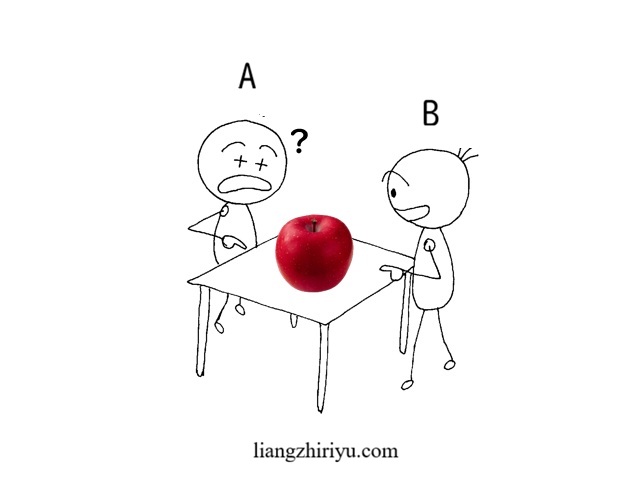
Answer for Q1 : Ringo is “an apple”

A : Kore wa nan desuka.

B : Kore wa ringo desu.


Answer for Q2 : Banana is “a banana”

A : Kore wa nan desuka.

B : Sore wa banana desu.


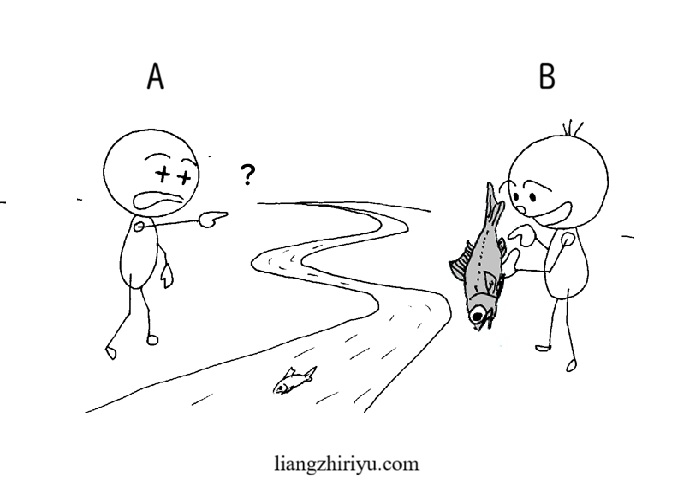
Answer for Q3 : Sakana is “a fish”

A : Sore wa nan desuka.

B : Kore wa sakana desu.


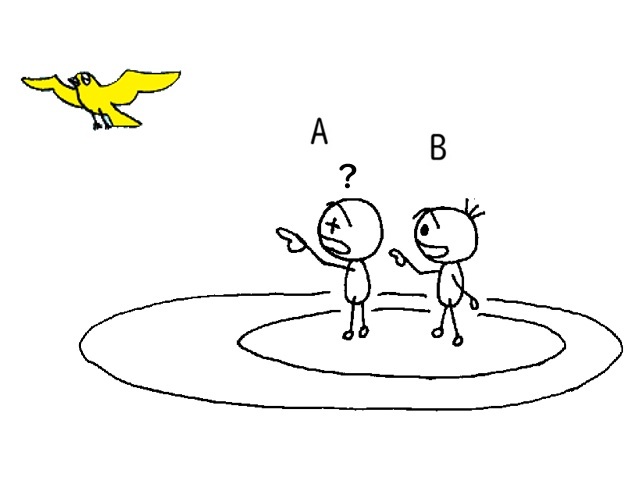
Answer for Q4 : Tori is “a bird”

A : Are wa nan desuka.

B : Are wa tori desu.


Japanese Learning: How to choose Pronouns “Kore”, “Sore”, or “Are”.

Kore, Sore, and Are are pronouns and one of the word groups of “Ko-So-A words”.

– Kore : a thing very near to the speaker and the listener

– Sore : a thing a little distant from the speaker but very near to the listener

– Are : a thing far from both of the speaker and the listener

How the person A and B would choose “Kore”, “Sore”, or “Are”? Think about them from Q1 to Q4.

Q1 : Ringo is “an apple”

A : { Kore or Sore or Are } wa nan desuka.

B : { Kore or Sore or Are } wa ringo desu.


Q2 : Banana is “a banana”

A : { Kore or Sore or Are } wa nan desuka.

B : { Kore or Sore or Are } wa banana desu.


Q3 : Sakana is “a fish”

A : { Kore or Sore or Are } wa nan desuka.

B : { Kore or Sore or Are } wa sakana desu.


Q4 : Tori is “a bird”

A : { Kore or Sore or Are } wa nan desuka.

B : { Kore or Sore or Are } wa tori desu.


The answers for Q1 through Q4 will be shown tomorrow.