Japanese Learning: Sentence expressing where something/someone is; “[Something/someone] wa [Place/location] desu.”

Yesterday’s we learned a sentence construction that expresses where the place is, using one of “Ko-so-a words”.

1. [Name of a Place] wa [Ko-so-a word for place] desu.

example ; Toire wa asoko desu. (The toilet is over there.)

This construction can be interrogative as below

example ; Toire wa doko desuka. (Where is a toilet?)

Since “koko”, “soko”, and “asoko” are pronouns for places, they don’t tell you what kind of the place there is. Let’s learn a sentence telling what is where with a noun describing place/location.

2. “[Something] wa [Place/location] desu.”

– Shokudou wa Ni-kai desu. (The dining room is on the second floor)

Shokudou; a dining room

Ni-kai; the second floor. Note that floors are counted with the same way as US, but different from British.

3. [Someone] wa [Place/location] desu.”

– Satou-san wa Kyoushitsu desu. (Ms. Sato is in the classroom.)

Practice and remember the following sentences;

A : Satou-san wa doko desuka. (Where is Ms. Sato?)

B : Satou-san wa Shokudou desu. (Ms. Sato is in the dining room.)

For the answer of person B, it is better not to use “Kanojo” that is corresponding to “she” in English. Using “Kanojo” is sometimes okay, but it’s better to use her name “Satou-san”. Note that the word “Kanojo” is quite often used to mean a girl friend who is very intimate.

<説明事項の漏れを防止するために、当ブログの”Japanese Learning”では、スリーエーネットワーク、”みんなの日本語 初級I 第2版”の練習Aを参照しています。今日は第3課のA3に関連しています。>
Japanese Learning: Sentence expressing what this place is; “[Koko] wa [Name of a Place] desu.”; Introduction of yet another ko-so-a words’ group.

Let’s learn how to say “This place is what.”, “That place is what”, and “Over there is what”. We use a noun predicate sentence in terms of the sentence construction. We need to know some nouns that describe places like classroom, railway station, dining room, and so on. And we also need to another ko-so-a words’ group that are pronouns for places/locations.

1. [Pronouns for places/locations] wa [Name of a Place] desu.

Pronouns for places/locations;

– koko : here, this place

– soko : (1) When the speaker and the listener are close and sharing a limited place, “soko” is a place a little distant from the two.

(2) When there is a distance between the speaker and the listener, and the speaker calls the place of the listener “soko”, the speaker would say “koko”.

– asoko : the place over there

– wa : a particle functions as topic marker, and subject marker in these cases

Name of a Place;

Remember some nouns that describe places;

– kyoushitsu : a classroom/classrooms

– eki : railway station

– shokudou : dining room

– desu : polite ending for sentence of present-positive

Practice and remember the following sentences;

– Koko wa kyoushitsu desu. (This place is a classroom.)

– Soko wa eki desu. (That place is a railway station.)

– Asoko wa shokudou desu. (The place over there is a dining room.)

Japanese Learning: Sentence expressing ownership “[Kono] [noun] wa [Person] [No] desu.”; Introduction of one of ko-so-a words’ group.

What we learned yesterday was a sentence that expresses ownership using noun-like “no”.

1. [Pronoun] wa [Person] [no] desu.”

example; Are wa watashi no desu.

The problem of sentence 1 is that it doesn’t say anything about what the person owns. We are going to learn today a sentences construction such that can express what the person owns. In order to do this, another ko-so-a words’ group will be introduced.

We know one ko-so-a words’ group that are pronouns “kore”, “sore”, and “are”.

– Kore : a thing very near to the speaker and the listener

– Sore : a thing a little distant from the speaker. If the thing is very near to the listener, the listener will uses “kore” for the same thing when the listener speaks about it.

– Are : a thing far from both of the speaker and the listener

Today’s ko-so-a words are “noun modifiers” that are placed in front of a noun, and modify the noun. Usually, a word modifying a noun is to be called an adjective. But what I call “noun modifiers” are words that are different from I-adjectives and Na-adjectives of Japanese language.

– Kono + noun — example ; kono hon (This book)

– Sono + noun — example ; sono jisho (The dictionary that is a little distant from me)

– Ano + noun — example ; ano kuruma (That car over there)

Look at the difference between the two sentences of three pairs.

– Kore wa watashi no desu. (This is mine.)

– Kono hon wa watashi no desu. (This book is mine.)

– Sore wa Satou-san no desu. (It is Ms. Sato’s.)

– Sono jisho wa Satou-san no desu. (The dictionary there is Ms. Sato’s.)

– Are wa sensei no desu. (That is (our) teacher’s.)

– Ano kuruma wa Sensei no desu. (That car over there is (our) teacher’s.)

Japanese Learning: <Answers for yesterday> How to choose Pronouns “Kore”, “Sore”, or “Are”.

– Kore : a thing very near to the speaker and the listener

– Sore : a thing a little distant from the speaker but very near to the listener

– Are : a thing far from both of the speaker and the listener

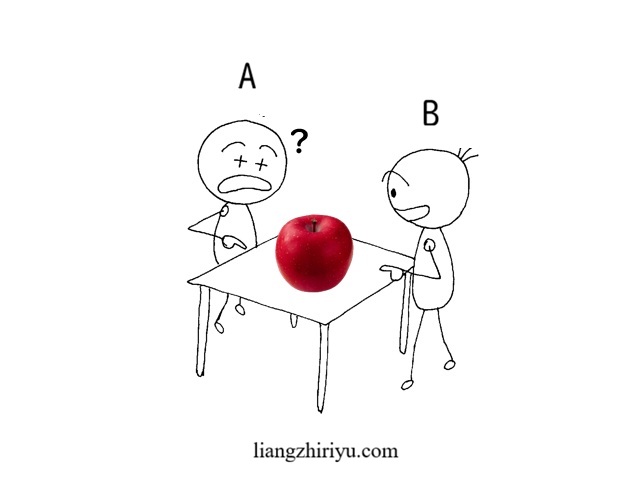
Answer for Q1 : Ringo is “an apple”

A : Kore wa nan desuka.

B : Kore wa ringo desu.


Answer for Q2 : Banana is “a banana”

A : Kore wa nan desuka.

B : Sore wa banana desu.


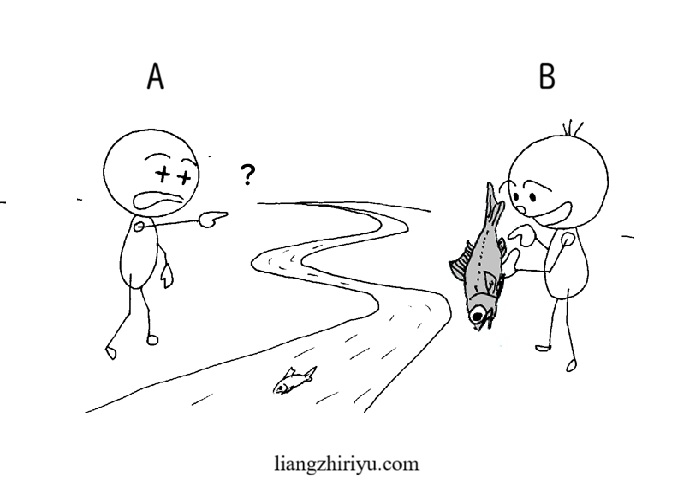
Answer for Q3 : Sakana is “a fish”

A : Sore wa nan desuka.

B : Kore wa sakana desu.


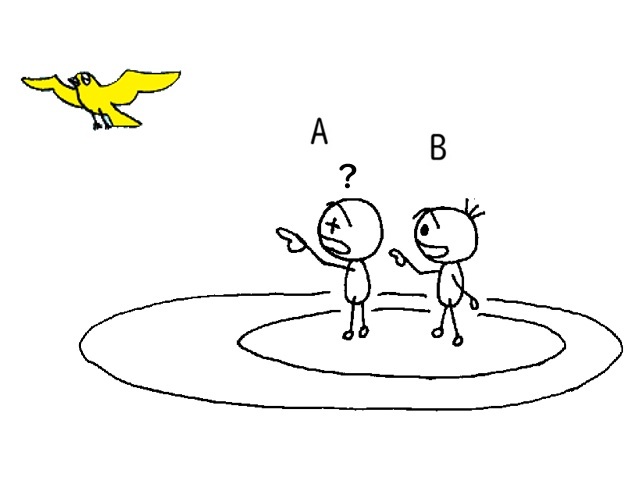
Answer for Q4 : Tori is “a bird”

A : Are wa nan desuka.

B : Are wa tori desu.


Japanese Learning: How to choose Pronouns “Kore”, “Sore”, or “Are”.

Kore, Sore, and Are are pronouns and one of the word groups of “Ko-So-A words”.

– Kore : a thing very near to the speaker and the listener

– Sore : a thing a little distant from the speaker but very near to the listener

– Are : a thing far from both of the speaker and the listener

How the person A and B would choose “Kore”, “Sore”, or “Are”? Think about them from Q1 to Q4.

Q1 : Ringo is “an apple”

A : { Kore or Sore or Are } wa nan desuka.

B : { Kore or Sore or Are } wa ringo desu.


Q2 : Banana is “a banana”

A : { Kore or Sore or Are } wa nan desuka.

B : { Kore or Sore or Are } wa banana desu.


Q3 : Sakana is “a fish”

A : { Kore or Sore or Are } wa nan desuka.

B : { Kore or Sore or Are } wa sakana desu.


Q4 : Tori is “a bird”

A : { Kore or Sore or Are } wa nan desuka.

B : { Kore or Sore or Are } wa tori desu.


The answers for Q1 through Q4 will be shown tomorrow.

Japanese Learning: How to ask “How old are you?”; Nansai desuka./Oikutsu desuka.

We have already leaned [Wh-question] in the form of noun predicate sentences.

A : Ano hito wa dare desuka : Who is that person?

B : Ano hito wa Sato-san desu : That person is Ms. Sato.

A, as a [Wh-question], is asking “Who?”. Today we are going to learn another [Wh-question], which is “How old?” (, although it’s not Wh- but How).

When you say your age or someone’s age, you need to use number. Numbers in Japanese usually are followed by a “quantifier”. For example, “five years old” is “Go sai”; “Go” is five, and “sai” is a quantifier for ages. In the combination of number and quantifier, pronunciation of numbers often changes to adapt the quantifier. Since it is difficult to remember all the combination of numbers and quantifiers, only [number+age quantifier] are shown below;

One year old : Issai (came from Ichi+sai)

Two years old : Ni sai

Three years old : San sai

Four years old : Yon sai (Don’t say “Shi sai”)

Five years old : Go sai

Six years old : Roku sai

Seven years old : Nana sai

Eight years old : Hassai (came from Hachi+sai)

Nine years old : Kyu sai (Don’t say Ku sai)

Ten years old : Jussai (Old people may say Jissai)

Nineteen years old : Juu kyuu sai

Twenty one years old : Nijuu issai

The number should continue to eighty or ninety, but let us stop here.

When you ask age, you will say;

1. Nansai desuka. (“How old are you?” with normal politeness)

2. Oikutsu desuka (How old are you? as an honorable expression)

Let us use 1. only today, because honorable expressions are to be studied later. And also note that “Anata (=you)” doesn’t appear in the question 1 and 2.

Here is an example of question and answer about age.

A : Nansai desuka. (How old are you?)

B : Kyuu sai desu. (I’m nine years old.)

Also, you can ask someone’s age;

3. Satou-san wa nansai desuka. (How old is Ms.Satou?)

Note that the construction of the 3 is as follows;

—– [subject: Satou-san] + [subject marker: wa] + [interrogative word: nansai]

+ [polite ending for present-positive:desu] + [ending particle for question; ka]

Practice and remember the followings

A : Satou-san wa nansai desuka. (How old is Ms.Satou?)

B : Satou-san wa Nijuu-issai desu. (She is twenty-one years old.)

A : Ja, Suzuki-san wa nansai desuka. (Then, how old is Mr. Suzuki?)

B : Suzuki-san mo Nijuu-issai desu. (He is also twenty-one years old.)

Japanese Learning: Interrogative form of Noun Predicate Sentences; [Noun1]wa [Noun2]desuka.

When trying to learn a construction of the second language, it is better to know three forms of the construction; Positive, Negative, and Interrogative forms. As for noun predicate sentences, these three forms are shown as below.

1. Positive form: [Noun1]wa [Noun2]desu.

2. Negative form: [Noun1]wa [Noun2]dewa arimasen.

3. Interrogative form: [Noun1]wa [Noun2]desuka.

It is very simple to make an interrogative sentence. You just put a particle “-ka” at the end of the sentence.

Please note that now we are talking about only “yes-no questions” for interrogative form. “Wh-questions” and “alternative questions” are not dealt with today.

So, “[Noun1]wa [Noun2]desuka.” is a “yes-no questions”. How do we answer to the question in Japanese? In general, yes is “Hai”, no is “Iie (in three moras; I-I-E)”, but be careful, “Hai”and “Iie” are not exactly the same as “yes” and “no”.

-Hai : What you are saying is right (The answer is not always followed by a positive expression)

-Iie : What you are saying is not right (The answer is not always followed by a negative expression)

Although this issue “yes-no and hai-iie are not the same” does not has to do with today’s examples, please note the difference between usages of yes-no and hai-iie.

Take a look at examples of yes-no questions and answers with “hai” and “Iie”. “Ja” is the short form of “Dewa”, in the following case means “Then”.

A : Koukousei desuka?

B : Iie, watashi wa koukousei dewa arimasen.

A : Ja, Daigakusei desuka?

B : Hai, Watashi wa Daigakusei desu.

You will find that two questions by A don’t use “Anata (you in English)”. “Anata(=you)” is a word often used when a wife calls her husband. So, use the word “Anata” sparingly, or avoid to use.